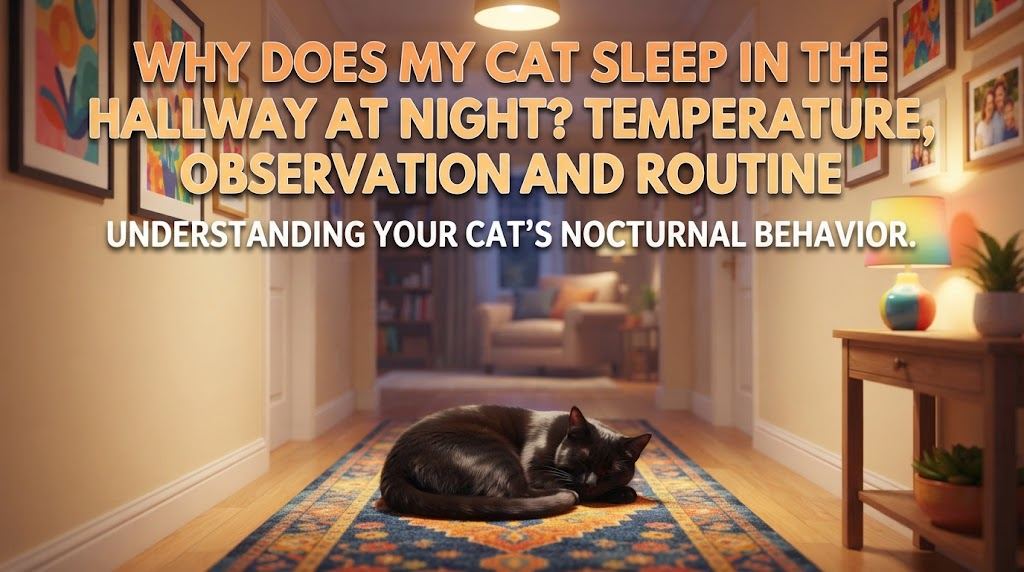
A hallway may look like an inconvenient place to sleep, but from a cat's point of view it can be a useful location. It often connects several rooms, carries household sounds and scents, and may have a comfortable floor temperature.
Quick Answer
Your cat may sleep in the hallway because it is cool or warm enough, offers a central observation point, keeps several escape routes open, or sits near the people and rooms that matter most. A longstanding relaxed preference is usually normal. A sudden change in sleeping location matters more when it comes with pain, restlessness, appetite changes or other unusual behavior.
A Hallway Gives Access to More Than One Room
Cats often prefer resting places that let them choose what happens next. A hallway can provide quick access to bedrooms, stairs, food areas or favorite windows without trapping the cat in one room. That flexibility may be more attractive than a bed placed in a corner.
Floor Temperature Can Be a Major Factor
Tile, wood and other hard floors may feel cooler than bedding during warm weather. In cooler seasons, a hallway near a heating source or warm airflow may become appealing for the opposite reason. If your cat changes locations with the season, temperature is a practical explanation to test.
The Location May Be Social Without Being Clingy
A cat can remain near household members without sleeping directly on a person. A central hallway may let the cat hear or smell several family members while still keeping its own space. This fits the fact that cats vary greatly in how much direct human contact they prefer.
Hallway Sleeping vs. Waiting at a Door
| Hallway sleeping | Door waiting |
|---|---|
| Cat settles and sleeps for long periods | Cat remains alert near a closed or frequently used door |
| Location may be central or temperature-based | Access or anticipation is often more important |
| Cat may choose several hallway spots | Behavior centers on one boundary |
| Usually ends in restful sleep | May include meowing, pawing or rushing through the door |
Make the Area Safe
If the cat regularly sleeps in a traffic path, reduce the risk of being stepped on at night. Use a small night light if appropriate, keep clutter off the floor, and offer a low comfortable bed slightly to the side of the hallway. Do not block exits or force the cat into an enclosed sleeping area it does not choose.
When a New Sleeping Location Matters
A cat that suddenly abandons favorite beds for the floor may simply be seeking a different temperature, but sudden behavior changes should be considered alongside health. Watch for stiffness, reluctance to jump, breathing changes, hiding, appetite loss, excessive thirst, weakness or repeated nighttime vocalization.
Related Virixoo Guides
If the cat is specifically waiting outside your room, read why cats wait outside bedroom doors. For a cat that focuses on an entryway, see why cats sit by doors. If the cat chooses the bed instead, compare why cats sleep at your feet.
Bottom Line
A hallway can be a comfortable strategic sleeping location because of temperature, central access and social proximity. If the behavior is relaxed and longstanding, it is usually just preference. Investigate a sudden location change when it appears with other physical or behavioral signs.