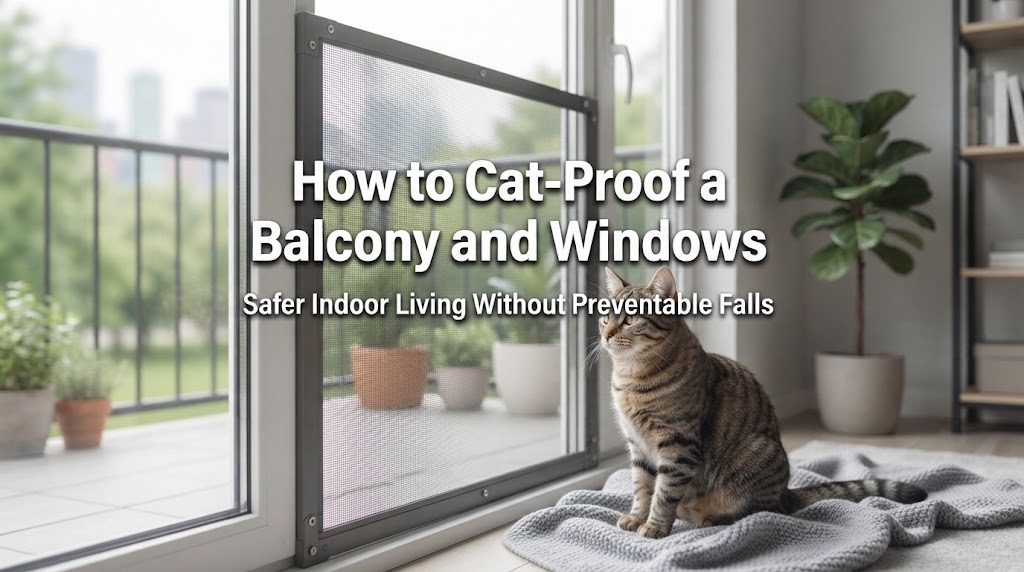
Cats are skilled climbers, but balance and reflexes do not make open windows or balconies automatically safe. A bird, insect, loud noise, slippery rail or failing screen can turn a familiar perch into a fall or escape. Ordinary insect screens may be designed to keep bugs out, not to hold a cat's weight. Safe access requires physical containment, not confidence that the cat “has never jumped before.”
Quick Answer
Treat every open window, balcony gap and loose screen as an escape or fall route. Use sturdy securely attached pet-appropriate screening or a fully enclosed catio system, inspect fasteners regularly and remove furniture that creates access to unsafe rails. Do not rely on supervision alone for an unenclosed high balcony. If a cat falls—even if it walks away—seek veterinary advice because internal injuries may not be obvious.
Where Indoor Fall and Escape Risks Hide
Loose or lightweight window screens
A cat leaning, climbing or launching at an insect can pop an unsecured screen from its frame. Check both the mesh and the frame attachment.
Tilted and partially open windows
Certain window designs create gaps in which a cat can become trapped. Restrict openings so the cat cannot enter a narrowing space or force the window farther open.
Balcony rail gaps
A cat can squeeze through surprisingly small spaces or attempt to walk along rails. Mesh must cover gaps from floor to a secure upper boundary without climbable exits.
Furniture near edges
Tables, planters and chairs can become launch points toward a rail or open window. Rearranging the space can remove tempting routes.
Doors used by visitors
Balcony safety includes access management. Guests may open a door and leave it open, so household rules and secondary barriers are useful.
A Room-by-Room Safety Check
Inspect from the cat's point of view, including places above your normal eye level.
- Test every window screen for movement and weak frame attachment without applying unsafe force.
- Measure openings and rail gaps; close or securely cover any space the cat could enter.
- Remove furniture and planters that provide a route to an unenclosed edge.
- If using a balcony enclosure or catio, check roof, corners, doors and attachment points as well as side mesh.
- Use door closers, gates or a two-door routine when exterior access is frequently opened.
- Inspect the setup after storms, maintenance work or moving furniture.
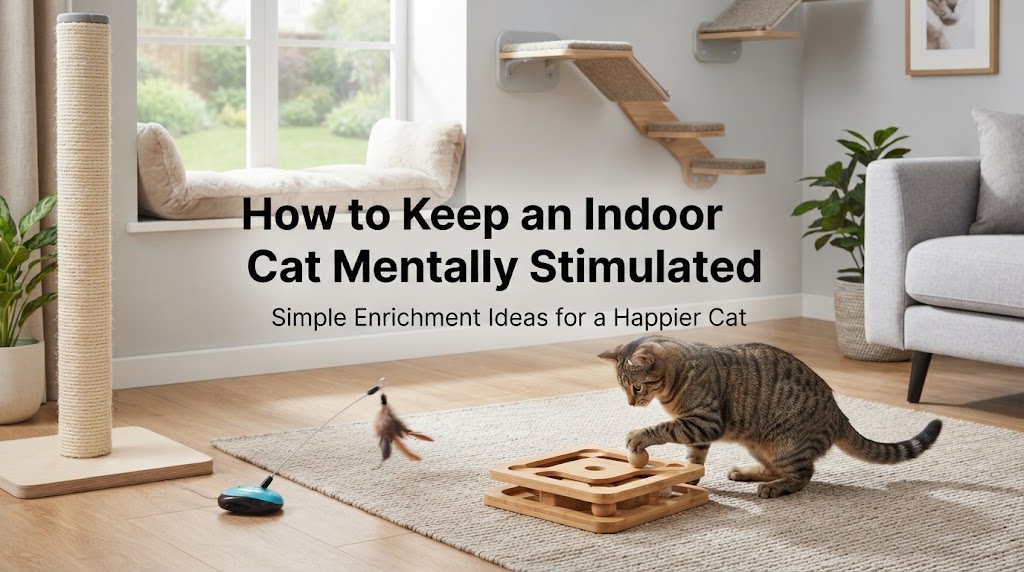
- Provide a safe indoor window perch so visual enrichment remains available without an open escape route.
Features of a Safer Enclosure
Containment should resist pushing, climbing and routine weather exposure.
- No reachable gap around the frame or floor edge.
- Secure attachment points that cannot be nudged loose by a cat.
- Mesh or material appropriate for animal containment, not just insects.
- A secure roof or upper barrier where climbing could lead out.
- A door that closes reliably and is not accidentally left ajar.
- Shade, water and temperature protection if the cat spends time in an enclosed outdoor area.
Common Assumptions vs. Safer Practice
Experience without an accident is not the same as a physical safety barrier.
| Assumption | Safer Practice |
|---|---|
| My cat has good balance | Use secure containment anyway |
| I will supervise from inside | Fully enclose high-risk balcony access |
| The insect screen looks strong | Confirm pet-resistant secure attachment |
| The cat never chases birds | Plan for sudden prey or startle behavior |
| The window is only slightly open | Block any gap the cat can enter |
Common Mistakes to Avoid
Do not tether a cat unattended on a balcony, rely on a collar tied to furniture, assume a standard insect screen can bear a cat's weight, or leave dangerous gaps because the cat is “too big” to fit. Avoid toxic balcony plants and unsecured heavy pots that can fall.
What to Do After a Fall or Escape
After any significant fall, contact a veterinarian even if the cat initially walks normally; chest, abdominal or orthopedic injuries can be hidden. If a cat escapes, search nearby hiding places first, keep doors and familiar scent access points controlled, and use local lost-pet resources rather than chasing a frightened cat.
Related Virixoo Guides
For safer indoor activity, see How to Keep an Indoor Cat Mentally Stimulated. If your cat spends hours at the window, read Why Does My Cat Sit in the Window?.
Inspect the Setup Like a Cat Would Use It
A visual check from the floor misses climbing routes. Look for horizontal bars, mesh edges, shelves, pipes and furniture that allow the cat to reach the top of an enclosure. Push gently on screen frames and gate latches to identify looseness before the cat does. Check corners where two materials meet; small gaps often appear there as buildings shift or fasteners loosen. Repeat the inspection periodically because weather, cleaning and normal use can weaken a once-secure installation.
Comfort Is Part of Balcony Safety
A fully enclosed balcony can still become dangerous if it overheats. Provide shade, fresh water and the ability to return indoors freely whenever the space is used. Avoid leaving a cat confined outside while you are away. Choose non-toxic plants and secure pots so they cannot tip or fall. If the balcony is too difficult to enclose reliably, a protected indoor window perch can provide visual stimulation without the fall risk.
Recheck After Any Home Repair
Window replacement, painting, air-conditioner service and balcony maintenance can temporarily remove screens or leave latches unsecured. Keep the cat in a closed safe room until the work is complete, then repeat the safety inspection before restoring access. A previously cat-proof area can become unsafe after one small hardware change.
Bottom Line
Balcony and window safety should be engineered, not assumed. Secure the physical openings, remove launch routes and preserve the view through a genuinely contained setup.