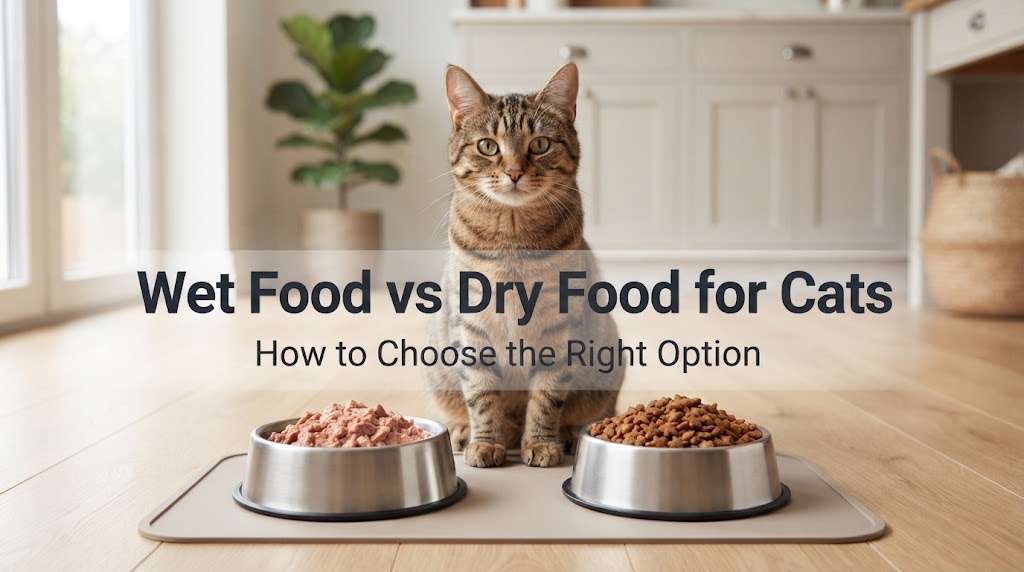
The wet-versus-dry debate often turns a flexible nutrition question into an all-or-nothing argument. Cats need a complete and balanced diet appropriate for life stage and health; both wet and dry commercial foods can meet that requirement. The formats differ in moisture, calorie density, storage, texture and feeding convenience. For many households, the best answer is the format—or combination—that supports hydration, healthy body weight, reliable intake and any medical goals set by the veterinarian.
Quick Answer
Choose a food labeled complete and balanced for your cat's life stage and compare calories, not just serving volume. Wet food provides substantially more dietary moisture and can make portion volume larger for a given calorie amount. Dry food is convenient for puzzles and timed feeders and can be safely used when appropriately formulated and portioned. Cats with urinary, kidney, diabetes, obesity or other conditions may benefit from specific diet characteristics, so medical needs should override generic internet rules.
The Real Differences Between Wet and Dry Food
Moisture
Wet foods contain much more water, which increases total water intake through meals. This can be useful for cats that naturally drink little or for some medical plans where increased moisture is desirable.
Calorie density and portion control
Dry food usually packs more calories into a small volume. Free-pouring can therefore add calories quickly. Wet food often has lower calorie density by volume, but portion control is still necessary.
Nutrition depends on formulation, not format alone
Protein, fat, carbohydrate, mineral levels and nutrient quality vary among individual products. You cannot infer the full nutritional profile solely from whether a food is canned or dry.
Convenience and feeding style
Dry food works well in many puzzle feeders and can remain palatable in a bowl longer. Wet food requires refrigeration after opening and should not be left at room temperature for long periods.
Individual preference and health
Some cats strongly prefer one texture. Dental disease may alter comfortable food texture, while urinary or kidney conditions may make moisture especially relevant. A veterinarian can help match diet to the individual.
How to Choose a Format for Your Cat
Start with the cat rather than with a rule from social media.
- Confirm the food is complete and balanced for the appropriate life stage.
- Compare calories per serving and estimate how the format fits the daily calorie target.
- Consider current water intake, urine health and any veterinarian-directed hydration goal.
- Think about feeding logistics: multi-cat access, timed feeders, food puzzles and storage.
- Respect texture preference while introducing new formats gradually.
- If combining wet and dry food, calculate both parts together so the total daily calories stay appropriate.
Questions Worth Asking About Any Food
The label and the cat's response matter more than marketing language.
- Is it complete and balanced for this life stage?
- How many calories are in the actual portion you feed?
- Does the cat maintain an ideal body condition on it?
- Is stool quality and appetite stable?
- Does a medical diagnosis require a therapeutic diet or specific nutrient profile?
Wet and Dry at a Glance
Neither column automatically wins every category.
| Feature | Wet Food | Dry Food |
|---|---|---|
| Moisture | High | Low |
| Calories per volume | Often lower | Often higher |
| Puzzle-feeder use | Some options | Very convenient |
| After-opening storage | Refrigeration often needed | Simple dry storage |
| Palatability/texture | Soft, aromatic | Crunchy/dry |
| Best medical choice | Depends on condition | Depends on condition |
Common Mistakes to Avoid
Do not assume all dry food causes disease or all wet food is automatically low calorie. Avoid changing a therapeutic diet without veterinary input. Do not leave wet food out for long periods in warm conditions, and do not free-pour dry food when your cat is gaining weight.
When Health Should Decide the Diet
Cats with urinary disease, chronic kidney disease, diabetes, obesity, food allergy, gastrointestinal disease, dental pain or other medical conditions may need a specific formulation rather than a general wet-or-dry recommendation. Discuss the full diet—including treats—with your veterinarian.
Related Virixoo Guides
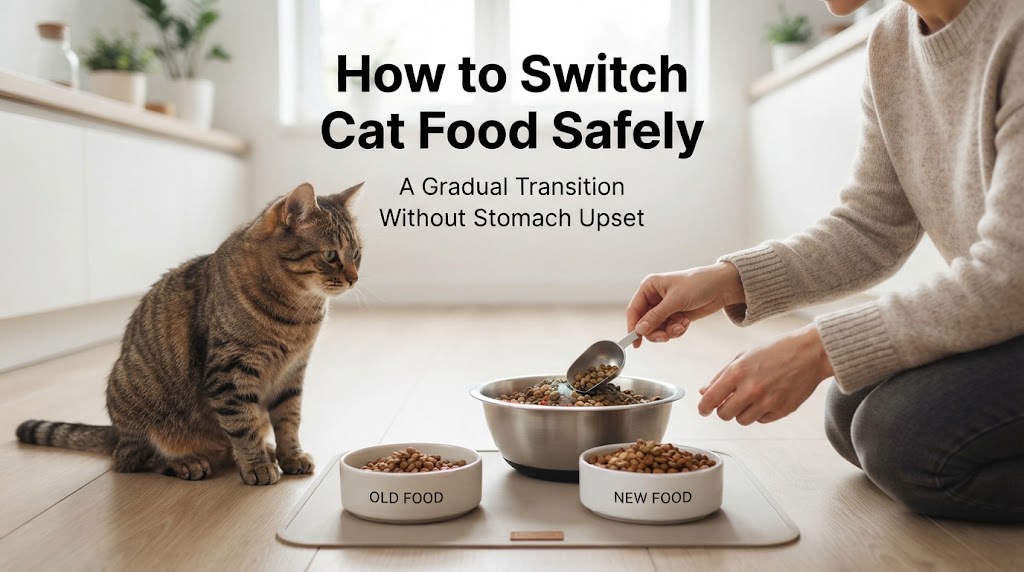
For portions, read How Much Should I Feed My Cat?. For hydration strategies, see How to Get Your Cat to Drink More Water. For gradual diet changes, use How to Switch Cat Food Safely.
Mixed Feeding Can Be a Deliberate Plan
Some owners use wet food for moisture and meal satisfaction while reserving a measured amount of dry food for puzzle feeders or timed meals. This can work well when the total calories and nutrient needs are calculated together. The common mistake is to feed a full wet-food ration and then add a full dry-food ration on top. Decide what proportion each format contributes and measure both. If one food is therapeutic, ask the prescribing veterinarian whether mixing another product would undermine the medical goal.
What About Dental Health?
Ordinary dry kibble should not be treated as a replacement for tooth brushing or veterinary dental care. Some specially formulated dental diets are designed and tested for oral-health effects, but a generic crunchy texture does not guarantee clean teeth. Choose food primarily for complete nutrition and the cat's individual needs, then address dental care with evidence-based home and veterinary strategies.
Read the Exact Product, Not the Category
When comparing two foods, use the manufacturer information for calories and nutritional adequacy rather than assumptions about all canned or all dry diets. Product formulations change, serving sizes differ and therapeutic diets may have goals that ordinary foods do not. The useful comparison is between the exact foods your cat would actually eat.
Bottom Line
Wet and dry are delivery formats, not quality grades. Choose a nutritionally complete food that fits hydration, calorie, preference and medical needs, and measure the total amount you actually feed.