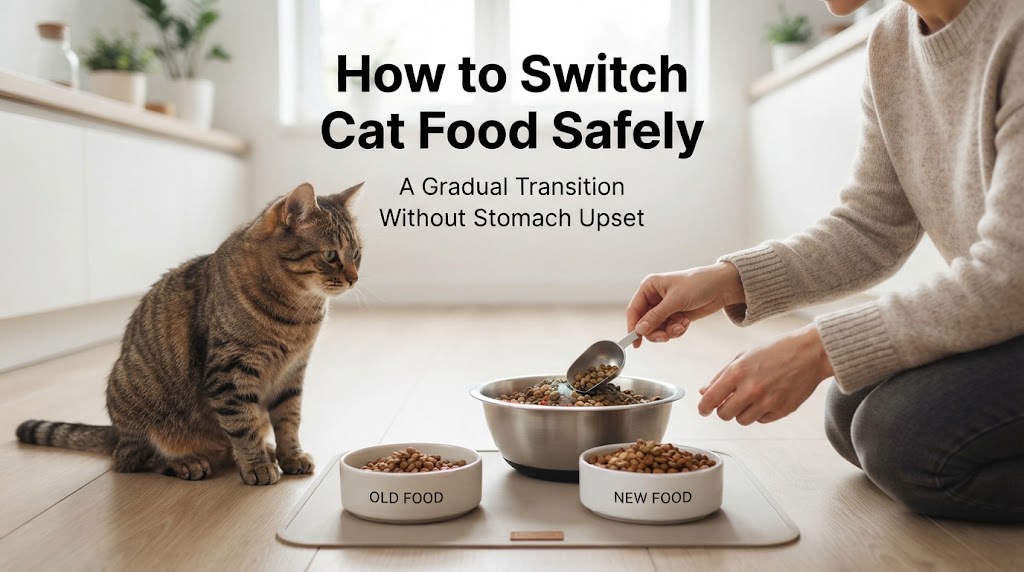
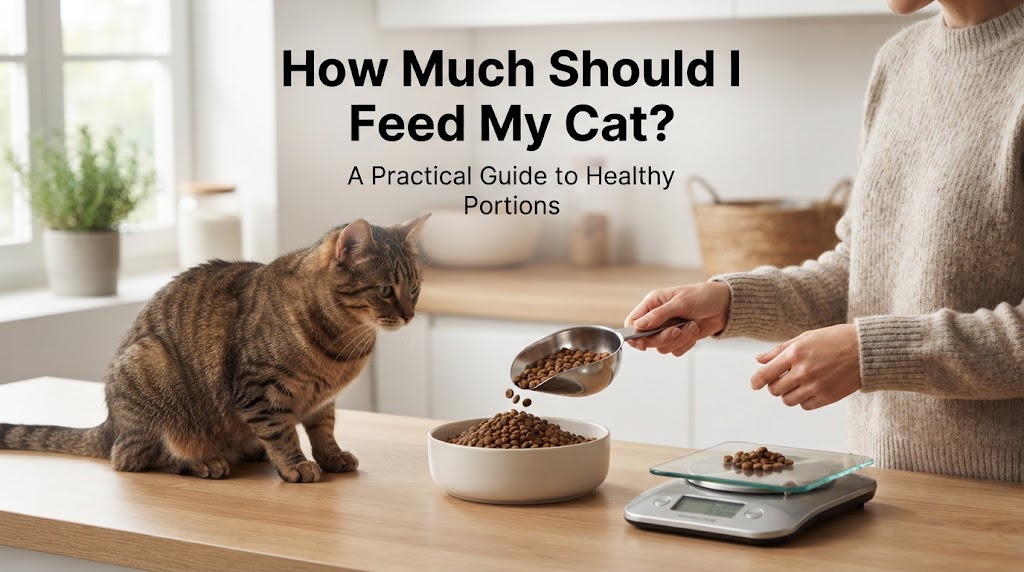
There is no single cup or can amount that is correct for every cat. A kitten, a sedentary indoor adult, an active young cat and a senior with a medical condition can have very different energy needs even when they weigh the same. Food also varies widely in calories per cup, pouch or can. A practical feeding plan therefore combines the food's calorie information with your cat's body condition, life stage, health and weight trend.
Quick Answer
Start with the calorie and feeding information on a complete and balanced cat food, but treat it as a starting point rather than a guarantee. Measure the total amount offered each day, including treats. Check body condition and weight regularly, then adjust with veterinary guidance if weight is drifting. Kittens, pregnant or nursing cats, underweight cats and cats with medical conditions need individualized plans. If your cat is overweight, do not crash diet or sharply restrict food without veterinary supervision.
What Determines a Cat's Portion
Calories matter more than container size
Two foods can look similar in the bowl yet contain very different calories. Check the package for kilocalories per cup, can or pouch. Measuring by calories makes it possible to compare foods and to account for treats without guessing from volume alone.
Life stage changes requirements
Growing kittens need more energy and nutrients relative to body size than most adults. Pregnancy, nursing, aging, illness and recovery can also change requirements. Choose a diet intended for the appropriate life stage and ask your veterinarian when needs are unusual.
Body condition is a reality check
The scale tells you total weight, while body condition helps show whether fat stores are too low, ideal or excessive. At an ideal condition, ribs should generally be easy to feel with a light covering and a waist should be visible from above, although coat and body shape can make visual checks harder.
Activity and environment matter
A highly active young cat may use more energy than a quiet indoor cat. Neutering, age and lifestyle can also affect calorie needs. Feeding the same amount for years without checking weight can allow gradual gain or loss to go unnoticed.
Treats and extras count
Treats, table food, dental products and food used for training all contribute calories. Small extras offered by several family members can become a large percentage of the daily intake.
How to Build a Measured Feeding Plan
Use a simple process and change only one variable at a time.
- Weigh your cat or obtain a current veterinary weight and body-condition assessment.
- Identify the exact food and its calorie content per can, pouch, cup or gram.
- Set a daily amount based on the food guidance and your veterinarian's estimate of your cat's needs.
- Divide the daily ration into the number of meals that fits your cat's age, health and household routine.
- Measure treats and training food from the daily calorie budget rather than adding unlimited extras.
- Recheck weight and body condition at regular intervals and adjust gradually when needed.
Make Portions Easier to Control
Small household systems prevent accidental overfeeding.
- Use a kitchen scale for dry food when precise portions are needed.
- Pre-measure the entire day's ration into one container so everyone knows what remains.
- Feed cats separately in multi-cat homes if one steals another's food.
- Use timed or microchip feeders when access control is difficult.
- Keep a written feeding plan on the refrigerator for all family members.
Signs the Current Amount May Need Review
Weight trend and body condition are more useful than begging behavior alone.
| What You Notice | Possible Meaning | Next Step |
|---|---|---|
| Steady ideal weight and condition | Current intake may be appropriate | Continue monitoring |
| Slow weight gain | Calories may exceed needs | Review portions and treats |
| Weight loss despite eating | Medical problem or insufficient intake possible | Veterinary assessment |
| Constant begging but weight stable | Behavior/routine may contribute | Use enrichment and measured meals |
| Kitten not growing appropriately | Growth needs or health issue | Veterinary review |
Common Mistakes to Avoid
Do not copy another cat's portion, estimate food by eye when weight control matters, or let multiple people add treats without tracking them. Avoid assuming the package's maximum recommendation is automatically right for an indoor cat. Most importantly, do not use severe calorie restriction to make an overweight cat lose weight quickly; rapid weight loss can be dangerous for cats.
When to Ask Your Veterinarian for a Feeding Target
Get an individualized plan if your cat is overweight, underweight, a growing kitten, pregnant or nursing, senior, diabetic, has kidney or urinary disease, or is losing weight unexpectedly. A veterinarian can estimate an ideal weight, choose a safe calorie target and recommend how quickly any weight change should occur.
Related Virixoo Guides
If your cat seems unusually food-focused, read Why Is My Cat Always Hungry?. For weight reduction, continue with How to Help an Overweight Cat Lose Weight Safely. For food-format choices, see Wet Food vs Dry Food for Cats.
Use Weight Trends Instead of Daily Begging
Begging is not a calorie calculator. Cats may ask for food because a routine has been reinforced, because a person has entered the kitchen, or because eating is one of the most predictable events in the day. If body weight and condition are appropriate, respond to some food-seeking with play, attention or a small portion of the measured daily ration rather than continually increasing total intake. Conversely, a cat that suddenly becomes much hungrier while losing weight needs a health assessment rather than simply a larger bowl.
Multi-Cat Feeding Needs Individual Data
When cats share food freely, it is difficult to know who ate what. One cat may gain weight while another quietly loses it. Separate feeding rooms, timed feeders or microchip-controlled feeders can make portions measurable. Watch each cat eat often enough to notice chewing changes or appetite loss. The household food total can look unchanged even when one cat's individual intake has shifted substantially.
Bottom Line
The right portion is the amount that meets nutritional needs while maintaining an appropriate body condition. Measure the food, count extras and let weight trend—not the size of the scoop—guide adjustments.