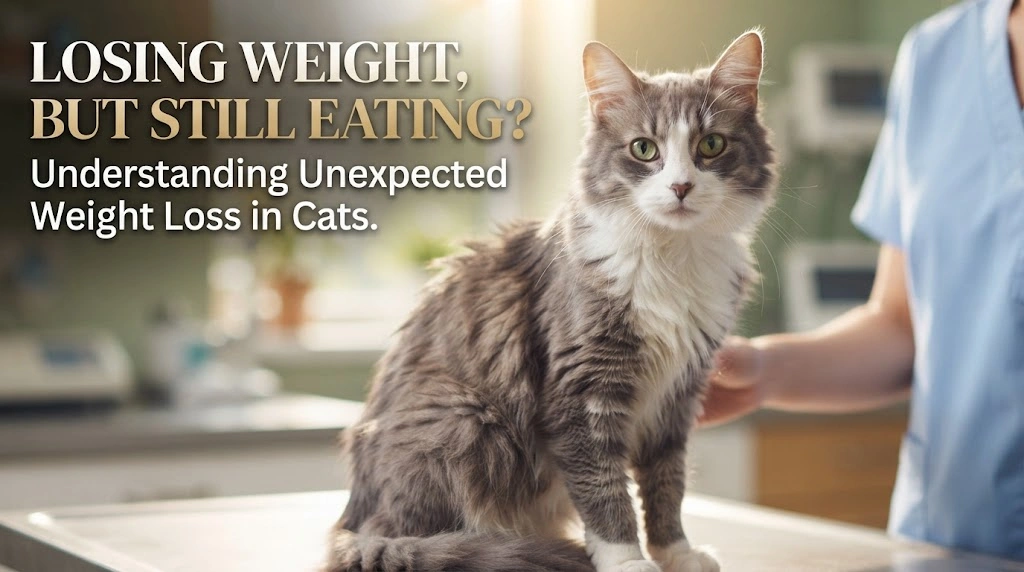
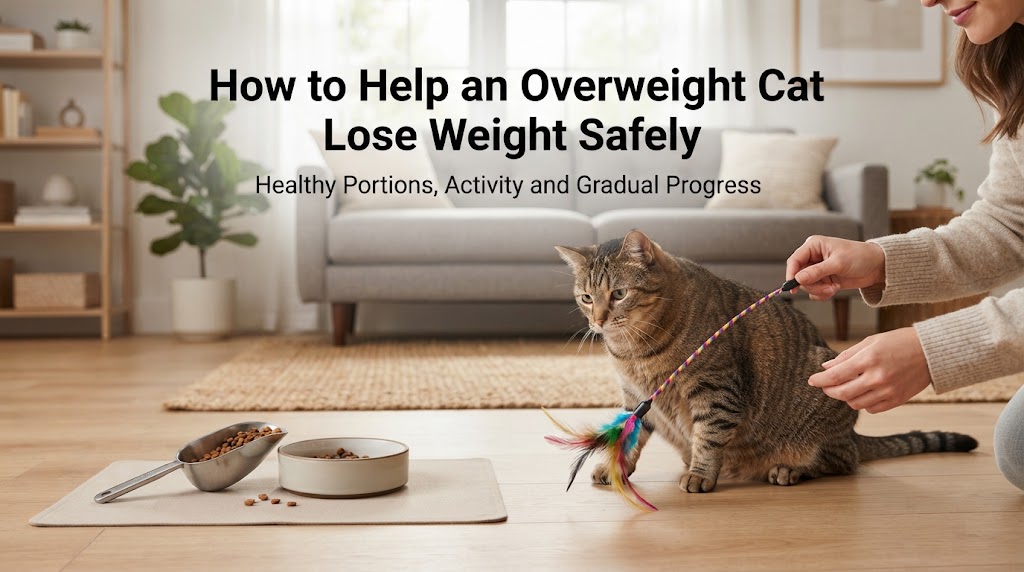
Weight loss in cats should be deliberate and gradual. Simply cutting a bowl in half or withholding food can create nutritional deficiencies and, in overweight cats that stop eating, increase the risk of hepatic lipidosis. A safer program starts by confirming that excess body fat is actually present, estimating an ideal weight, choosing an appropriate complete diet and setting a calorie target with a veterinarian. Progress is then measured in trends rather than daily fluctuations.
Quick Answer
Schedule a veterinary assessment before a major weight-loss program, especially if your cat has other health problems. Measure every meal and treat, feed a nutritionally complete diet in an amount designed for controlled loss, and weigh the cat regularly. Increase activity with short play and food-search tasks. Never use starvation or a severe sudden calorie cut. If an overweight cat stops eating, contact a veterinarian promptly.
Why Safe Feline Weight Loss Needs a Plan
Body condition comes before the target
A scale number alone does not define obesity because frame size and muscle mass vary. Body-condition scoring helps estimate excess fat and gives a more meaningful target.
Calories must fall without losing essential nutrition
A properly formulated weight-management diet can provide necessary vitamins, minerals, amino acids and protein within a lower calorie allowance. Randomly feeding tiny portions of a calorie-dense maintenance food may make nutrient balance harder.
Cats should lose weight gradually
Slow controlled loss helps protect health and allows muscle and behavior to be monitored. The veterinarian may set a weekly percentage target based on the individual cat.
Exercise helps, but food intake still matters
Play, climbing and food puzzles increase activity and quality of life, but they do not make unlimited calories disappear. Weight plans work best when intake and activity are addressed together.
Multi-cat homes need access control
One dieting cat can quietly eat from another bowl and appear not to lose weight. Separate meals or microchip feeders make intake measurable.
A Safe Weight-Loss Workflow
Treat the plan like a measured health project, not a punishment.
- Ask the veterinarian to confirm current weight, body condition, ideal target and whether testing is needed before dieting.
- Choose the recommended diet and calculate the exact daily amount from its calorie content.
- Measure the entire daily ration, including treats, rather than refilling by eye.
- Divide food into several meals or puzzles if that improves behavior and appetite.
- Use brief interactive play suited to the cat's mobility and gradually increase activity.
- Weigh on the same scale at regular intervals and record the trend.
- Adjust only with a reason; if loss is too fast, too slow or appetite falls, contact the veterinarian.
Make the Household Support the Plan
Most weight-loss failures are measurement or access problems, not a cat “breaking the diet.”
- Ask everyone to use food from the measured daily ration for treats.
- Feed pets separately.
- Store food where the cat cannot self-serve.
- Use non-food attention such as play or grooming as rewards when appropriate.
- Place climbing and resting resources so movement is comfortable rather than forced.
Healthy Progress vs. Warning Signs
Weight loss should improve health without sacrificing appetite or energy.
| What You See | Interpretation | Action |
|---|---|---|
| Slow steady loss, cat eats normally | Plan likely on track | Continue monitoring |
| No change for several checks | Calories/access may need review | Recalculate with vet |
| Rapid loss | Plan may be too aggressive or disease present | Veterinary review |
| Refuses food | Potential health risk | Contact veterinarian promptly |
| Weakness or vomiting | Not normal dieting | Veterinary assessment |
Common Mistakes to Avoid
Do not skip meals for days, use human weight-loss products, make an abrupt extreme calorie reduction or rely on exercise alone. Avoid replacing a balanced meal with large amounts of low-calorie treats or vegetables unless a veterinary nutrition plan specifically includes them.
When Veterinary Supervision Is Essential
All substantial feline weight-loss plans benefit from veterinary input, and supervision is especially important for cats with diabetes, urinary disease, arthritis, kidney disease, gastrointestinal problems or a history of not eating. An overweight cat that stops eating is not “doing well on the diet”; it needs prompt assessment.
Related Virixoo Guides
Start with How Much Should I Feed My Cat?. For exercise and food puzzles, see How to Keep an Indoor Cat Mentally Stimulated.
Measure More Than Body Weight
During weight loss, record body weight, body condition, appetite, activity and muscle condition. A number on the scale can fall because of fat loss, muscle loss, dehydration or illness, so the whole trend matters. Take monthly top and side photographs from the same distance if that helps visualize body shape. Your veterinarian may also track muscle over the spine and shoulders, particularly in older cats, because preserving lean tissue is part of a healthy plan.
Use Food-Seeking Behavior Productively
A dieting cat does not have to receive every calorie in a bowl. Divide part of the measured ration among puzzle feeders, simple search games or several small meals. This increases opportunities to work for food without adding calories. Start puzzles easy and make them harder only when the cat succeeds. The objective is engagement, not frustration or delaying access so long that the cat skips needed intake.
Plan for Plateaus
Weight loss may slow as body size and energy needs change. A plateau is a reason to recheck measurements, treats, access to other pets' food and the current calorie target—not to make an abrupt severe cut. Bring the weight record to follow-up visits so adjustments are based on data rather than frustration.
Bottom Line
Safe weight loss is measured, gradual and nutritionally complete. Set the target with your veterinarian, control all calories, protect appetite and judge progress over weeks rather than trying to make the scale drop quickly.