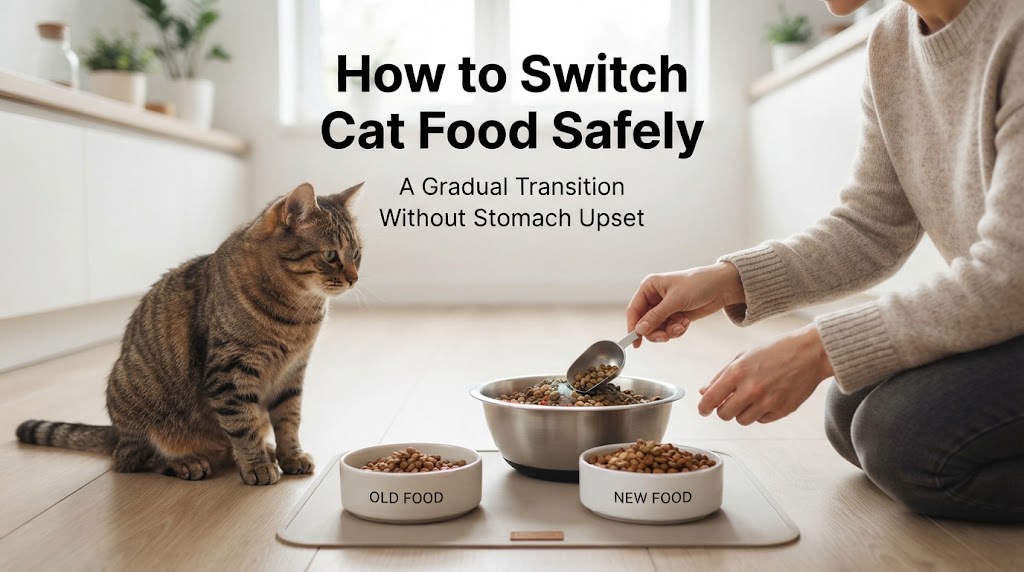
Cats can be sensitive to changes in flavor, texture, smell and routine. An abrupt food switch can lead to refusal, vomiting or loose stool in some cats, while a cat that has eaten one texture for years may reject a new one even when hungry. A gradual transition lets the digestive system and the cat's preferences adjust together. The exception is when a veterinarian gives different instructions because of illness or a therapeutic diet.
Quick Answer
For a healthy cat making an elective diet change, mix a small amount of the new food into the familiar food and increase it gradually over roughly a week or longer if needed. Watch appetite, vomiting and stool. Do not try to “wait out” a cat that stops eating; cats can become seriously ill after sustained food refusal. If the new food was prescribed for a medical condition, follow your veterinarian's transition plan rather than a generic schedule.
Why Food Changes Can Be Difficult
Cats notice texture as well as flavor
A cat accustomed to pâté may reject chunks, while a dry-food eater may be suspicious of wet texture. Temperature, bowl shape and smell can also affect acceptance. A successful change may require adjusting format as well as ingredients.
The gut needs time to adapt
Changing ingredients and nutrient composition suddenly can alter digestion and stool. A slower transition makes it easier to identify whether a problem is truly linked to the new food.
Food refusal is more serious in cats
A cat that refuses meals should not be managed by repeatedly withholding all alternatives until it gives in. Prolonged inadequate intake can lead to serious metabolic complications, particularly in overweight cats.
Medical diets are different
A therapeutic urinary, kidney, allergy, gastrointestinal or diabetes diet has a specific purpose. Timing and strictness may matter, so ask the prescribing veterinarian how to transition and whether the old food can be mixed.
Too many changes hide the cause
Switching brand, protein, treats and feeding schedule simultaneously makes it difficult to know what caused diarrhea or refusal. Change one major variable at a time when possible.
A Gradual Food Transition
The exact speed can be adjusted to the individual cat and veterinary instructions.
- Days 1–2: offer mostly the familiar diet with a small amount of the new food.
- Days 3–4: increase the new food if appetite and stool remain normal.
- Days 5–6: move toward mostly new food while keeping the total daily calories appropriate.
- Day 7 and beyond: complete the transition if the cat is eating normally and digestion is stable.
- If the cat becomes reluctant, slow down rather than immediately increasing the new proportion.
- Stop the experiment and contact your veterinarian if the cat stops eating, repeatedly vomits, develops significant diarrhea or becomes unwell.
Improve Acceptance Without Creating Bad Habits
Small presentation changes can make a new diet easier to investigate.
- Offer food in a clean bowl away from litter boxes and heavy traffic.
- Serve wet food at a comfortable temperature so aroma is noticeable, without overheating it.
- Keep meal times predictable.
- Avoid adding many high-calorie toppers that unbalance the diet or teach the cat to wait for extras.
- In multi-cat homes, feed separately so you know which cat ate which food.
When to Slow Down or Call the Vet
Mild hesitation and illness are not the same thing.
| Response | What to Do |
|---|---|
| Sniffs new food, eats old food | Use a slower transition |
| Mild brief stool softening, otherwise normal | Hold at current ratio and monitor |
| Repeated diarrhea or vomiting | Stop changing and contact vet |
| Refuses all food | Veterinary advice promptly |
| Therapeutic diet rejected | Contact prescribing vet for alternatives |
Common Mistakes to Avoid
Do not force-feed an unwilling cat without veterinary instruction, starve a cat into accepting a new diet, add onion, garlic, salty broth or random human foods to improve flavor, or switch through several diets in rapid succession. Avoid interpreting a single successful bite as proof that the transition is complete.
When a Diet Change Needs Veterinary Guidance
Ask for help when the diet change is being made for urinary disease, kidney disease, diabetes, food allergy, obesity, gastrointestinal disease or another medical condition. Contact your veterinarian promptly if the cat refuses food, loses weight, repeatedly vomits or has persistent diarrhea.
Related Virixoo Guides
For general portions, see How Much Should I Feed My Cat?. If your cat will not eat, read Why Is My Cat Not Eating?. For loose stool, see Why Does My Cat Have Diarrhea?.
Texture Transitions Can Need Their Own Strategy
Moving from one kibble to another is different from asking a dry-food-preferring cat to accept pâté. For a texture change, offer a tiny separate sample alongside the familiar meal before mixing everything together. Some cats accept gradual changes in moisture, temperature or texture better than a sudden blend. Never make the familiar food inaccessible for so long that the cat goes without adequate calories. The goal is voluntary acceptance, not proving that hunger will eventually win.
Keep a Transition Log
Write down the proportion of new food, appetite, vomiting and stool quality each day. If a problem appears, the log tells you exactly where the transition was when signs began. It also prevents several family members from advancing the ratio at different speeds. For a cat with a sensitive stomach, this simple record can be more useful than relying on a vague memory that “we switched sometime last week.”
Bottom Line
A good transition protects both digestion and appetite. Move slowly, keep the total diet measured and treat sustained food refusal as a health concern rather than a battle of wills.