
Dogs
8 min read
Pale Gums in Dogs: A Home Check That Can Signal an Emergency
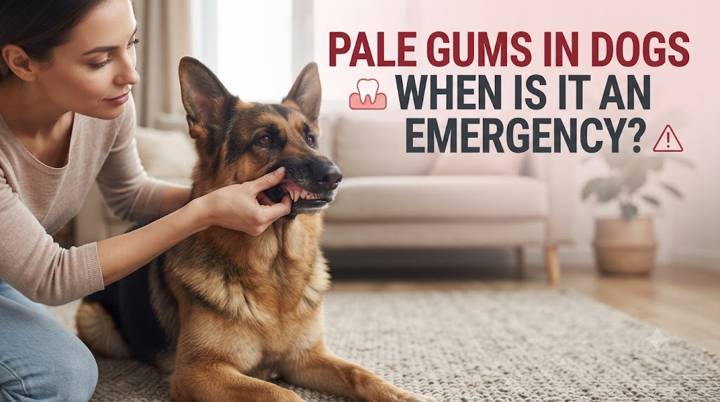
Learn what pale gums can mean in dogs, how to compare gum color safely with your dog's normal baseline, and which accompanying signs require urgent...
Browse 140 Virixoo dog health guides, organized to help you move between closely related questions.
Learn what pale gums can mean in dogs, how to compare gum color safely with your dog's normal baseline, and which accompanying signs require urgent...

Repeated licking at the tail base often points to fleas, allergy, skin infection, or irritation around the rear end. Learn what to check and when v...

Nighttime crying can be related to pain, gastrointestinal or urinary needs, anxiety, cognitive changes, or another problem that interrupts sleep.

Learn what to do when a dog splits or cracks a toenail, how to control minor bleeding safely, and when damage to the quick or nail bed needs veteri...

A suddenly limp tail can follow muscle strain or limber tail, but trauma, spinal pain, and neurologic problems can look similar. Learn the warning...

Dogs may wake panting because they are warm, excited from a dream, anxious, painful, or affected by a medical problem. Repeated unexplained nightti...
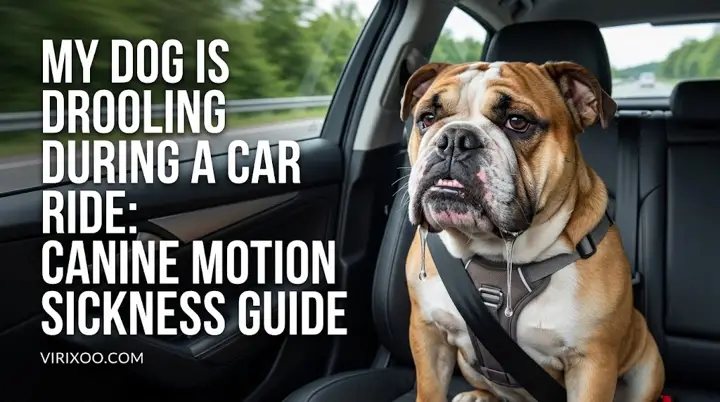
Car-only drooling commonly accompanies motion sickness, nausea, stress, or anticipation and is especially informative when it starts soon after tra...
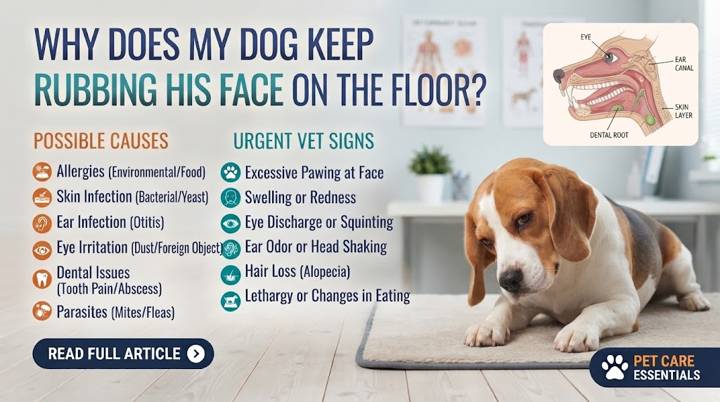
Repeated face rubbing can reflect eye irritation, ear discomfort, dental or mouth pain, allergies, skin irritation, or something stuck around the f...

Sudden refusal to jump into the car can reveal joint, paw, muscle, or back pain, poor traction, fear after a bad experience, or reduced confidence...

A red eyelid bump can arise from an inflamed gland, cyst, infection, irritation, or eyelid mass; rubbing and corneal irritation make examination mo...

Learn why a dog may repeatedly remain standing or sitting instead of lying down, and how pain, abdominal discomfort, breathing problems, or anxiety...
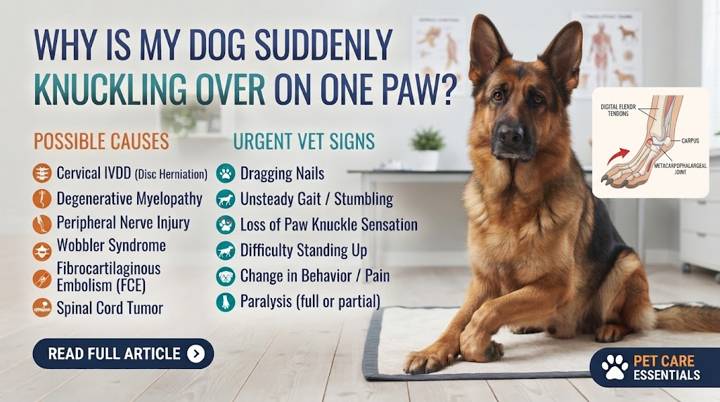
Knuckling—standing or stepping on the top of a paw—can indicate a neurologic, spinal, nerve, orthopedic, or severe weakness problem and deserves pr...

Vomiting after drinking may follow rapid water intake, nausea, stomach disease, heat or exercise, but repeated episodes can quickly lead to dehydra...

A newly lowered head while walking can reflect neck or back pain, weakness, nausea, fear, or a posture used to reduce discomfort.

Urine leakage during sleep can occur with urinary incontinence, urinary tract disease, increased urine production, neurologic problems, or structur...
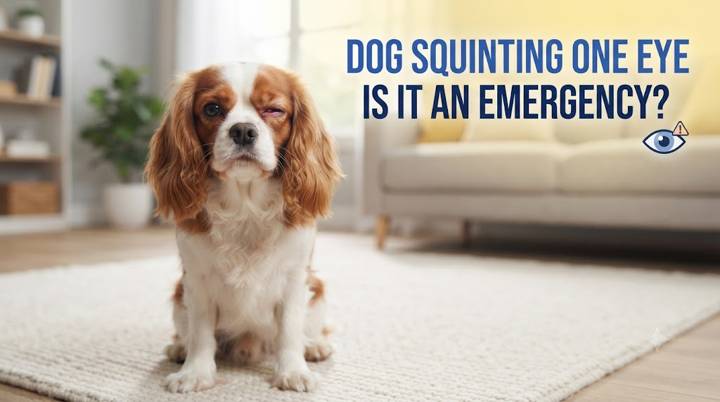
Learn why a dog may suddenly squint one eye, what you can check safely at home, why leftover eye drops can be risky, and which eye signs need urgen...
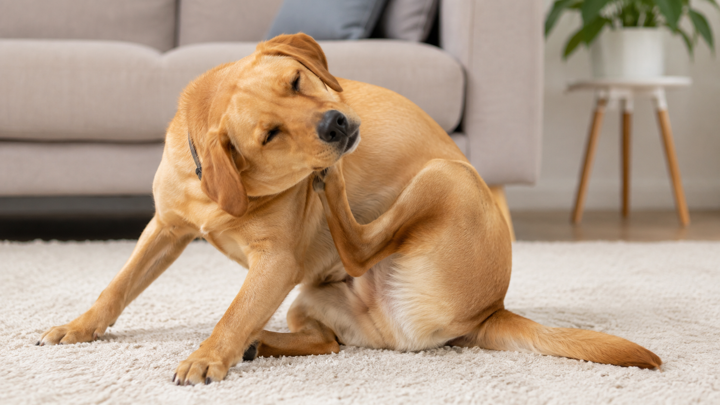
Learn why dogs scratch excessively, how fleas, allergies, infections and irritation differ, what to check safely at home, and when a vet visit is n...
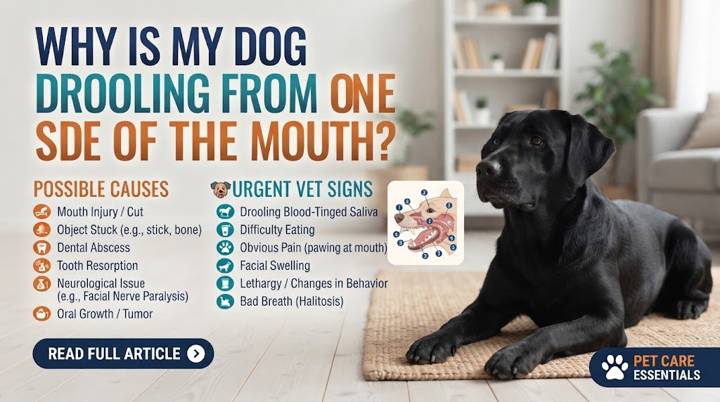
One-sided drooling can point to a local mouth problem, dental pain, a foreign object, oral injury, nausea, or a neurologic problem affecting the face.

Stumbling during tight turns can reveal balance, neurologic, orthopedic, vision, or weakness problems that may be less obvious during straight walk...

Learn what a bump on a dog's eyelid may represent, which changes owners can monitor safely, and when rubbing, bleeding, rapid growth, or eye irrita...

Pawing repeatedly at the face often means something is uncomfortable around the eye, ear, mouth, or skin. The side involved and accompanying signs...
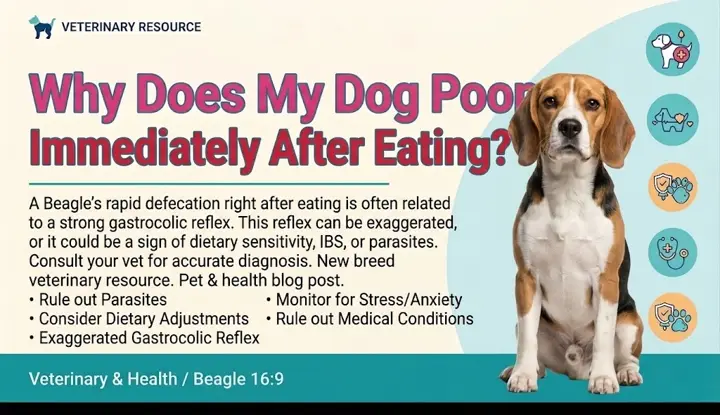
Defecating soon after a meal can reflect the normal gastrocolic response, a learned routine, diet effects, or gastrointestinal irritation when stoo...

Learn how to recognize true lethargy in dogs, common causes, what symptoms to track, what you can do safely, and when low energy needs urgent veter...

Repeated lip licking can be a normal response to food, but it may also accompany nausea, stress, dental pain, mouth irritation, or swallowing disco...