
Mucus in Dog Stool: What the Color, Amount and Other Symptoms Can Tell You
Understand why mucus may appear in dog stool, what stool color and accompanying symptoms can reveal, when monitoring may be reasonable, and when ve...

Browse 140 Virixoo dog health guides, organized to help you move between closely related questions.
Understand why mucus may appear in dog stool, what stool color and accompanying symptoms can reveal, when monitoring may be reasonable, and when ve...

Visible food-like material in stool can follow rapid eating or certain foods, but persistent changes with weight loss or diarrhea may indicate abno...
Repeated stretching soon after meals can be normal, but it may also accompany gas, nausea, abdominal discomfort, or more serious digestive pain.
Stronger urine odor can occur with concentrated urine, diet changes, urinary infection, or contamination, but odor alone cannot diagnose the cause.
Some dogs appear to sleep with partly open eyes during light or REM sleep, but persistent inability to close an eye, redness, discharge, cloudiness...
Inability to fully close one eye can expose the cornea to drying and injury and may be associated with facial nerve dysfunction, trauma, swelling...
Unequal pupils, called anisocoria, can be associated with eye disease, nerve dysfunction, trauma, or neurologic problems and should be assessed pro...
Whining when lowering the head to a bowl can indicate neck, back, shoulder, mouth, or dental pain rather than simple pickiness.
Learn why a dog may suddenly hold the head tilted, how ear pain differs from balance disorders, and which neurologic or vestibular signs need urgen...
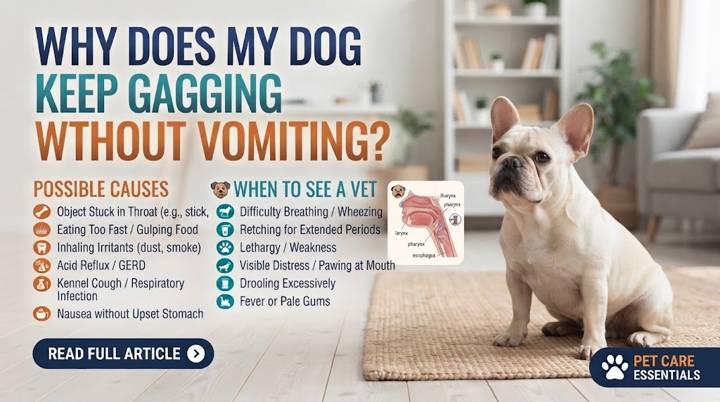
Repeated gagging without producing vomit can come from throat irritation, coughing, a foreign object, nausea, airway disease, or an emergency such...
Learn how to assess a dog's enlarged or bloated abdomen, which patterns may be mild, and which signs such as retching, pain, weakness, or rapid dis...
Digestive sounds can be normal, but persistent loud gurgling may accompany hunger, diet changes, gas, intestinal upset, or other gastrointestinal p...
Focused licking of one front leg can be driven by skin irritation, allergy, a small wound, paw trouble, joint pain, or discomfort deeper in the limb.
A practical guide to reduced water intake in dogs, including safe hydration checks, common reasons a dog may drink less, warning signs of dehydrati...
A dog that briefly avoids one paw after rest may have joint stiffness, a sore pad, nail injury, soft-tissue pain, or an orthopedic problem that eas...
Frequent yawning can be normal around rest, but dogs may also yawn during stress, discomfort, medication effects, or illness[cite: 18].
A repeated chest-down, rear-up stretch can be ordinary stretching, but when persistent it may accompany abdominal discomfort, nausea, back pain, or...
Brief twitching or kicking during sleep is often associated with normal dreaming, but prolonged, violent, or unusual episodes—especially with abnor...
Repeated swallowing without food can come from extra saliva, nausea, mouth or throat irritation, reflux-like discomfort, or true swallowing difficu...
Use a safe step-by-step approach to a swollen dog paw, including what to inspect, common causes such as stings and nail injuries, and warning signs...
Learn why dogs and puppies get hiccups, which everyday triggers are usually harmless, what owners can do safely, and which unusual symptoms need ve...
Crying during the first few steps after rising can point to joint, paw, muscle, or spinal pain that is most noticeable after rest.
Learn why a dog's nose may change from black or brown to lighter shades, how seasonal fading differs from inflamed skin disease, and which nose cha...
Coughing during excitement can be triggered by airway irritation or pressure, but recurrent coughing may also occur with tracheal, lung, or heart d...