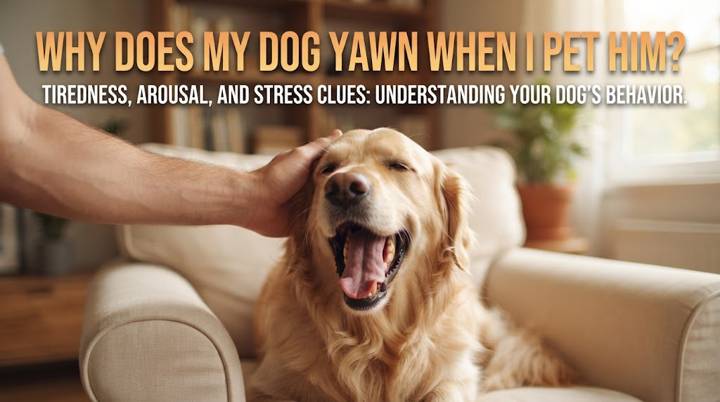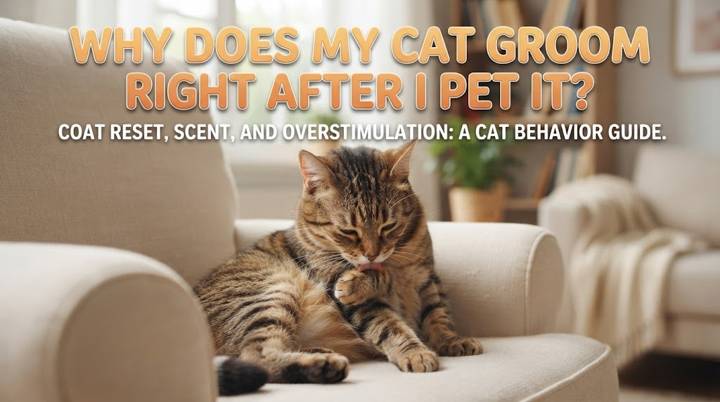
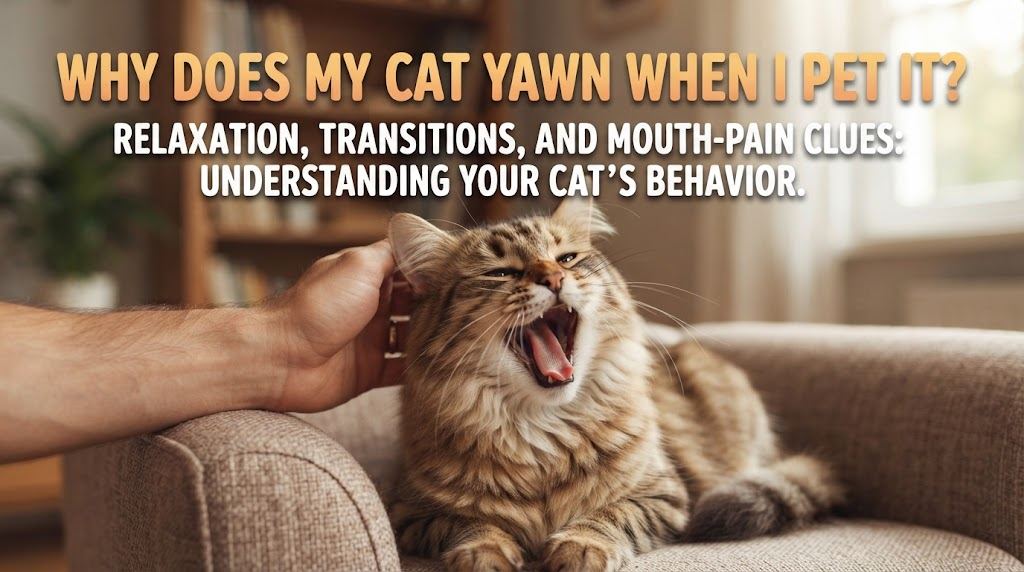
A cat yawning while you stroke its head can look like a clear emotional message, but one yawn is not a reliable translation of how the cat feels. Timing and body language are more useful than the yawn alone.
Quick Answer
A cat may yawn during petting because it is relaxed, waking up, becoming sleepy, or simply transitioning between activities. Do not treat yawning as automatic proof of trust, boredom or stress. Look at the cat's posture, whether it chooses to stay, and whether yawning is occasional or has become frequent and physically uncomfortable.
Read the Whole Interaction
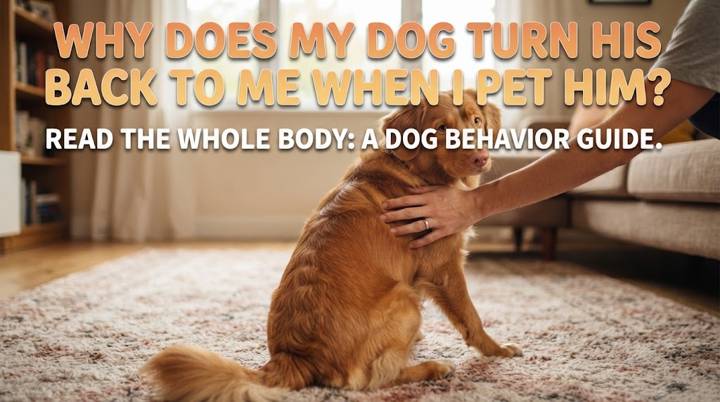
A loose cat that leans into your hand, keeps neutral ears, remains beside you and yawns once is very different from a cat that becomes tense, flicks its tail, turns its head toward your hand or repeatedly moves away. The first pattern is compatible with a calm interaction; the second suggests the cat may be reaching its limit for touch.
Petting Can Happen During a Natural Transition
Cats often stretch, groom, yawn and change position when moving from sleep to wakefulness or from one activity to another. If you pet a resting cat at exactly that moment, the yawn may have more to do with the transition than with your hand.
Use a Simple Consent Pause
After several strokes, stop briefly. If the cat leans toward your hand, rubs against you or remains positioned for more contact, continue gently. If it turns away, leaves, becomes tense or swats, let the interaction end. Respecting those small choices is more useful than trying to decode one isolated yawn.
When Repeated Yawning Becomes an Oral-Health Clue
Frequent yawning can look behavioral when the real issue is discomfort opening the mouth. Dental disease and other oral problems may also cause bad breath, drooling, food dropping, one-sided chewing, pawing at the mouth, reduced grooming or reluctance to eat hard food.
| Pattern | What to do |
|---|---|
| Single yawn during relaxed petting | Usually just observe the rest of the body language |
| Yawning plus tail lashing or tension | Pause petting and give the cat choice |
| Repeated yawning plus bad breath or drooling | Arrange an oral examination |
| Difficulty closing the mouth, major facial swelling or breathing trouble | Seek prompt veterinary care |
Do Not Use the Yawn as a Personality Test
Online interpretations often assign one emotional meaning to a single gesture. Cats communicate through combinations of posture, movement, facial expression, sound, distance and context. A useful interpretation remains flexible rather than declaring that every yawn means the same thing.
Related Virixoo Guides
If your cat becomes defensive during touch, read why cats swat during interaction. If the cat paws at its mouth around meals, see why mouth discomfort may cause pawing. Repeated lip movements after eating are covered in the guide to lip smacking after meals.
Bottom Line
Yawning during petting is usually a context clue, not a diagnosis of emotion. A relaxed cat that yawns once is generally very different from a cat that yawns repeatedly with oral pain signs. Let the whole body and the frequency of the behavior guide your response.