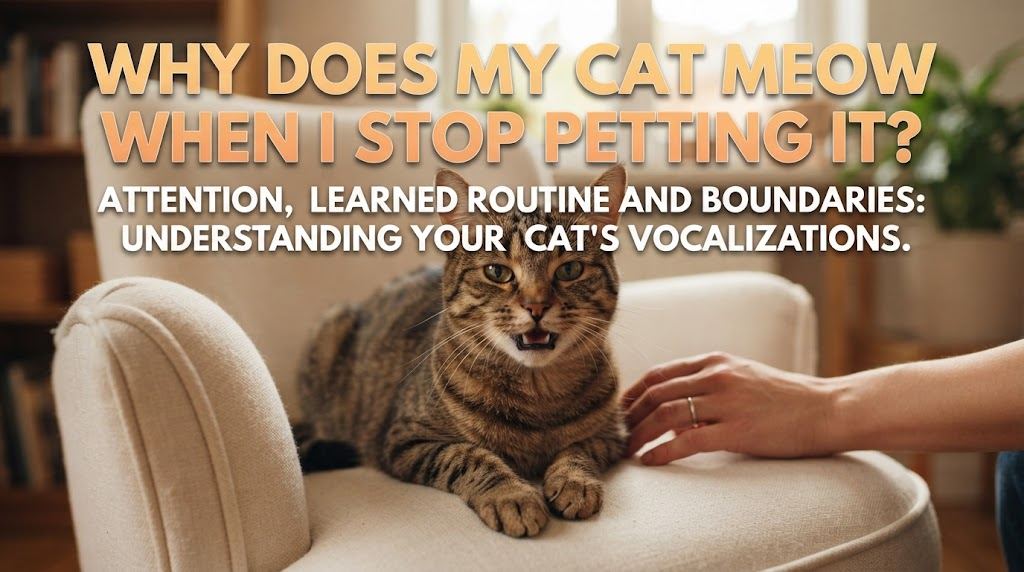
You stop scratching your cat's chin, and a second later the cat looks up and meows. That sequence can be easy to interpret as “keep going,” but the safest reading still comes from the whole interaction.
Quick Answer
A cat may meow when petting stops because it wants more attention, has learned that vocalizing makes your hand start again, or is trying to communicate another need. A relaxed cat that leans back toward you is different from a cat that becomes tense, flicks its tail or bites. Let body language decide whether to continue.
Vocalizing Can Become Part of a Learned Sequence
If meow → petting resumes, the cat has a very clear reason to repeat the meow. This is ordinary learning, not manipulation in a human sense. The behavior becomes especially strong when the response is reliable.
Check What the Cat Does After the Meow
| What the cat does next | What it may suggest |
|---|---|
| Leans into your hand | More contact may be wanted |
| Walks toward a bowl or door | The cat may be asking you to follow |
| Stays close but turns its body away | Social contact may be wanted without more petting |
| Tail lashes, skin twitches or cat bites | The interaction may be becoming overstimulating |
More Petting Is Not Always the Correct Answer
A cat can enjoy attention and still have a short touch tolerance. Purring and meowing do not cancel signs such as tense muscles, rotating ears, skin rippling, tail lashing or a quick head turn toward your hand. If those appear, pause rather than assuming the vocalization means “more.”
Use Short Petting Sessions and Choice
Try several gentle strokes, then stop with your hand nearby. If the cat rubs into your hand or clearly reinitiates contact, continue. If it remains beside you without moving closer, simply share the space. This keeps the cat in control of the interaction.
If the Meowing Is Becoming Demanding
You do not need to punish vocalization. Instead, avoid making every loud meow the fastest route to food or prolonged petting. Provide attention proactively at predictable times, include daily play, and reinforce calm approaches. Consistency matters more than scolding.
When New Vocalization Deserves a Health Check
A cat that suddenly becomes much more vocal, especially a senior cat, should be evaluated in context. Pain, hyperthyroidism, sensory change, cognitive dysfunction and other problems can increase vocalization. Seek veterinary advice when the change is persistent or appears with weight loss, thirst, restlessness, confusion, appetite changes or pain.
Related Virixoo Guides
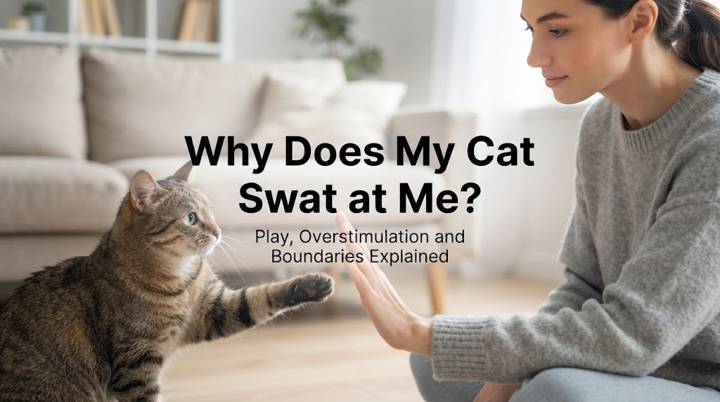
If the cat changes from meowing to striking, read why cats swat during interaction. For broader attention-seeking and companionship, see why cats follow people. If the behavior is mostly visual attention, compare why cats stare at their owners.
Bottom Line
A meow after petting stops often means the cat has learned that vocalization continues an interaction, but it is not a universal request for more touch. Pause, read the whole body, and let the cat show whether it wants petting, proximity or something else.