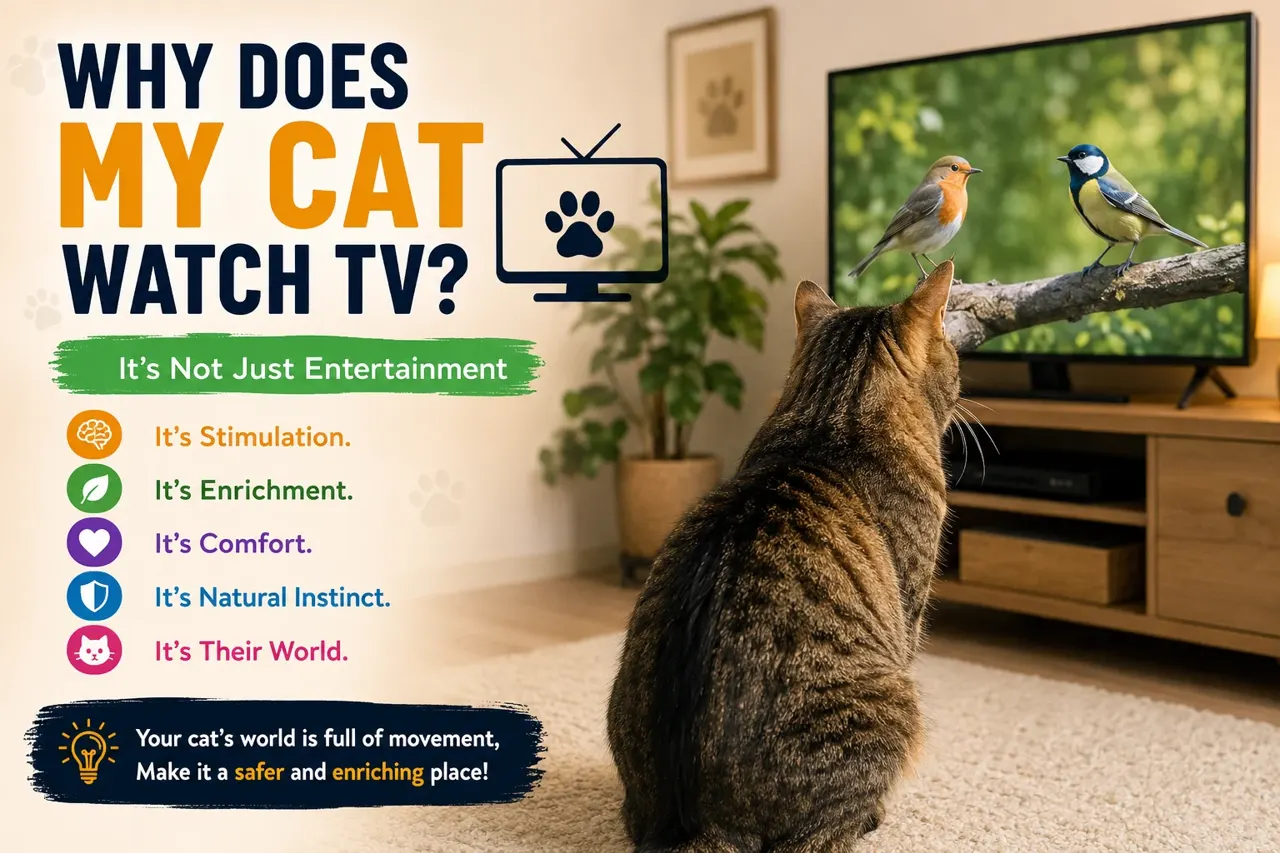
Some cats ignore television completely, while others become fascinated by birds, insects, small animals, or fast-moving shapes on a screen. Visual movement and sound can trigger curiosity and hunting-related attention.
Screen Watching Can Be Enrichment—Up to a Point
Watching television is usually harmless in moderation. Make sure the screen is stable, prevent your cat from knocking equipment over, and remember that screen viewing should supplement—not replace—interactive play and physical enrichment.
What Attracts Cats to Screens?
Small Moving Objects
Bird-like or insect-like movement can capture feline attention.
Sound
Chirps, rustling, and other animal noises may increase interest.
Novelty
A changing screen offers unpredictable visual stimulation.
Individual Preference
Not every cat responds to screens, and lack of interest is completely normal.
Screen Safety
- Secure televisions and monitors against tipping.
- Protect cables from chewing.
- Do not encourage jumping directly onto fragile screens.
- Follow viewing with real interactive play when appropriate.
Screen Habits Worth Watching
Can cats understand television?
Cats can respond to visible movement and sound, but we should not assume they interpret a program the way people do.
Are bird videos good enrichment?
They can provide temporary stimulation for some cats when used safely alongside other enrichment.
Why does my cat look behind the TV?
The cat may be investigating where a moving or sounding target went.
When to Stop
End the session if your cat becomes persistently frustrated, attacks the equipment, or cannot settle afterward.
What makes a screen interesting
Cats are highly responsive to movement, so birds, insects, small animals, and quick changes on a screen can hold attention. The value is usually visual stimulation, not “understanding television” in the human sense. Some cats watch for a few seconds; others stalk the screen or search behind it for the disappearing object.
Make screen play physically safe
Secure televisions and monitors so they cannot tip if a cat paws or jumps toward them. Keep cords inaccessible, move fragile objects away from the screen, and stop the session if the cat becomes frantic, repeatedly crashes into the display, or redirects arousal toward another pet. A tablet on a table is not safe if a cat can knock it to the floor.
Let the cat finish the hunting sequence somewhere real
If screen watching creates intense focus, follow it with a short wand-toy session or another activity the cat can physically catch. Real play provides movement, choice, and a successful “capture” that a screen cannot. Window views, climbing spaces, scent exploration, food puzzles, and social play should remain the core enrichment options.
Related Virixoo Guides
Read why cats sit in windows. Read why cats chirp at birds. Read why cats knock things over.
Use Screens as One Tool, Not the Whole Enrichment Plan
Television can be a small piece of indoor enrichment, but the best feline entertainment still includes real movement, climbing, scratching, exploration, and play.