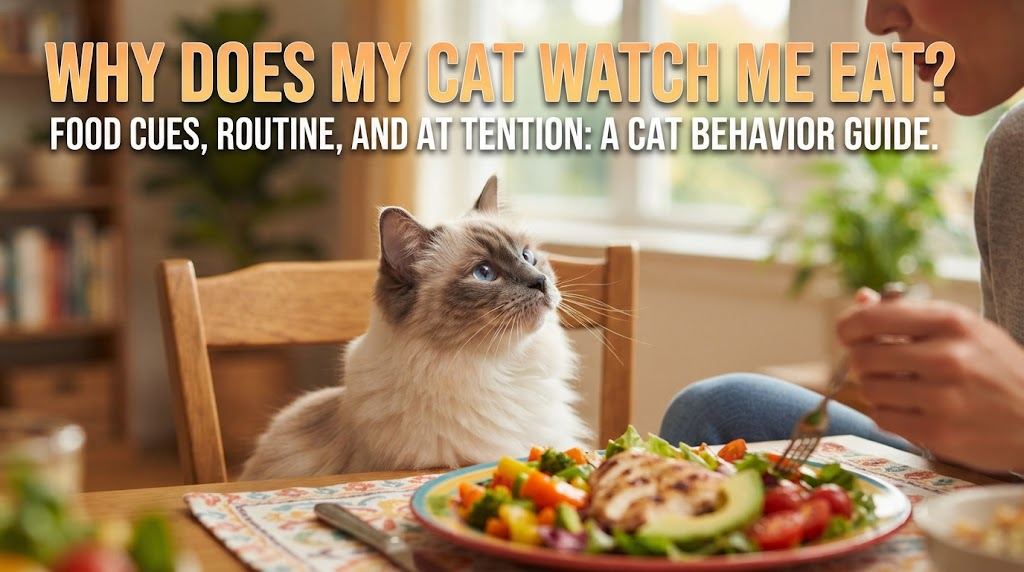
A cat that quietly watches every bite of your dinner can make a human meal feel like a performance. The behavior is usually easier to understand when you consider what your meals have predicted in the past.
Quick Answer
Your cat may watch you eat because food smells interesting, your mealtime is a predictable household event, the cat expects a reward, or watching you has previously led to attention or a taste of food. Simply watching is usually harmless. The important distinction is between observation, learned begging and a genuine increase in hunger.
Your Mealtime Is a Strong Routine Cue
Cats learn patterns around chairs, plates, kitchen sounds, food preparation and the times people sit down. If your meal regularly happens near the cat's feeding time, watching you may be part of anticipating its own routine.
Human Food Smells Can Be Interesting Without Being Appropriate
Meat, dairy, sauces and warm food can produce strong odors. Interest does not mean the cat needs a share. Some human foods are unsuitable or toxic to cats, and rich table scraps can add unnecessary calories or upset the stomach. It is safer to keep the cat's nutrition based on a complete, appropriate cat diet.
Your Response Can Teach Begging
If staring leads to a bite from the plate, talking, petting, or getting up to serve the cat, the behavior can become very reliable. The cat has learned that watching is part of a successful sequence.
| Behavior during your meal | What to consider |
|---|---|
| Sits quietly and watches | Routine, curiosity or food odor |
| Meows, paws or climbs onto you | Attention or food-seeking may have been reinforced |
| Steals food whenever possible | Management and a consistent feeding routine are needed |
| Suddenly begs all day, not only during meals | Consider a true appetite change |
How to Reduce Mealtime Begging
Decide on one rule and keep it consistent. Do not sometimes feed from your plate and sometimes punish the cat for asking. Offer the cat's planned meal or a food puzzle at a separate location if timing works for your household. Reward calm behavior away from the table rather than pushing or shouting.
Watch for a Real Change in Appetite
If your cat has become persistently hungry, is losing weight despite eating, drinking or urinating more, vomiting, or showing other health changes, the issue is no longer just human-meal curiosity. Increased appetite can accompany medical problems and deserves veterinary assessment when it is new or pronounced.
Related Virixoo Guides
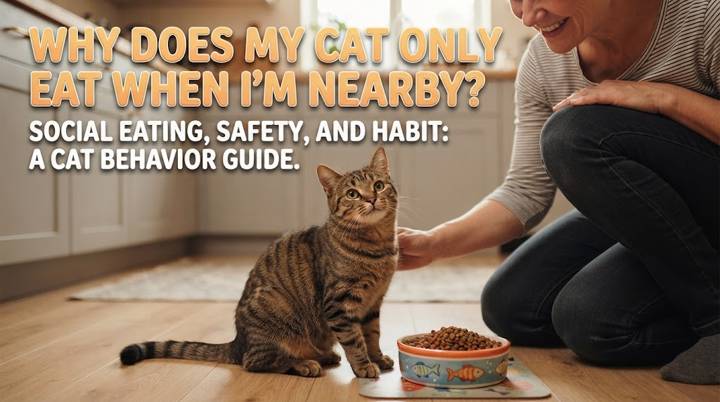
For staring in situations unrelated to food, read why cats stare at their owners. If your cat seems hungry throughout the day, see why a cat may seem constantly hungry. If the issue is social eating rather than watching you eat, read why some cats prefer an owner nearby at meals.
Bottom Line
Watching you eat is usually about routine, smell, learning or attention rather than a nutritional need for your food. Keep table rules consistent, provide appropriate feeding enrichment, and distinguish ordinary mealtime interest from a new all-day increase in hunger.