
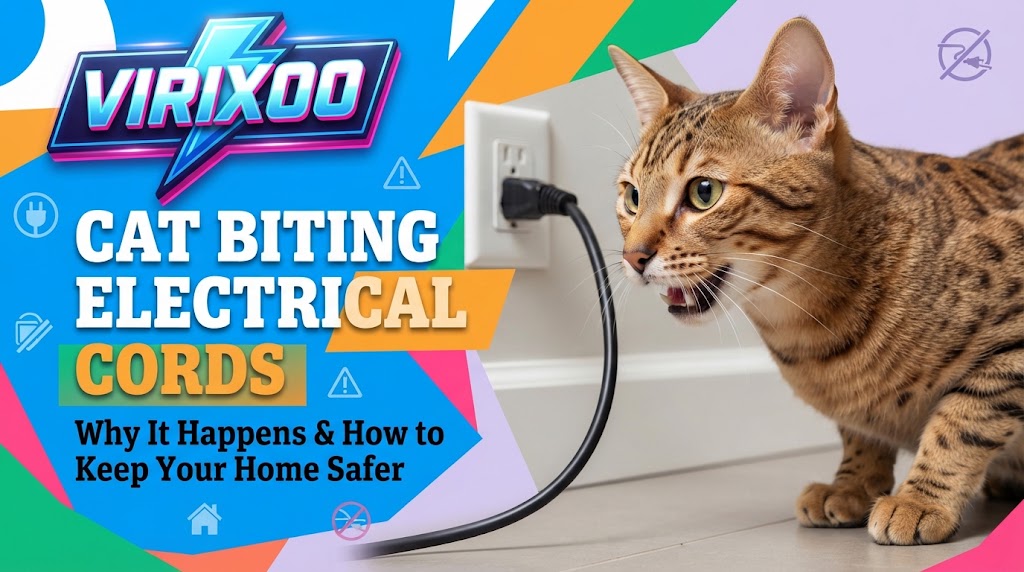
Electrical-cord chewing is both a behavior problem and a safety hazard. Cats may chew cords because of play, teething, pica, boredom, texture preference, or attention, but a live cord can cause painful mouth burns, electrical shock, or secondary breathing complications.
Quick Answer
Block access to cords immediately and provide safer alternatives. If the cat has bitten a live cord and has burns around the mouth, drooling, coughing, breathing difficulty, weakness, collapse, or abnormal behavior, seek veterinary care promptly. Breathing difficulty after electrical injury is an emergency.
Why Cats Chew Cords
Thin cords move like prey and have a texture some cats enjoy. Kittens may chew during exploration, while adult cats may develop the habit from boredom or pica. A cat that chews many non-food objects should also be evaluated for medical contributors.
Make the Environment Safe First
Unplug unused cords, route wires behind furniture, use rigid cord covers, and block access to entertainment centers and desk areas. Management is essential because training alone cannot make a live wire safe.
Do Not Use Dangerous Deterrents
Avoid applying essential oils, hot pepper, caustic products, or toxic substances to cords. If a taste deterrent is used, choose a pet-safe product and follow the label, but physical barriers are more reliable.
Provide Better Chewing and Play Options
Use interactive toys, food puzzles, scheduled play, and safe chewable items recommended for cats. Rotate toys so they remain interesting. The goal is to reduce the value of cords rather than relying only on punishment.
Electrical Injury Signs
| Sign | Why It Matters |
|---|---|
| Burns around lips or tongue | Possible electrical burn |
| Drooling | May indicate oral pain |
| Coughing or rapid breathing | Possible respiratory complication |
| Weakness or collapse | Emergency |
| Abnormal heart rhythm | Possible electrical injury |
Why Breathing Problems Can Be Delayed
Electrical injury can contribute to fluid accumulation in the lungs. A cat may initially appear stable and later develop coughing or increased breathing effort. Any respiratory change after a known electrical shock deserves prompt veterinary attention.
What Not to Do
- Do not touch the cat while it is still in contact with a live wire.
- Do not punish the cat physically.
- Do not apply essential oils to cords.
- Do not ignore mouth burns or breathing changes.
If the Cat Is Being Shocked
Turn off the power source before touching the cat if it can be done safely. Do not put yourself at risk. Once the electricity is off, seek emergency veterinary care.
When Pica Should Be Considered
If the cat also eats plastic, fabric, litter, paper, or other non-food material, tell the veterinarian. Medical and behavioral factors may both be contributing.
Bottom Line
Prevent access to cords rather than relying on correction. Cord chewing can become a medical emergency if electrical contact occurs, particularly when oral burns, weakness, or breathing changes are present.
Why Cord Covers Work Better Than Training Alone
Behavior can relapse when the owner is not present. Physical management reduces the chance of a dangerous mistake. Rigid conduit, cable boxes, and furniture placement can remove access entirely.
How to Build Better Daily Enrichment
Schedule short interactive play sessions, rotate toys, offer food puzzles, and provide climbing and scratching opportunities. Cats with predictable outlets for hunting and exploration may be less likely to create their own dangerous activities.
What to Do After a Minor Mouth Burn
Even if the cat seems stable, oral burns deserve veterinary assessment because tissue injury may worsen over time and respiratory complications can be delayed. Do not apply creams or human burn products inside the mouth.
What to Record Before You Call
For cat biting electrical cords, write down the exact time the problem or exposure began, what you saw, and whether the cat is getting better, worse, or staying the same. Record appetite, drinking, urination, stool, vomiting, breathing, movement, awareness, and any unusual behavior. For poisoning or foreign-body concerns, keep the product package, plant photo, object description, or medication label available.
Do not delay urgent care to collect perfect information. When a cat is weak, collapsing, struggling to breathe, seizing, repeatedly vomiting, unable to urinate, or rapidly deteriorating, transport takes priority over documentation.
How to Decide Whether Monitoring Is Still Safe
Monitoring is only reasonable when the cat is comfortable, the exposure or behavior has been professionally judged low-risk, and no red flags are present. A cat that becomes quieter may not simply be resting; it may be becoming weaker. Look at the whole cat rather than one visible sign.
If new pain, breathing changes, neurologic signs, food refusal, repeated vomiting, or abnormal urination develops, contact the veterinarian again even if the original sign appears slightly improved.
Common Mistakes to Avoid
- Waiting for severe symptoms after a known high-risk exposure.
- Giving a home remedy before identifying the substance or object.
- Using medication prescribed for another pet.
- Forcing food, water, or handling when the cat is distressed.
- Assuming that normal walking or eating rules out a serious problem.
What Follow-Up Should Focus On
After treatment or professional advice, track whether the cat returns toward its normal baseline. Appetite, grooming, breathing, movement, litter-box habits, and interaction should all be considered. Follow recheck recommendations even when the visible problem seems better, because some toxicities and internal injuries can evolve after the first examination.
Why Early Advice Often Changes the Outcome
Many feline emergencies are easier to treat before severe symptoms develop. Early veterinary or poison-control guidance can determine whether decontamination, imaging, observation, or immediate treatment is appropriate. Waiting until the cat is obviously ill can remove safer or less invasive options.
When in doubt, describe the exact exposure or behavior, the timeline, and the cat’s current condition rather than trying to diagnose the problem yourself.
Why Kittens May Be More Vulnerable
Kittens are curious, mouth objects frequently, and may chew cords during exploration. They also have less body mass, so a serious electrical injury can destabilize them quickly. Kitten-proofing should be done before free access to rooms with exposed wiring.
How to Identify High-Risk Areas
Desk setups, television consoles, bedside chargers, kitchen appliances, and holiday decorations often contain dangling cables. Walk through the home at floor level and look for cords that move when touched or hang within easy reach.
Why Punishment Often Fails
Scolding may stop chewing only while the owner is present. Once the cat is alone, the cord remains interesting. Physical barriers and environmental enrichment provide protection even when no one is watching.
When a Behavior Consultation Helps
If cord chewing continues despite management or is part of a wider pica pattern, a veterinarian or qualified behavior professional can help assess medical contributors, stress, and enrichment needs.
What Improvement Should Look Like
For cat biting electrical cords, improvement means the cat is returning toward its normal baseline rather than showing only one isolated change. Appetite, grooming, movement, breathing, litter-box habits, awareness, and social behavior should all be considered. If the original sign looks better but the cat becomes weaker, more withdrawn, painful, or unable to perform a normal function, the overall situation is not improving.
Follow any veterinary instructions exactly and complete recommended rechecks. Do not add supplements, human medication, or home remedies unless the veterinary team specifically approves them.
Why Holiday Decorations Increase Risk
String lights, thin charger cables, and dangling decorative wires can be especially tempting because they move and appear in new places. During holidays or room rearrangements, inspect cords again rather than assuming an old cat-proofing setup still covers every hazard.
What Recovery From an Electrical Injury Can Require
Veterinary care may include oxygen, pain control, monitoring of heart rhythm, and observation for delayed lung complications. A cat that seems stable immediately after the shock can still need monitoring, especially if there are mouth burns or abnormal breathing.
When to Call Again After Initial Advice
For cat biting electrical cords, call the veterinary team again if the cat develops a new symptom, the original sign becomes more frequent or severe, or basic functions change. Important changes include repeated vomiting, food refusal, weakness, abnormal breathing, inability to urinate, severe pain, tremors, seizures, or collapse.
Describe what changed and when it changed. A clear timeline helps the clinic decide whether home monitoring is still appropriate or whether the cat should be examined sooner.
Why Mouth Burns Can Worsen After the Event
Electrical burns may look small immediately after contact and become more obvious as damaged tissue evolves. Drooling, reluctance to eat, swelling, or bad odor after a shock deserves re-evaluation even if breathing remains normal.
Final Safety Check
Before deciding to continue home observation, confirm that the cat is breathing comfortably, walking normally, responsive, and able to eat, drink, urinate, and use the litter box. A change in any of these basic functions can be more important than the original symptom itself. When the situation is time-sensitive or the exposure is known to be high-risk, professional advice should take priority over waiting for visible deterioration.