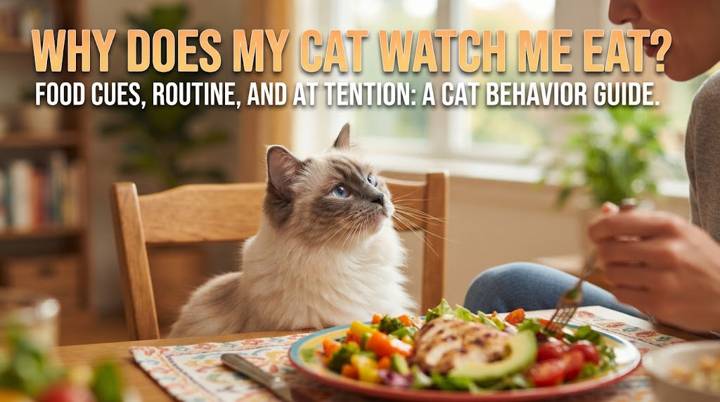
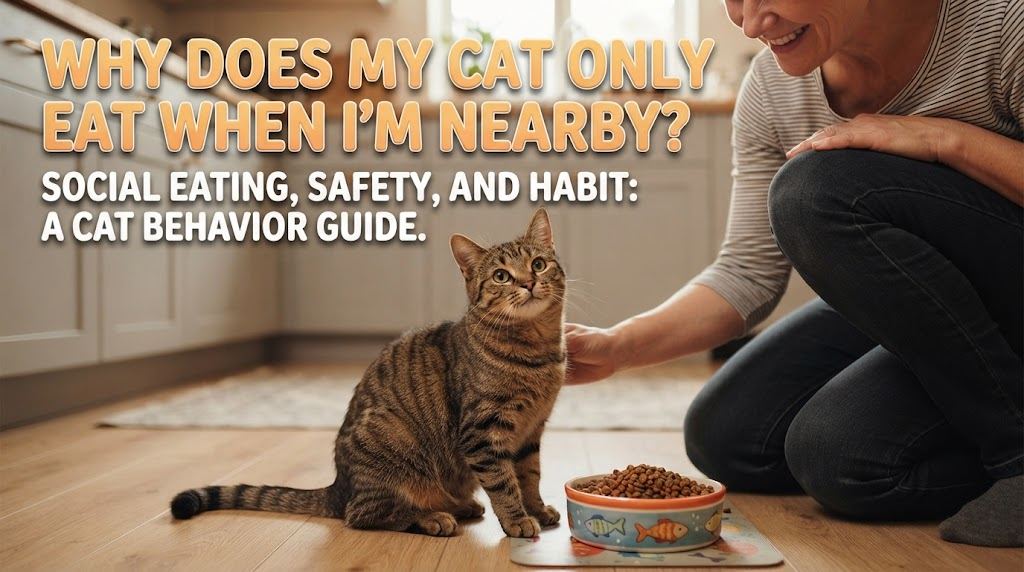
If your cat walks to the bowl, checks where you are, and then starts eating only after you sit nearby, the behavior can feel unusually dependent. In many cats, however, the explanation is simpler: your presence has become part of a familiar, predictable feeding routine.
Quick Answer
A cat may prefer to eat when you are nearby because your presence feels familiar and safe, because the feeding area feels more secure with you there, or because the routine has been reinforced over time. If the cat eats a normal amount, maintains weight, and behaves normally otherwise, the pattern is often behavioral. A sudden change in appetite or a new refusal to eat alone deserves closer attention.
Start by Asking Whether Your Cat Is Actually Eating Enough
The important distinction is between preference and reduced food intake. A cat that waits for you but then finishes its normal meals is different from a cat that approaches food, takes only a few bites, or needs repeated coaxing to consume enough calories. Track the amount actually eaten for several days rather than judging only from visits to the bowl.
If intake is falling, the issue should not automatically be labeled “affection eating.” Dental pain, nausea, congestion, gastrointestinal disease, stress, and many other problems can change how a cat approaches food.
Your Presence May Make the Feeding Area Feel Safer
Cats should be able to eat where they feel secure and where another pet cannot block or intimidate them. In a busy home, a person sitting nearby may unintentionally function as a predictable buffer against noise, dogs, other cats, children, or sudden movement. If your cat eats better when you are present, look at the environment before assuming the cat simply wants attention.
- Is another pet watching or approaching the bowl?
- Is the food beside a noisy appliance, doorway, or high-traffic route?
- Does the cat repeatedly look around instead of settling to eat?
- Does moving the bowl to a quiet location reduce the need for your presence?
Routine Can Turn Company Into Part of the Meal
Cats learn repeated sequences very well. If you have always placed the bowl down, stood beside it, talked to the cat, or petted the cat while it ate, those cues can become part of the meal routine. The cat may not be incapable of eating alone; it may simply wait for the familiar sequence to begin.
This is especially likely when the cat looks relaxed, starts eating quickly once you arrive, and does not show fear or physical difficulty.
How to Encourage More Independent Eating
Do not suddenly remove support from a cat that is already eating poorly. For a healthy cat with stable intake, make changes gradually. Start by remaining in the room without hovering over the bowl. Over several meals, increase your distance. You can also provide a quiet feeding station, visual separation from other pets, and a consistent meal schedule.
| What you notice | What it may suggest | Useful next step |
|---|---|---|
| Eats normally once you sit nearby | Learned routine or social comfort | Increase distance gradually |
| Looks around nervously while eating | Feeding-area stress | Move food to a quieter protected area |
| Approaches food but stops after a few bites | Possible eating difficulty or nausea | Monitor intake and arrange veterinary assessment if persistent |
| Needs company after a sudden behavior change | Stress or health change may be involved | Review recent household and health changes |
Do Not Create a Battle Around the Bowl
Avoid pushing the cat toward food, repeatedly moving the bowl under its face, or using punishment. Feeding should remain low-stress. If you want to change the habit, reduce your involvement gradually while preserving a secure feeding environment.
When the Pattern Deserves Veterinary Attention
Arrange a veterinary check if your cat is eating less overall, losing weight, drooling, dropping food, chewing differently, vomiting, hiding, becoming weak, or showing a sudden change from its normal eating pattern. Cats should not be allowed to go for prolonged periods without adequate food while an owner waits for a behavioral strategy to work.
Related Virixoo Guides
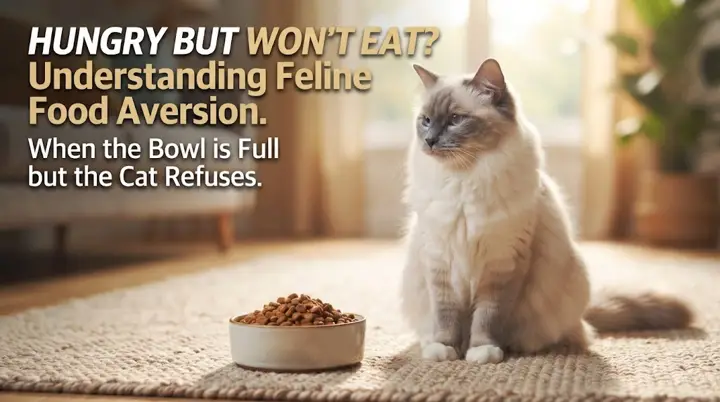
If your cat is eating less overall, read why cats stop eating. If the cat appears hungry but repeatedly walks away from the bowl, see why a cat may want food but have difficulty eating. For a true increase in food-seeking, read why a cat may seem hungry all the time.
Bottom Line
Needing you nearby at meals can be a learned social routine or a clue that the feeding location feels safer with you present. First confirm that your cat is eating enough and maintaining weight. Then improve the feeding environment and, if desired, build independence gradually rather than abruptly removing the routine.