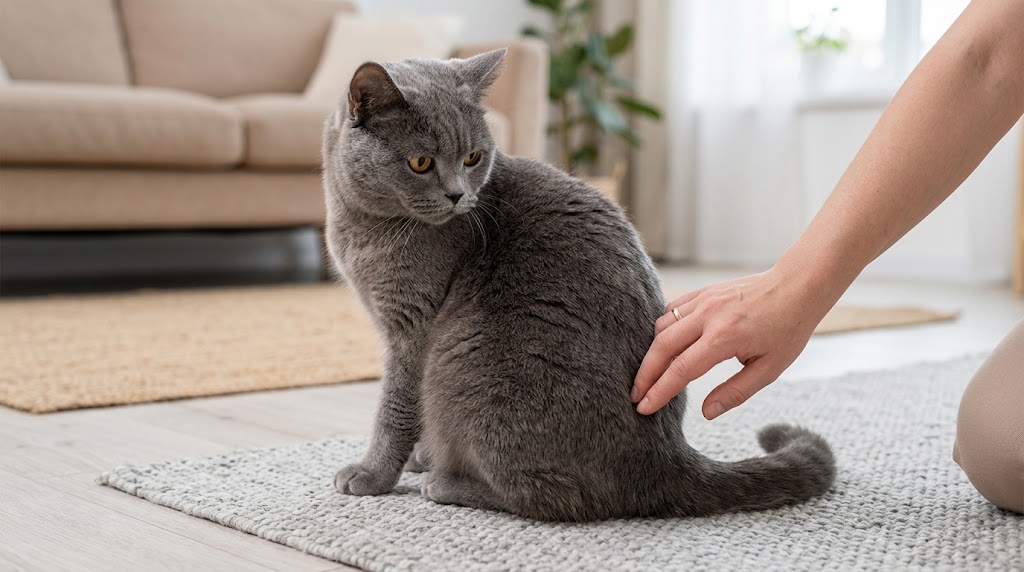

A kitten spinning after its tail can be ordinary play and body exploration. Adult cats may occasionally do the same, but frequent or frantic tail chasing can also occur when the tail or surrounding skin is uncomfortable.
Quick Answer
Occasional relaxed tail chasing can be playful. Repeated biting, skin damage, hair loss, sudden sensitivity, or intense episodes should be evaluated because irritation, pain, or behavioral problems may be involved.
Why Cats Chase Their Tails
Play
A moving tail can become an irresistible target, especially for kittens.
Boredom
Limited opportunities for active play may encourage repetitive self-directed games.
Skin Irritation
Itching around the tail can make a cat turn, chase, lick, or bite the area.
Pain or Sensitivity
Discomfort can cause unusual attention to the tail or back.
What Owners Should Observe
- How often episodes occur.
- Whether the cat can be redirected to a toy.
- Any redness, wounds, fleas, or hair loss.
- Whether touching the back or tail causes pain.
- Whether the behavior began suddenly.
Frequently Asked Questions
Is tail chasing normal in kittens?
Brief playful episodes are common, but injury or compulsive repetition is not something to ignore.
Should I grab the tail to stop the cat?
No. Redirect with an appropriate toy and avoid handling a painful area.
Can fleas cause tail biting?
Parasites and skin irritation can contribute to itching, so persistent biting warrants veterinary assessment.
When to Contact a Veterinarian
Arrange an examination for wounds, bleeding, hair loss, severe itching, pain, sudden frantic episodes, or repeated behavior that is difficult to interrupt.
Related Virixoo Guides
Read knock Things Over. Read scratch the Carpet. Read why Is My Cat Losing Hair.
Final Thoughts
The difference between playful tail chasing and a problem is usually frequency, intensity, and physical signs. Watch the pattern rather than assuming every spin is harmless or abnormal.