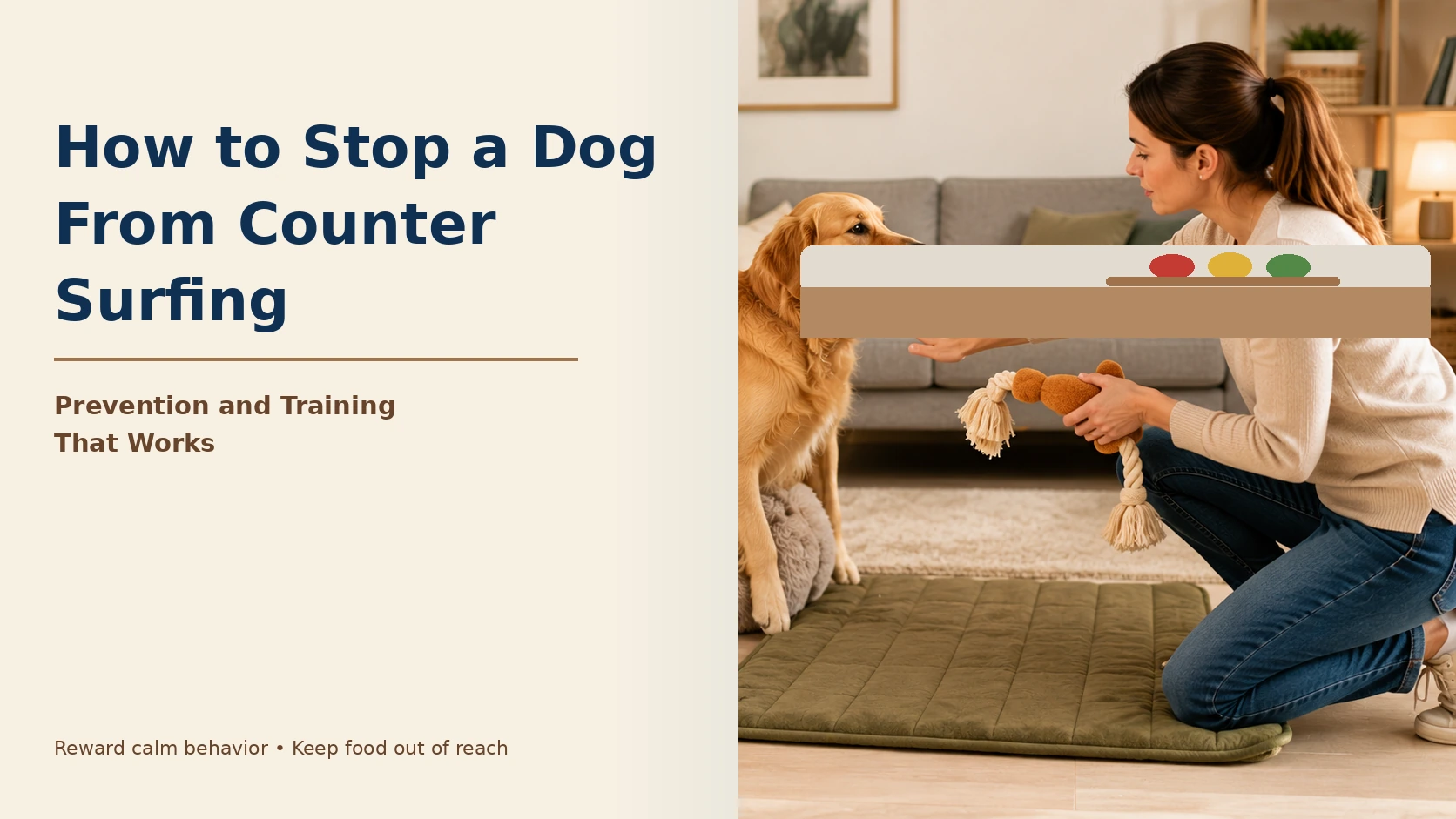
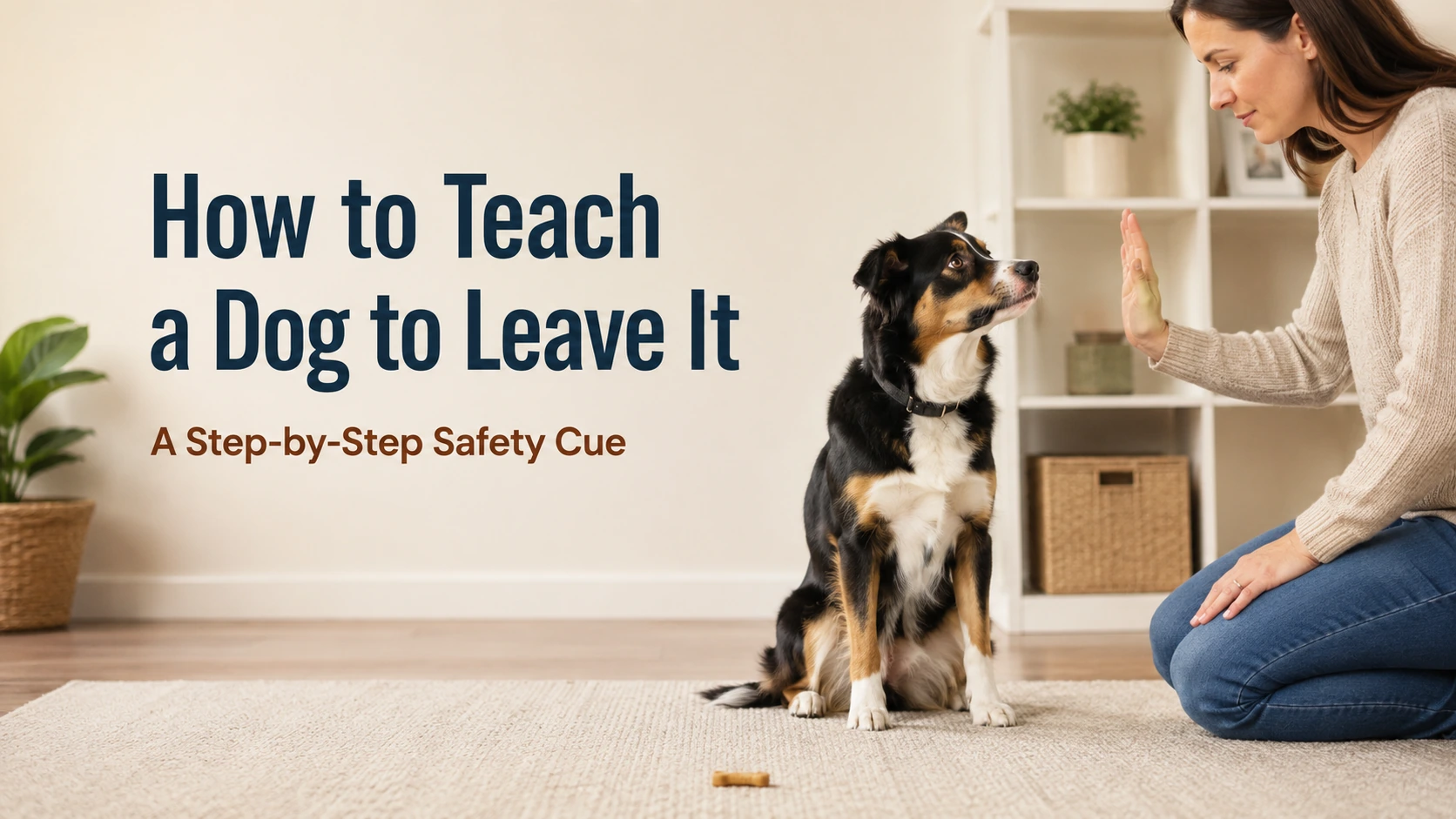
“Leave it” means do not take or investigate that item. It is one of the most useful safety cues you can teach because dogs encounter dropped food, medication, trash, animal waste, and unknown objects. The skill should be taught as a choice that pays well, not as a threat.
Quick Answer
Start with a treat hidden in your closed hand. Wait silently while your dog investigates. The moment the dog backs away, mark the choice and reward from your other hand. Progress to an open palm, then a protected treat on the floor, then easy real-life setups. Add the words “leave it” only after the dog understands the behavior. Never deliberately test the cue with truly dangerous objects.
Leave It Versus Drop It
The difference is important. Leave it means the dog should not pick the item up. Drop it means release something already in the mouth. Teaching both gives you a prevention cue and a backup cue. See How to Teach a Dog to Drop It after your dog understands this lesson.
What You Need
- Small high-value treats.
- A lower-value training treat or safe object.
- A quiet room with few distractions.
- A leash for later floor practice.
- Short sessions of a few minutes.
Step 1: Closed-Fist Game
- Place a low-value treat inside one fist.
- Present the closed fist at your dog’s nose level.
- Say nothing while the dog sniffs, licks, or paws.
- The instant your dog backs the nose away, mark with “yes” or a click.
- Reward from the other hand, not from the leave-it hand.
This teaches a powerful rule: moving away from the temptation makes a reward appear elsewhere.
Step 2: Open-Hand Practice
Open your palm so the dog can see the treat. If the dog dives toward it, calmly close your hand. When the dog backs away, reopen. Reward from the opposite hand for ignoring the visible food. Avoid repeatedly saying “no.” Let the consequence of approaching be loss of access and the consequence of disengaging be reinforcement.
Step 3: Add the Verbal Cue
Once your dog reliably backs away as soon as the temptation appears, say “leave it” just before presenting the item. Do not repeat the words five times. One cue should predict one clear behavior.
Step 4: Treat on the Floor
Place a low-value treat on the floor and cover it with your hand or foot so the dog cannot grab it. Say the cue once. When the dog disengages, mark and reward from your hand. The floor item should remain unavailable during early practice.
Step 5: Add Distance
With the dog on leash, place an item several feet away. Walk toward it. Cue “leave it” before the leash becomes tight, reward the dog for turning toward you, then move away. Gradually decrease distance only while your dog succeeds.
Step 6: Practice With Different Safe Objects
Dogs do not automatically generalize. Practice with boring food, a toy, a tissue, a shoe, and safe household objects. Then practice outdoors with staged items you control. Never use medication, chocolate, grapes, bones, chemicals, or other dangerous material as a training test.
Step 7: Use Sniffing as a Reward
On walks, a dog may want access to a safe smell rather than food. Ask for “leave it,” reward the disengagement, then later release the dog to another safe area with a “go sniff” cue. This makes the environment part of the reinforcement system.
Common Training Mistakes
Repeating the Cue
If you say “leave it” over and over while the dog ignores you, the words lose clarity. Reduce the difficulty instead.
Making Every Temptation Too Hard
Start with something the dog can resist. Training beside discarded chicken bones on day one is not training; it is a setup for failure.
Grabbing at the Dog
Physical competition can trigger keep-away or guarding. Use management and distance so the dog cannot reach the item while learning.
Rewarding From the Forbidden Item
During early teaching, reward from a separate source. This makes disengagement clear and prevents the dog from assuming “leave it” eventually means “take the same thing.”
Using Leave It for Dogs That Eat Dirt or Grass
The cue can help interrupt unwanted ingestion but should not replace investigating persistent behavior. If your dog repeatedly eats soil, see Why Does My Dog Eat Dirt?. For grass eating, read Why Does My Dog Eat Grass?.
When to Get Training Help
If your dog guards items, snaps when approached, or has a history of swallowing dangerous objects, work with a qualified reward-based trainer or behavior professional. Resource guarding needs a careful plan rather than forced item removal. See Why Does My Dog Guard Food or Toys?.
Build Reliability With the Three Ds
Once the dog understands the basic cue, increase distance, duration, and distraction one at a time. If you move the forbidden item closer, keep the environment quiet. If you add a more exciting distraction, increase distance again. Asking for all three at once is a common reason a dog appears to “forget” a cue it actually understands.
A Four-Level Progression
| Level | Example |
|---|---|
| 1 | Treat hidden in closed fist indoors |
| 2 | Visible treat on protected floor spot |
| 3 | Safe object several feet away on leash |
| 4 | Real walk with ordinary distractions at a manageable distance |
Emergency Management Is Different From Training
If medication spills or a toxic food hits the floor, do not turn the emergency into a training test. Physically block access, move the dog behind a door or gate, and clean the hazard. Training should make future emergencies easier, but management remains part of safety even with a well-trained dog.
How to Know the Cue Is Ready for Real Life
The dog should respond on the first cue in several rooms, around different safe items, and at varying distances. Reliability means more than success with a treat in your hand. Continue to reward real-life responses generously, especially when the dog disengages from something genuinely interesting.
FAQ
How long does it take to teach leave it?
Many dogs understand the basic game quickly, but reliable real-world performance requires gradual practice across locations and distractions.
Should I say “no” before leave it?
No extra warning is required. A clear single cue is easier to understand.
Can leave it stop my dog from eating things on walks?
It can greatly improve safety, but management still matters. Use a leash, scan ahead, and avoid areas with dangerous debris.
What if my dog already has the object?
Use a separately trained “drop it” or trade cue rather than repeating “leave it.”