“Drop it” means release what is already in your mouth. The easiest way to teach it is through a fair trade: giving up an object reliably makes something good happen. This reduces chasing and conflict and can become an important safety skill when a dog picks up something inappropriate.
Quick Answer
Give your dog a low-value toy. Present a high-value treat near the nose. The moment the dog releases the toy, mark the behavior and give the treat. When safe, return the toy so the dog learns that releasing does not always end the fun. After several predictable repetitions, add the words “drop it” just before the dog releases. Gradually practice with different safe objects and distractions.
Drop It Is Not the Same as Leave It
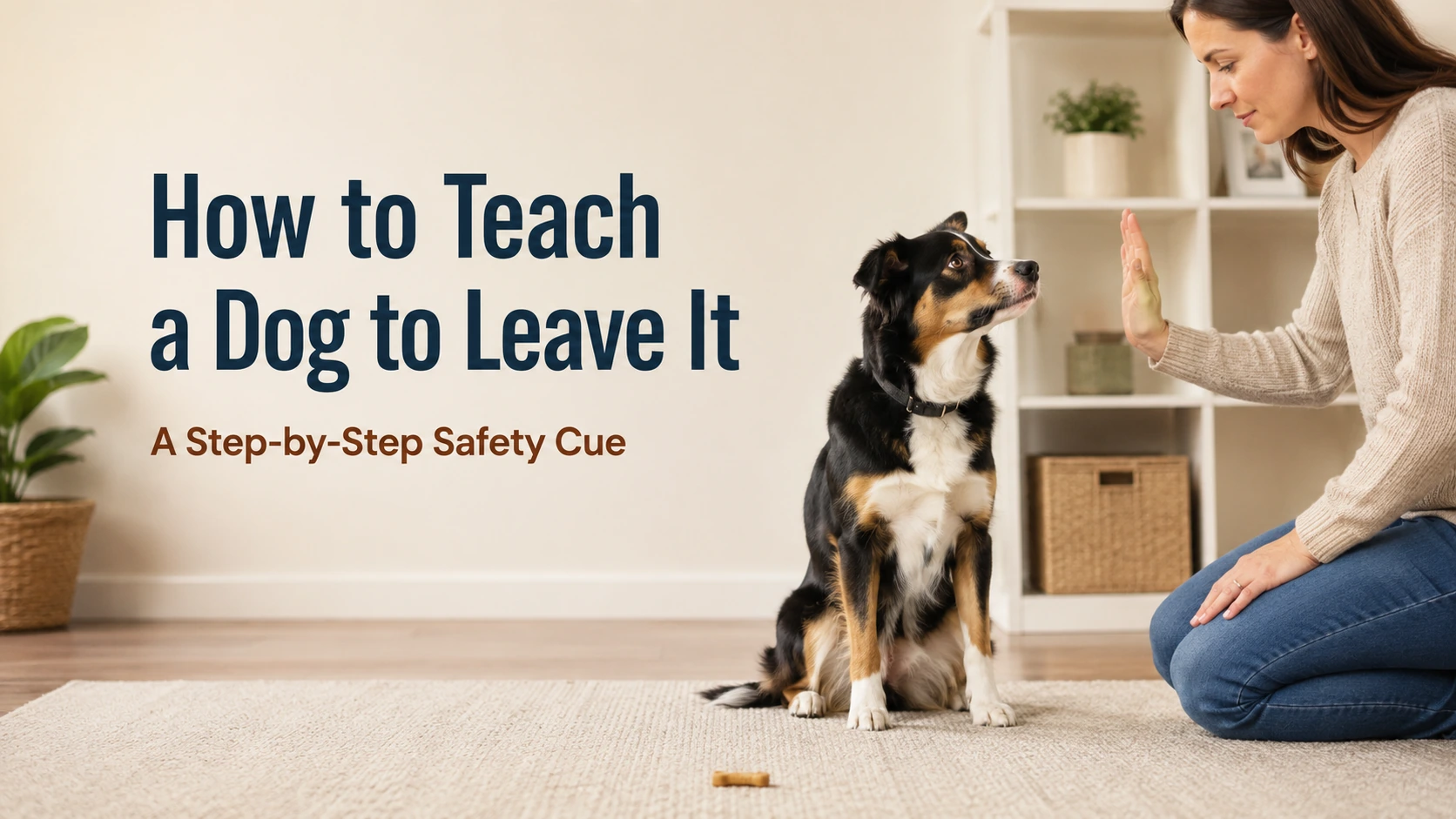
Use leave it before the dog takes something. Use drop it after the object is in the mouth. The skills complement each other but should have separate cues. For the prevention skill, read How to Teach a Dog to Leave It.
Why Chasing Often Makes the Problem Worse
Many dogs discover that grabbing a sock makes a person run toward them. The dog then learns an exciting keep-away game. Some dogs may swallow an object when pressured because they expect it to be taken. A trade changes the emotional picture from conflict to cooperation.
Step 1: Choose the Right Practice Item
Start with a safe toy your dog likes but does not guard intensely. Do not begin with stolen food, a high-value chew, or something dangerous. Training is easier when the first decision is easy.
Step 2: Create the Trade
- Let the dog hold the toy for a few seconds.
- Bring a high-value treat to the dog’s nose.
- Wait for the mouth to open and the toy to fall.
- Mark the release immediately.
- Give the treat.
- When safe, offer the toy again.
Returning the object during practice helps prevent the dog from learning that approaching humans always means losing possessions.
Step 3: Add the Cue
When the dog predictably releases as the trade appears, say “drop it” a moment before showing the reward. After several sessions, begin saying the cue first and then rewarding the response.
Step 4: Fade the Visible Food
Keep rewards available but out of sight. Say “drop it,” wait briefly, mark the release, and then produce the reward. This prevents the food itself from becoming the only signal.
Step 5: Practice With Different Toys
Use a ball, rope toy, soft toy, and other safe items. Reward generously when moving to a more valuable object. Dogs often understand a cue in one context before they understand it everywhere.
Step 6: Add Movement and Real Life
Practice during fetch or tug. During tug, go still, ask for the release, mark it, then restart the game as the reward. In everyday situations, trade stolen safe objects rather than turning retrieval into a chase.
What If My Dog Runs Away With the Object?
Practice in a smaller room or with a leash attached to a harness under supervision so the dog cannot rehearse keep-away. Do not yank the leash to force the object out. Increase reward value and lower the value of the practice item.
What If My Dog Guards the Item?
Growling, freezing, hard staring, hovering over an object, or snapping are signs to stop informal training and get professional help. Do not punish a growl or pry the mouth open. For guarding behavior, read Why Does My Dog Guard Food or Toys?.
If the Object Is Dangerous
Training advice changes during a real emergency. If your dog has medication, a sharp object, a toxic food, or something likely to obstruct the intestine, use the safest practical trade without chasing. Contact a veterinarian or poison resource promptly when toxic ingestion is possible. Do not induce vomiting unless a veterinary professional specifically instructs you to do so.
Build a Dog Who Likes Trading
Occasionally approach your dog during normal toy play, toss a treat, and walk away without taking anything. This helps your presence predict good outcomes rather than loss. With chews, follow safe handling practices and avoid deliberately provoking guarding.
Related Virixoo Guides
For appropriate chewing outlets, see How to Choose Safe Chew Toys for Your Dog. If your dog damages household items, see How to Stop a Dog From Chewing Furniture.
Build Value for Human Approach
A dog that expects people to confiscate everything may avoid, guard, or swallow objects. During ordinary play, approach occasionally, deliver a treat, and leave the toy alone. At other times, trade and then return the item. These repetitions teach that a person approaching is not automatically bad news.
A Progression From Easy to Real Life
| Stage | Practice |
|---|---|
| 1 | Low-value toy, visible high-value treat |
| 2 | Same toy, reward hidden until release |
| 3 | Different toys and locations |
| 4 | Moving games such as fetch or tug |
| 5 | Safe household objects under supervision |
Do Not Poison the Cue
If “drop it” always ends play, the dog may become slower to respond. During training, frequently give the toy back or immediately start another game. Save permanent removal for items that truly need to be taken away. The cue should predict a fair exchange, not automatic disappointment.
Practice Before You Need It
The worst time to discover that the cue is weak is when the dog has a dangerous object. Short easy practice several times a week creates a history of successful trades. Keep sessions calm and finish while the dog is still eager to participate.
FAQ
Should I pull an object from my dog’s mouth?
Not during routine training. Forcing the mouth can increase conflict and bite risk. Teach a voluntary release instead.
Why does my dog swallow things when I approach?
The dog may anticipate losing the item. Chasing or repeated forced removal can strengthen that pattern.
Can I use a toy instead of food as the reward?
Yes. A second toy or restarting a game can be highly effective for play-motivated dogs.
How is drop it different from leave it?
Drop it releases an item already held; leave it prevents taking the item in the first place.