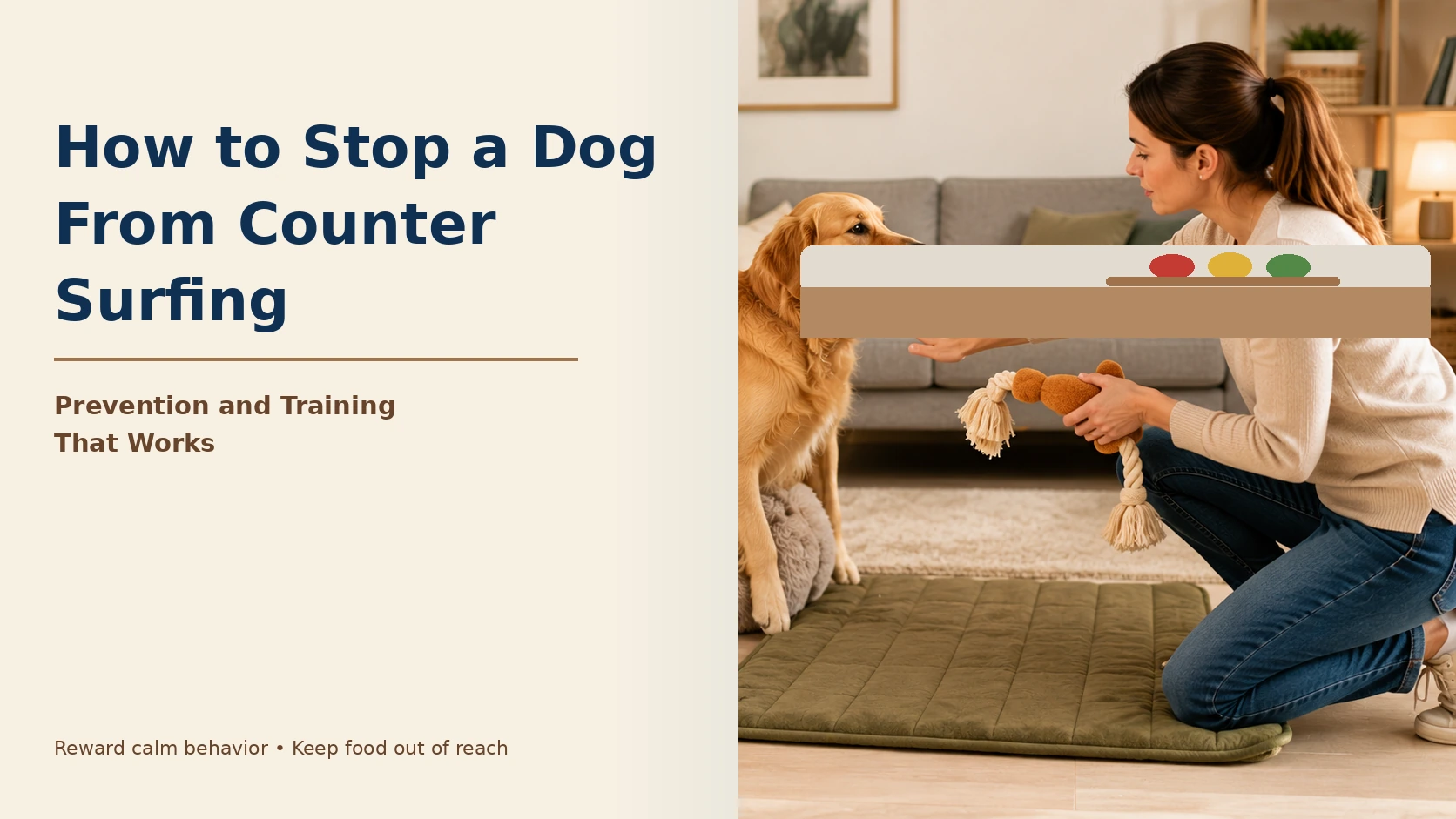
Counter surfing is powerful because it rewards itself. A dog that finds one sandwich, crumb, or piece of meat on the counter learns that checking the surface can pay. The fastest improvement comes from making the counter consistently unrewarding while teaching the dog exactly what to do instead during meal preparation.
Quick Answer
Remove all food from reachable counters, push ingredients away from edges, use gates or supervision while cooking, and prevent the dog from practicing the behavior. At the same time, reward an alternative such as lying on a mat or staying outside the kitchen. Teach “leave it” for items the dog has not taken and “drop it” as a backup if something is already in the mouth. Avoid punishment after the food is gone; it does not undo the reward the dog already received.
Why Counter Surfing Becomes a Strong Habit
Finding food is a large reward. Even if the dog succeeds only once every twenty attempts, that unpredictable jackpot can keep checking behavior alive. This is why “mostly clean” counters often fail. Management must be consistent enough that the dog stops discovering surprise rewards.
Step 1: Make the Counter Boring
- Store food in cabinets, containers, or the refrigerator.
- Do not leave cooling food unattended within reach.
- Wipe crumbs and grease from surfaces.
- Move knives, hot pans, bones, medication, chocolate, grapes, onions, and other hazards away from edges.
- Keep chairs and stools from becoming climbing steps for smaller dogs.
Step 2: Manage Kitchen Access
Use a gate, closed door, leash under supervision, or a defined station while you prepare food. Management is not failure; it prevents the dog from rehearsing a behavior that is highly reinforcing and potentially dangerous.
Step 3: Teach a “Place” Behavior
Choose a mat or bed a safe distance from the cooking area. Start when no food is present. Reward the dog for looking at the mat, stepping on it, lying down, and staying there briefly. Build duration gradually. Once the behavior is easy, practice while handling boring food, then normal meal preparation.
Step 4: Pay the Behavior You Want
Reward the dog for four paws on the floor, choosing the mat, or calmly staying outside the kitchen. Do not wait until the dog jumps up before offering attention. Reinforcement works best when the desired behavior becomes more profitable than checking the counter.
Step 5: Teach Leave It and Drop It
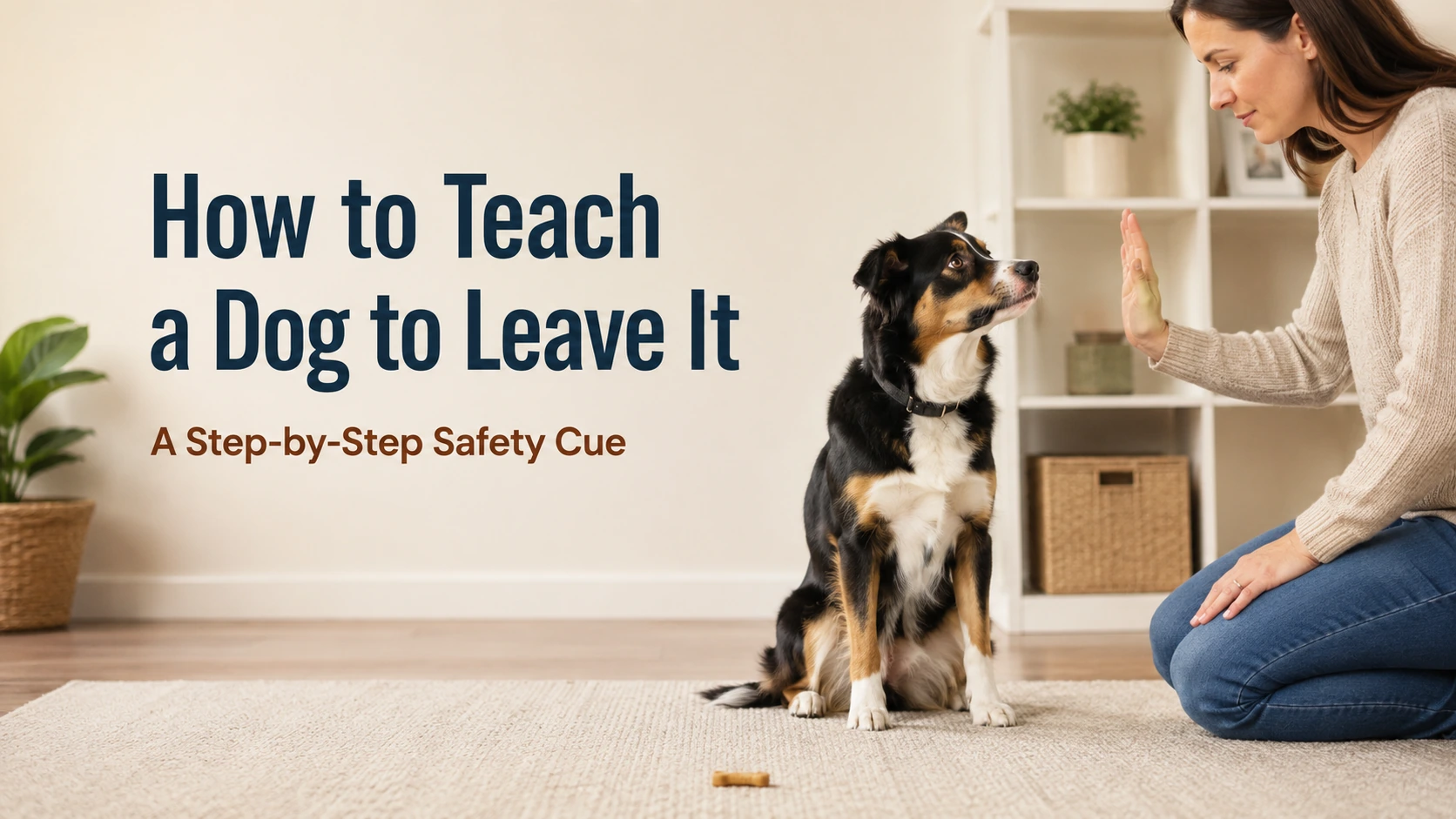
Leave it can prevent a dog from approaching a dropped item. Drop it is useful if the dog already grabbed something. These cues are safety tools, but they do not replace a clean counter and good kitchen management.
What to Do When the Dog Jumps Up
If the counter is clean, calmly guide the dog back to the floor or mat and reinforce the alternative. Avoid yelling, pushing, or creating an exciting confrontation. If food was accessible, fix the management error rather than expecting training alone to compete with a self-served meal.
Why Punishment Often Fails
Dogs may learn not to counter surf while a person is watching yet continue when alone. Punishment can also add stress or make the dog more secretive. Prevention changes what the environment teaches; reinforcement changes which behavior the dog chooses.
Counter Surfing When You Leave the Room
If the dog only steals food when unsupervised, do not test them with accessible food. Block access, clear surfaces, and use a safe area when you cannot supervise. Cameras can help confirm whether the dog is checking counters, scavenging bins, or engaging in broader separation-related behavior.
What If My Dog Begs While I Cook?
Begging and counter surfing can occur together but are not identical. For food-seeking around people, see Why Does My Dog Beg for Food?. Keep household rules consistent so one person is not rewarding behavior another person is trying to reduce.
Food Safety Matters
Counter surfing is not only inconvenient. Dogs can reach toxic foods, cooked bones, skewers, hot pans, wrappers, or medications. If your dog consumes something potentially toxic or a sharp foreign object, contact a veterinarian or animal poison service promptly rather than waiting for symptoms.
A Seven-Day Reset
- Clear counters completely.
- Set up a gate or mat station before cooking.
- Practice five short mat sessions without food distractions.
- Reward calm behavior during one easy meal-prep period each day.
- Prevent all unsupervised kitchen access.
- Practice leave it with safe staged items.
- Review where accidental rewards are still occurring.
Seven days will not erase every habit, but a clean streak can reveal how much the environment was maintaining the behavior.
Make the Whole Kitchen Predictable
Decide where the dog should be when food is prepared, where rewards will be delivered, and what happens when cooking ends. A mat two meters from the counter, for example, can become a clear station. If family members sometimes feed from the counter and sometimes punish the dog for approaching it, training becomes much harder.
Measure Progress by Attempts, Not Just Stolen Food
A dog may stop successfully stealing while still checking the counter fifty times a day. Track how often the dog approaches, jumps, or scans the surface. True progress means those attempts decrease because the counter has become unrewarding and the alternative behavior has become valuable.
Counter-Surfing Troubleshooting
| Problem | Adjustment |
|---|---|
| Dog leaves mat every few seconds | Shorten duration and reward more frequently |
| Dog only surfs when alone | Prevent unsupervised kitchen access |
| Dog jumps during meal prep | Start mat routine before food appears |
| One family member feeds scraps | Create one household rule and stick to it |
| Dog steals dropped items | Practice leave it separately and manage the floor |
Do Not Rely on Willpower Around Dangerous Food
Even a trained dog can make a mistake when a highly valuable item appears. Keep toxic foods and medication physically inaccessible. Training is an additional layer of safety, not permission to leave hazards within reach.
FAQ
How long does it take to stop counter surfing?
Improvement can begin quickly when access is controlled, but well-rehearsed habits may require weeks or longer of consistent management and training.
Should I use noise traps on the counter?
Start with prevention and reward-based alternatives. Startle methods can create fear and may not teach the dog what to do instead.
Why does my dog counter surf only when I leave?
The dog has probably learned that the behavior is safe and rewarding when people are absent. Prevent access rather than setting up tests.
Can small dogs counter surf?
Yes. Some climb on chairs or jump onto surfaces, so management should consider the dog’s actual reach.
Trusted Reference
American Kennel Club: How to Get Your Dog to Stop Counter-Surfing