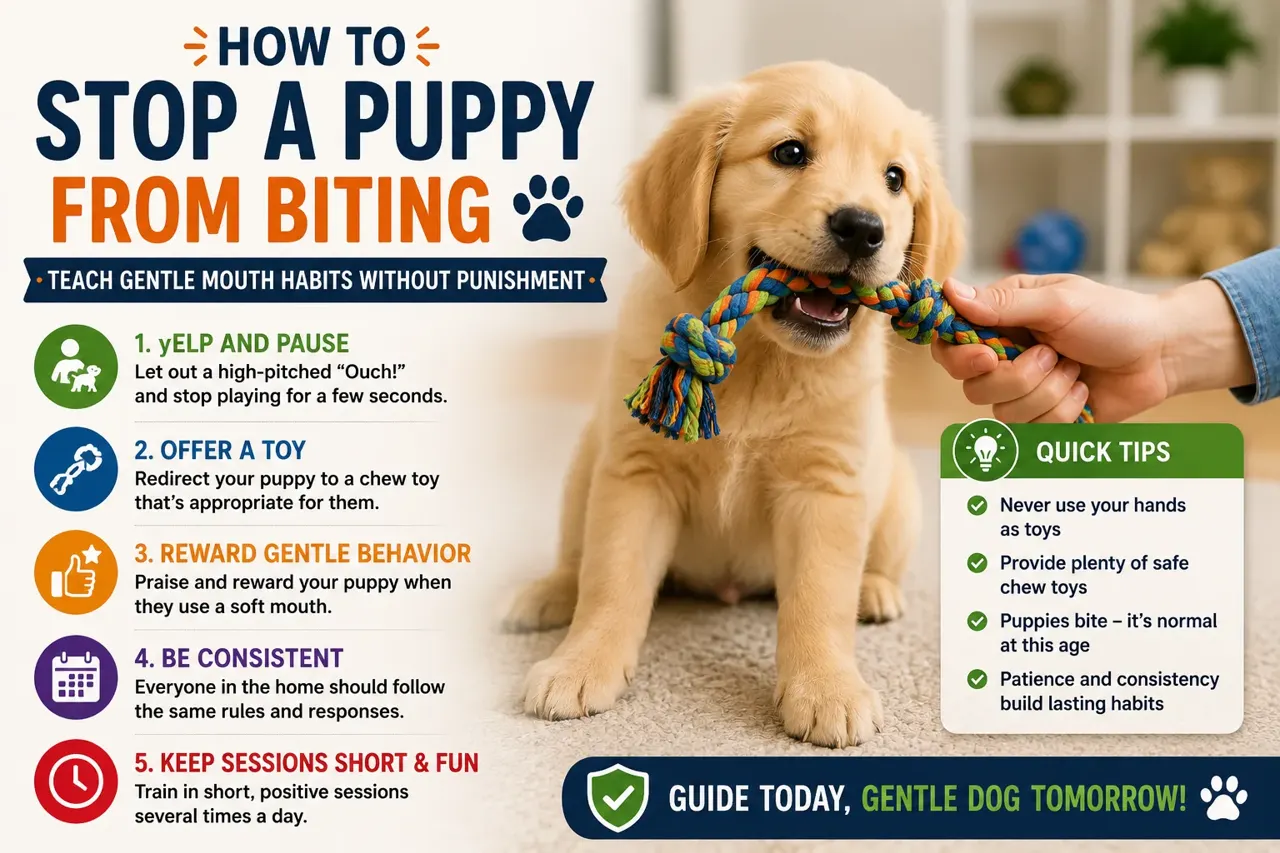
Mouthing is common in puppies because they explore, play and cope with teething through their mouths. The job is to teach safer habits without turning normal learning into conflict. Practical, reward-based steps, common mistakes, safety guidance and clear signs for when professional help is appropriate.
Quick Answer
Teach bite inhibition by redirecting teeth to appropriate toys, pausing interaction immediately when teeth touch skin too hard, ensuring enough sleep, and avoiding rough physical play that escalates biting behavior.
Why Puppies Use Their Mouths
Puppies investigate objects, initiate play, and communicate with their mouths. Teething and overtiredness can increase mouthing behavior significantly.
Redirect Before the Puppy Is Overexcited
Keep suitable chew toys within reach and offer one before your hands or clothing become the target during play sessions.
What to Do When Teeth Hurt
End interaction briefly and calmly when biting becomes painful by stepping away or becoming still rather than yelling.
Common Mistakes to Avoid
Avoid hitting, tapping the nose, or yelling, as these actions can frighten the puppy or turn biting into an aggressive game.
Related Virixoo Guides
For puppy management guidance, read How to Socialize a Puppy Safely: Build Confidence Without Overwhelming Them.
Bottom Line
Patience, redirection, and clear boundaries teach puppies gentle manners without harming their trust in you.