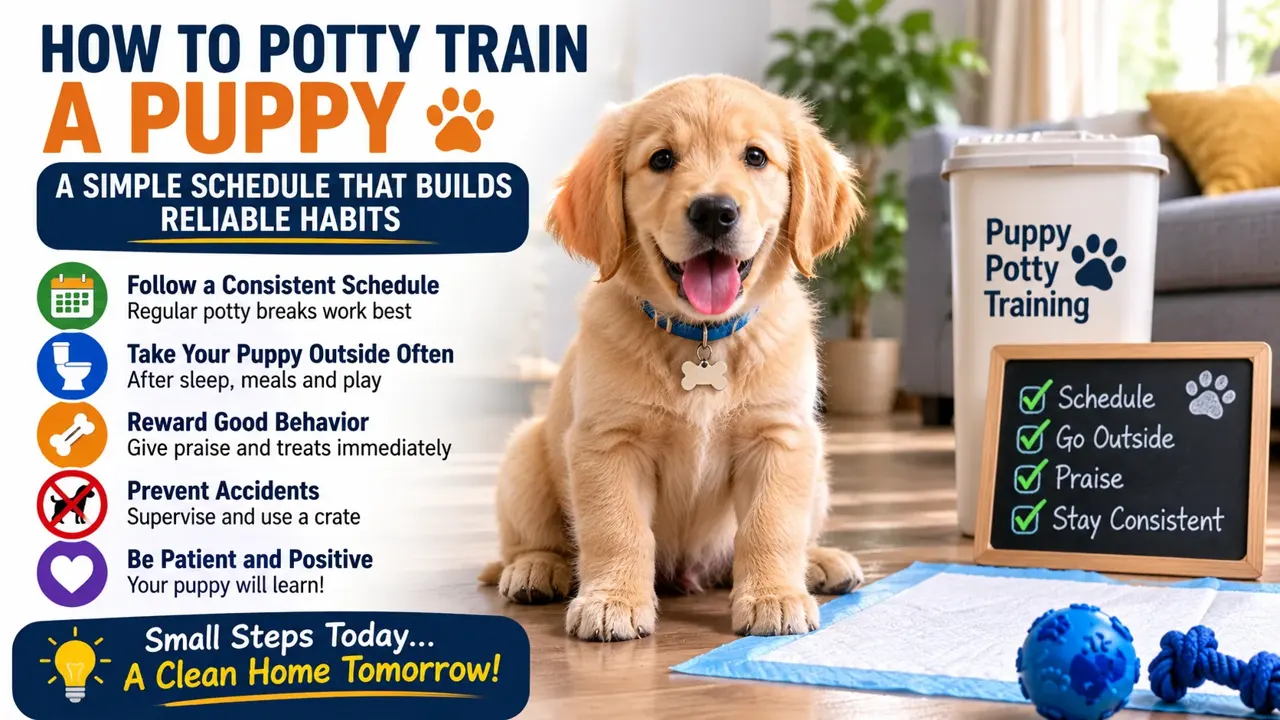
House training succeeds when the puppy is given frequent chances to be right. Timing, supervision and immediate reinforcement matter far more than punishment. Practical, reward-based steps, common mistakes, safety guidance and clear signs for when professional help is appropriate.
Quick Answer
Potty training is mostly a schedule-and-supervision problem. Take the puppy out after waking, eating, drinking, play, and naps; reward immediately after elimination outdoors; supervise closely indoors; and clean accidents without punishment.
Build a Predictable Toilet Schedule
Young puppies need frequent opportunities because bladder and bowel control are still developing. Start with trips after waking, meals, drinking, energetic play, naps, and before bedtime.
Choose One Easy Toilet Area
Take the puppy to a consistent outdoor location on leash and give enough quiet time to eliminate. Keep the trip boring until toileting happens so play does not delay the process.
Reward at the Right Moment
Reward immediately after the puppy finishes in the correct place. Waiting until you are back indoors weakens the connection.
Common Mistakes to Avoid
Never scold or punish a puppy for accidents found after the fact, as they cannot connect the punishment to past actions.
Related Virixoo Guides
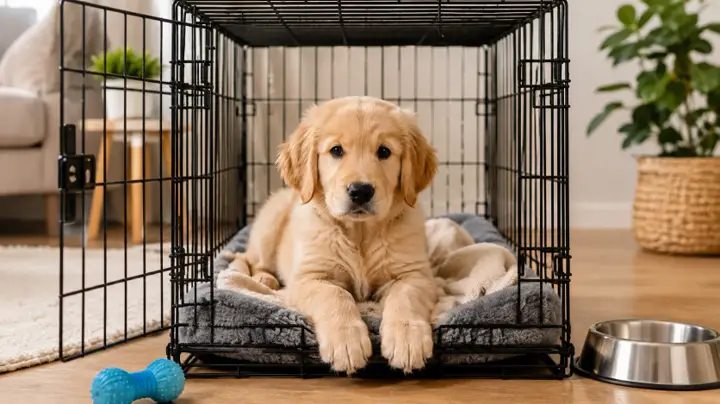
For crate management alongside house training, read How to Crate Train a Puppy: A Positive Step-by-Step Plan.
Bottom Line
Consistency, careful supervision, and prompt rewards make house training straightforward and stress-free.