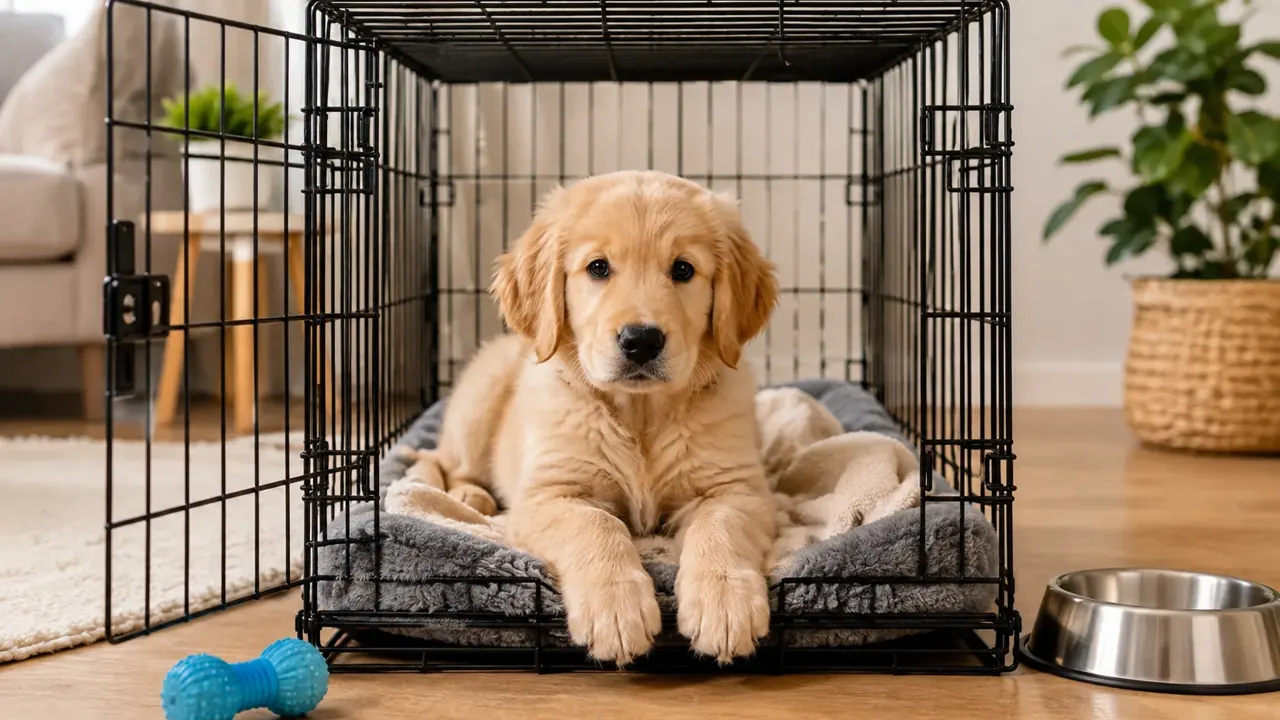
Crate training can be useful for rest, travel and safe household management, but the crate should become a place the puppy chooses to enter rather than a place associated with fear. Practical, reward-based steps, common mistakes, safety guidance and clear signs for when professional help is appropriate.
Quick Answer
Crate training should create a voluntary, comfortable resting place—not force prolonged confinement. Pair the crate with food, rest, and short easy sessions, increase duration gradually, and back up if the dog shows panic.
Set Up the Crate for Comfort and Safety
Choose an appropriate size and location, remove unsafe items, and make the surface comfortable for the individual dog. The dog should be able to stand, turn, and lie down naturally.
Create a Positive First Association
Leave the door open and toss treats or feed meals near and then inside the crate. Let the dog enter and exit freely before adding meaningful confinement.
Close the Door for Seconds, Not Minutes
Once the dog enters comfortably, close the door briefly while providing a safe activity or food reward, then open it before distress develops. Increase duration in small increments.
Common Mistakes to Avoid
Never use the crate as a punishment, and do not force a panicked puppy to stay inside against their will.
Related Virixoo Guides
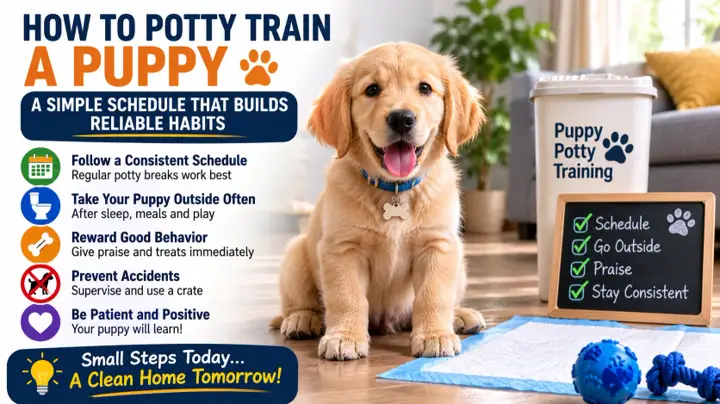
To support your puppy's routine, read How to Potty Train a Puppy: A Simple Schedule That Builds Reliable Habits.
Bottom Line
Patience, positive reinforcement, and gradual steps turn a crate into a safe, welcoming den for your puppy.