Dogs are not born knowing that leash tension should matter. Loose-leash walking becomes reliable when slack consistently produces movement, sniffing and rewards. Practical, reward-based steps, common mistakes, safety guidance and clear signs for when professional help is appropriate.
Quick Answer
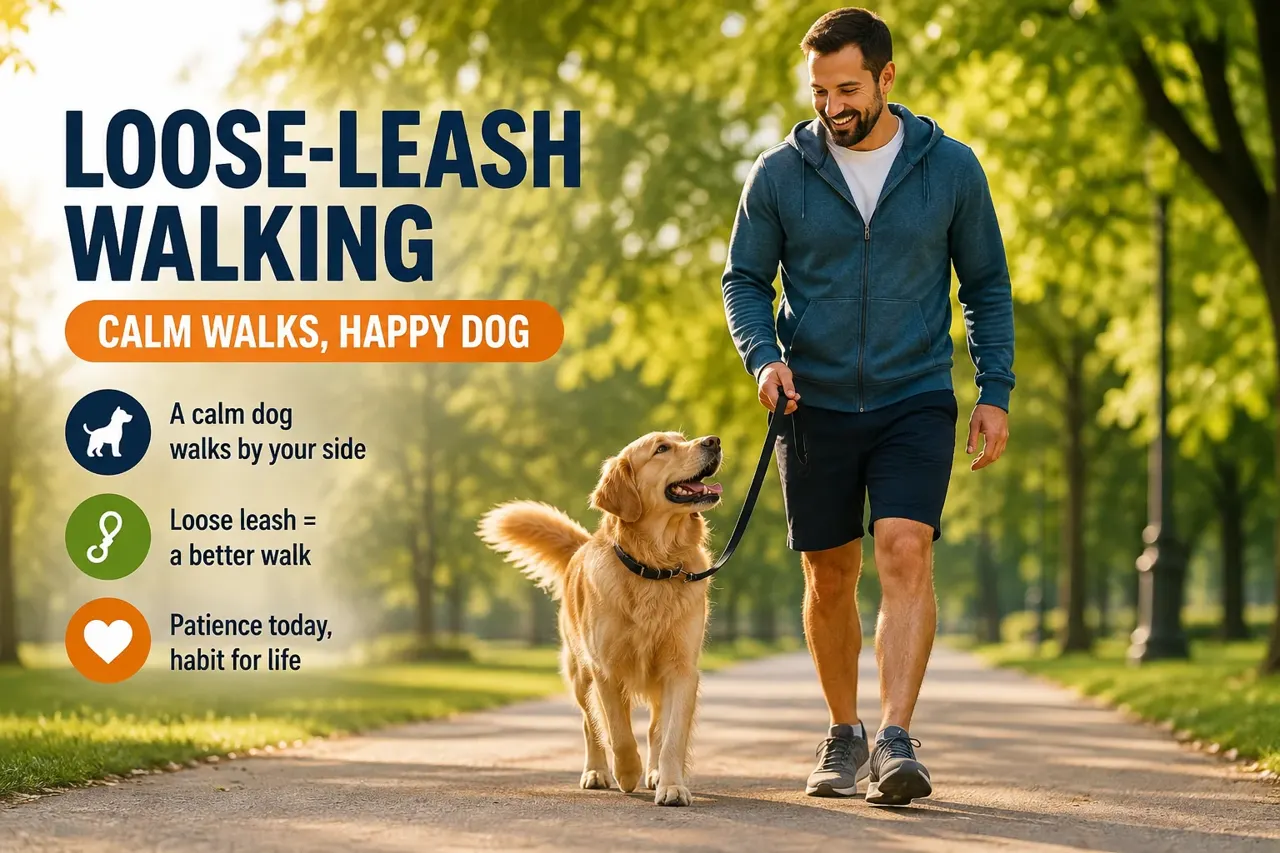
Loose-leash walking improves fastest when pulling stops producing forward movement and walking near you reliably earns access to movement, sniffing, and rewards. Begin in easy environments, use equipment that fits safely, and increase distractions only while the dog can still respond.
Why Dogs Pull on Leash
Pulling is often reinforced because it works: the dog reaches smells, people, dogs, or the next interesting place.
What to Do When the Leash Tightens
Avoid letting sustained pulling repeatedly carry the dog toward the reward. Pause, change direction when safe, or wait for slack, then resume movement.
Common Mistakes to Avoid
Avoid jerking the leash or using harsh corrections, which can create fear and anxiety associated with walks.
Related Virixoo Guides
To enhance overall control outdoors, read How to Teach a Dog to Come When Called: Build a Reliable Recall Safely.
Bottom Line
Clear rules where pulling stops forward momentum will teach your dog that a loose leash is the key to exploring the world.