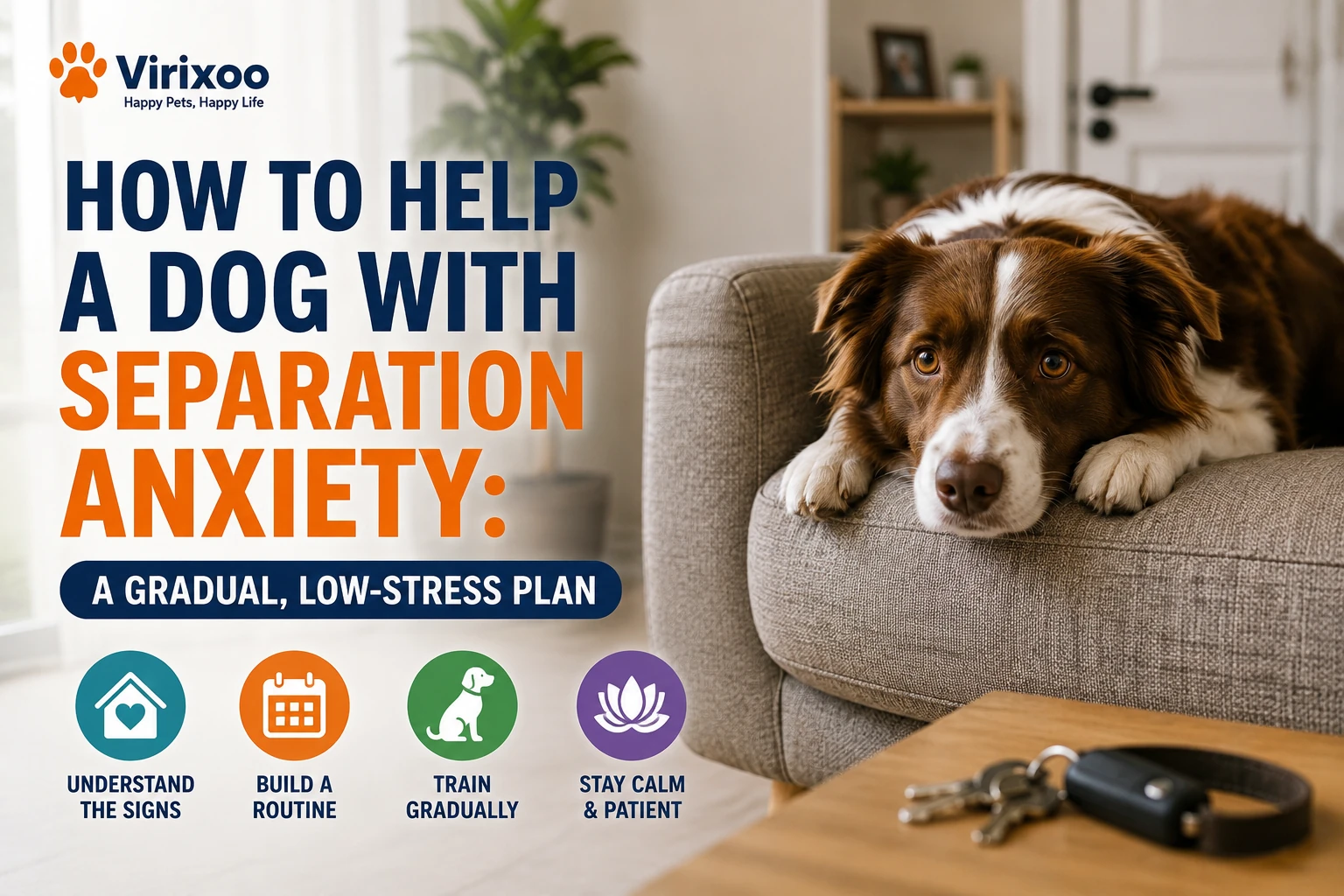
Helping a dog stay calm when left alone is a training process. The aim is to teach the dog that short periods of independence are safe and predictable, while avoiding absences that repeatedly trigger severe distress.
Quick Answer
Teach calm independence while you are home, identify a separation duration your dog can handle, practice very short absences, and increase time gradually. Keep departures boring and provide safe enrichment. If your dog panics, injures itself, or cannot tolerate even brief separation, contact a veterinarian or qualified behavior professional.
Independence Training Plan
1. Teach a Relaxed Home Base
Reward your dog for resting on a bed or mat while you move around the room. Gradually increase distance and duration without making the exercise difficult.
2. Practice Brief Room Separations
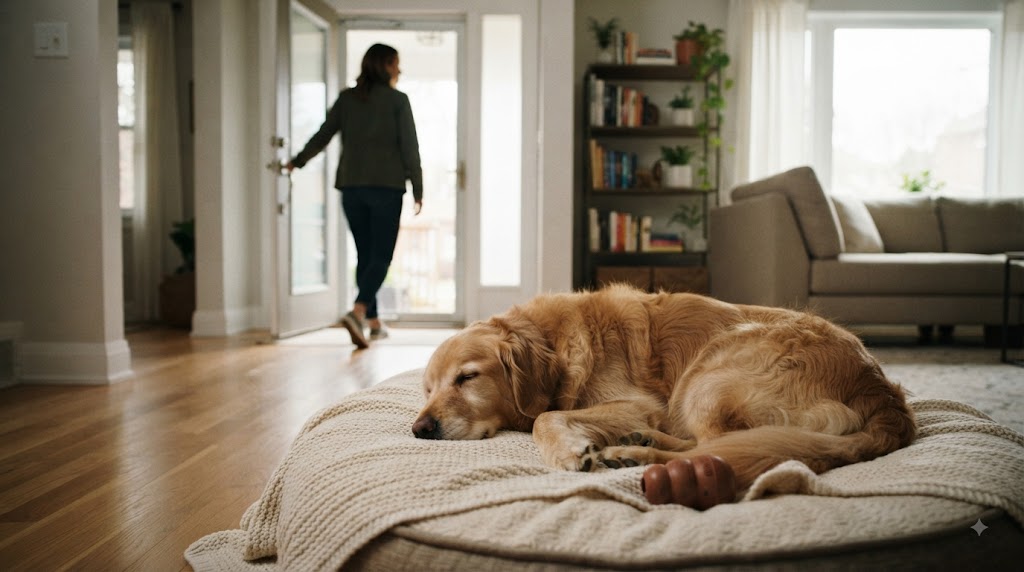
Step behind a door for a few seconds and return before your dog becomes distressed. Repeat and build duration slowly.
3. Practice Real Departures
When room separations are easy, briefly leave the home. Start with a duration that your dog can handle comfortably.
4. Increase Time in Small Steps
Do not increase every session. Repeat successful durations and occasionally make the next attempt easier. If anxiety appears, shorten the next separation.
5. Make Departure Cues Ordinary
Pick up keys, put on shoes, or open the door without leaving at random times. This can reduce the intensity of learned departure signals.
6. Provide Safe Enrichment
Offer appropriate food puzzles, toys, or chews that your dog already uses safely. Introduce them while you are present before relying on them during absences.
Build a Supportive Routine
Give your dog appropriate exercise, toilet opportunities, rest, and mental stimulation. These needs support general well-being, but exercise alone does not replace separation training.
What If Your Dog Becomes Distressed?
Return to a duration your dog can handle. Do not deliberately repeat long absences to force adaptation. For significant anxiety, professional support may be needed.
If your dog's problem is specifically separation anxiety, a veterinarian or qualified behavior professional can help you build a structured plan.
Common Mistakes
- Leaving for too long too soon.
- Making departures and arrivals highly emotional.
- Punishing destruction or accidents.
- Using a crate when confinement itself causes panic.
- Assuming exercise alone will solve the problem.
When to Contact a Veterinarian
Seek professional advice if your dog shows severe panic, escape attempts, self-injury, persistent destruction, sudden behavior changes, or distress that prevents gradual training. A veterinarian can help rule out medical contributors and discuss treatment options.
Frequently Asked Questions
How long can a dog be left alone?
There is no universal duration that suits every dog. Age, health, toilet needs, temperament, training, and individual tolerance all matter.
Will leaving the TV on keep my dog calm?
Some dogs may find familiar background sound comforting, but it is not a substitute for gradual independence training.
Should I use a crate for alone-time training?
A crate can be appropriate for a dog that already finds it comfortable, but it should not be used to force a panicking dog to remain confined.
Final Thoughts
Calm alone time develops through manageable practice. Reward independence, increase absences gradually, meet your dog's normal needs, and seek professional help when distress is severe.