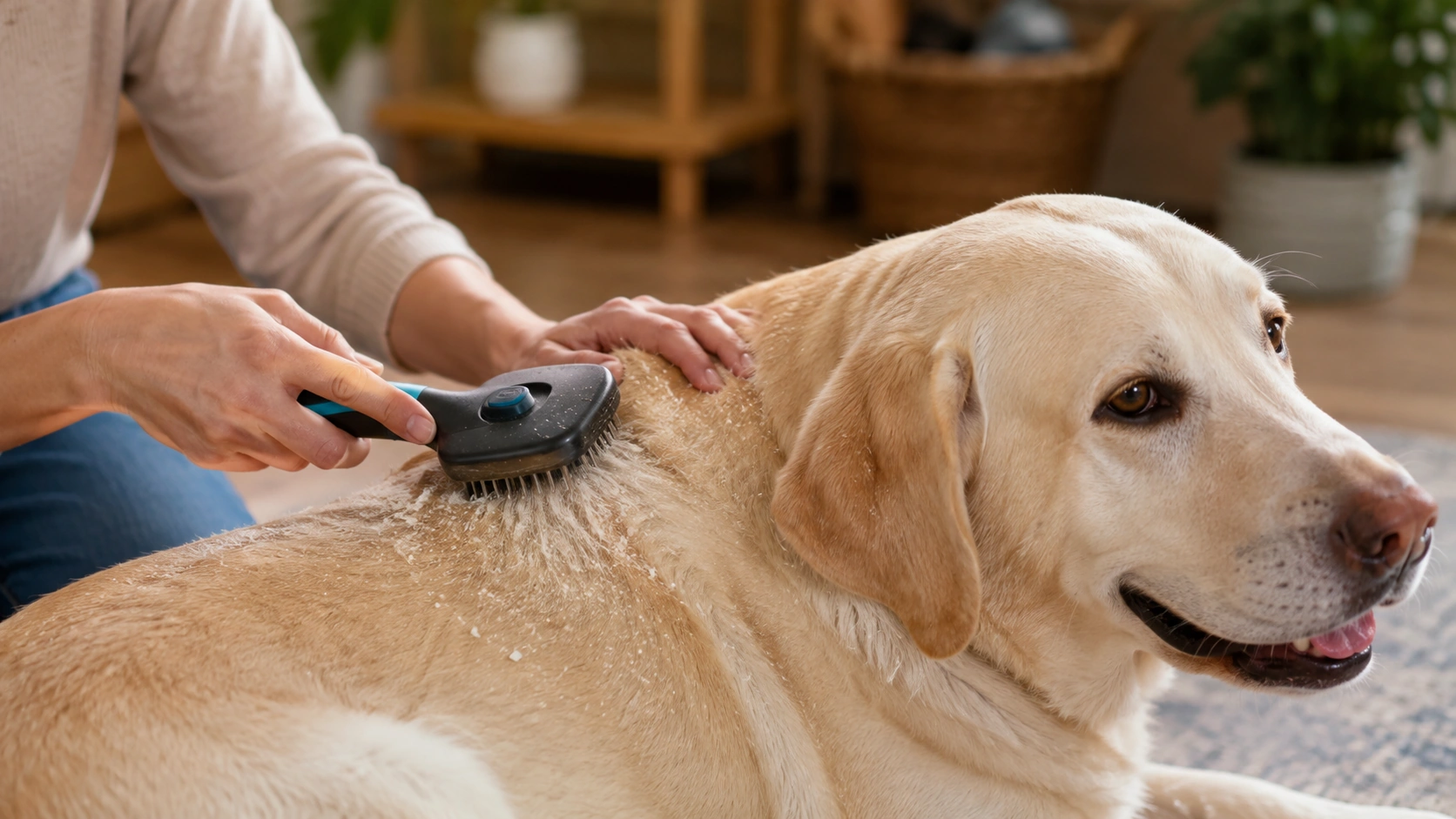

Regular brushing removes loose hair, helps prevent mats, and gives owners a chance to notice skin changes early. The right technique depends on coat type. Brushing harder or more often is not always better, especially when the skin is already inflamed.
Quick Answer
Choose tools suited to your dog’s coat, work in small sections, and brush gently in the direction of hair growth unless the tool’s instructions say otherwise. Stop if the skin becomes red, painful, or irritated. Mats close to the skin, sudden heavy shedding, bald patches, odor, sores, or intense itching need more than routine grooming.
Know the Coat You Are Working With
Short smooth coats, long coats, curly coats, wire coats, and double coats require different tools and schedules. A professional groomer can demonstrate a safe technique for your dog’s specific coat.
Brush Before Mats Become Tight
Small tangles are easier to manage than dense mats that pull continuously on the skin. Do not cut tight mats with scissors close to the skin because folded skin can be accidentally cut. Severe matting may require professional clipping.
Do Not Overuse Deshedding Tools
Some tools can remove a large amount of undercoat quickly, but repeated aggressive use may irritate skin or damage healthy coat. Follow product directions and stop when loose coat is reasonably reduced.
Shedding vs. Hair Loss
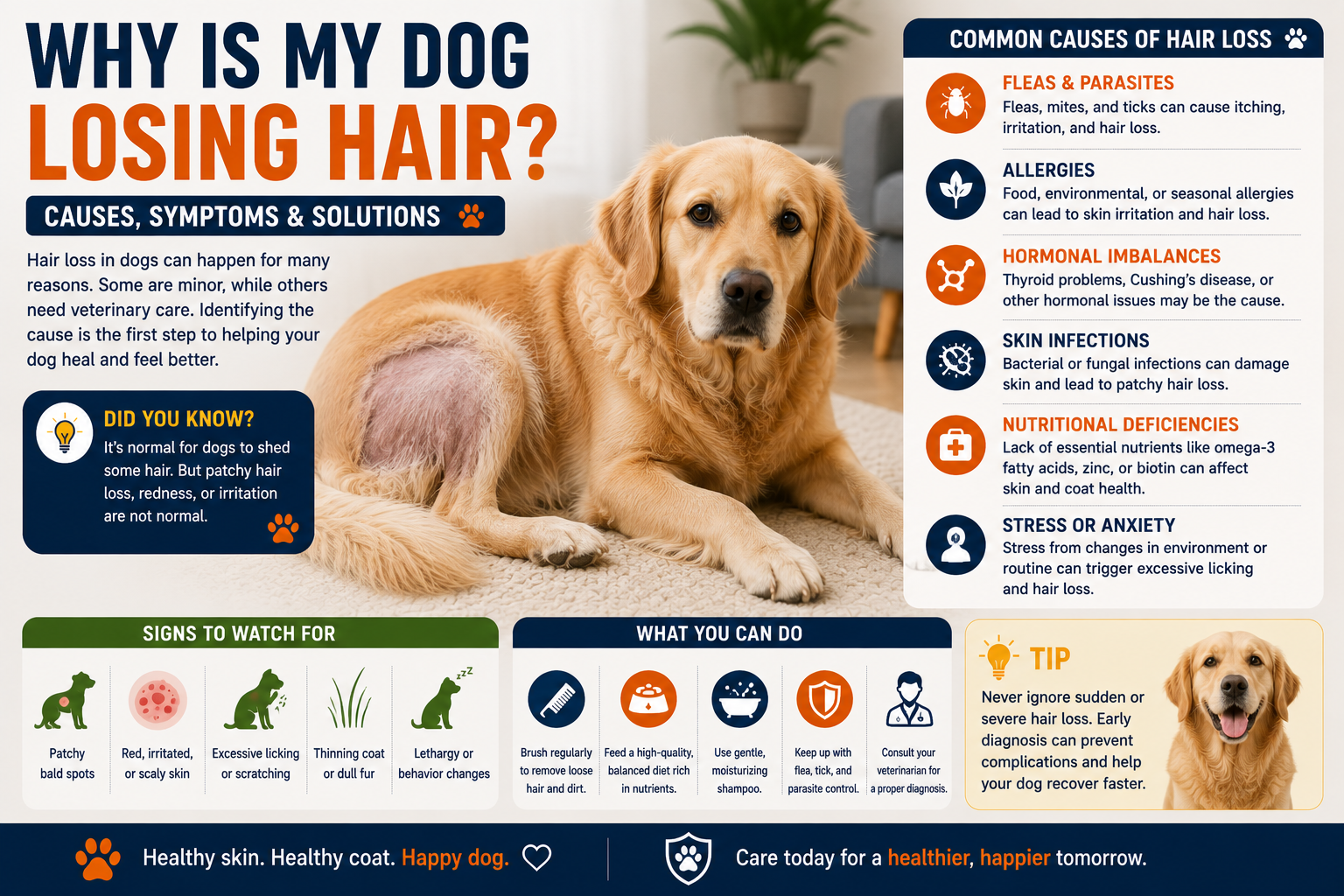
Seasonal shedding generally leaves an intact coat underneath. Visible bald patches, symmetrical thinning, broken hair, sores, crusting, odor, or skin color change are different. For abnormal hair loss, read Why Is My Dog Losing Hair?.
Use Grooming as a Skin Check
- Look for fleas or flea dirt.
- Check for redness, scabs, sores, or moist areas.
- Feel for lumps or painful areas.
- Check paws and nails while the dog is relaxed.
- Notice unusual odor or greasy skin.
Bathing and Brushing
Brush out loose debris and manageable tangles before bathing when appropriate. After bathing, dry the coat thoroughly, particularly in dense-coated dogs. Persistent odor after bathing may indicate skin, ear, dental, or anal-area disease; see Why Does My Dog Smell Bad?.
Related Virixoo Guides
For bald patches or unusual shedding, see Why Is My Dog Losing Hair?. For intense scratching, read Why Does My Dog Have a Hot Spot?. For nail-care practice, see How to Trim Dog Nails Safely.
FAQ
How often should I brush my dog?
It depends on coat type, length, shedding, season, and skin health. Long or mat-prone coats usually need more frequent care than short smooth coats.
Can brushing stop shedding?
No. Normal shedding cannot be eliminated, but brushing can remove loose hair before it spreads around the home.
Why does my dog have dandruff after brushing?
Dry flakes can have several causes, including skin irritation or disease. Persistent flaking, odor, itch, or hair loss deserves veterinary assessment.
Bottom line: Brush for comfort and coat maintenance, not maximum hair removal. Grooming should leave the skin calm and give you useful information about changes that need attention.