A persistent bad smell is often coming from a specific body area rather than from the dog as a whole. Skin infection, moist coat, ear disease, dental disease, anal-sac problems, urine or stool contamination, and rolling in strong-smelling material are common categories. Finding the source prevents repeated bathing from masking a medical problem.
Quick Answer
Smell the coat, ears, mouth, paws, and rear separately without putting your face close to a painful dog. Look for redness, discharge, greasy skin, wounds, tartar, swelling, or stool contamination. Persistent odor from an ear, mouth, skin lesion, or rear deserves veterinary evaluation.
Skin and Coat Odor
Yeast and bacterial overgrowth can create a strong or musty smell, particularly when skin is red, greasy, itchy, or inflamed. Moisture trapped under thick or matted hair can also contribute to skin problems. Repeated shampooing without identifying the cause may dry or irritate the skin.
Ear Odor
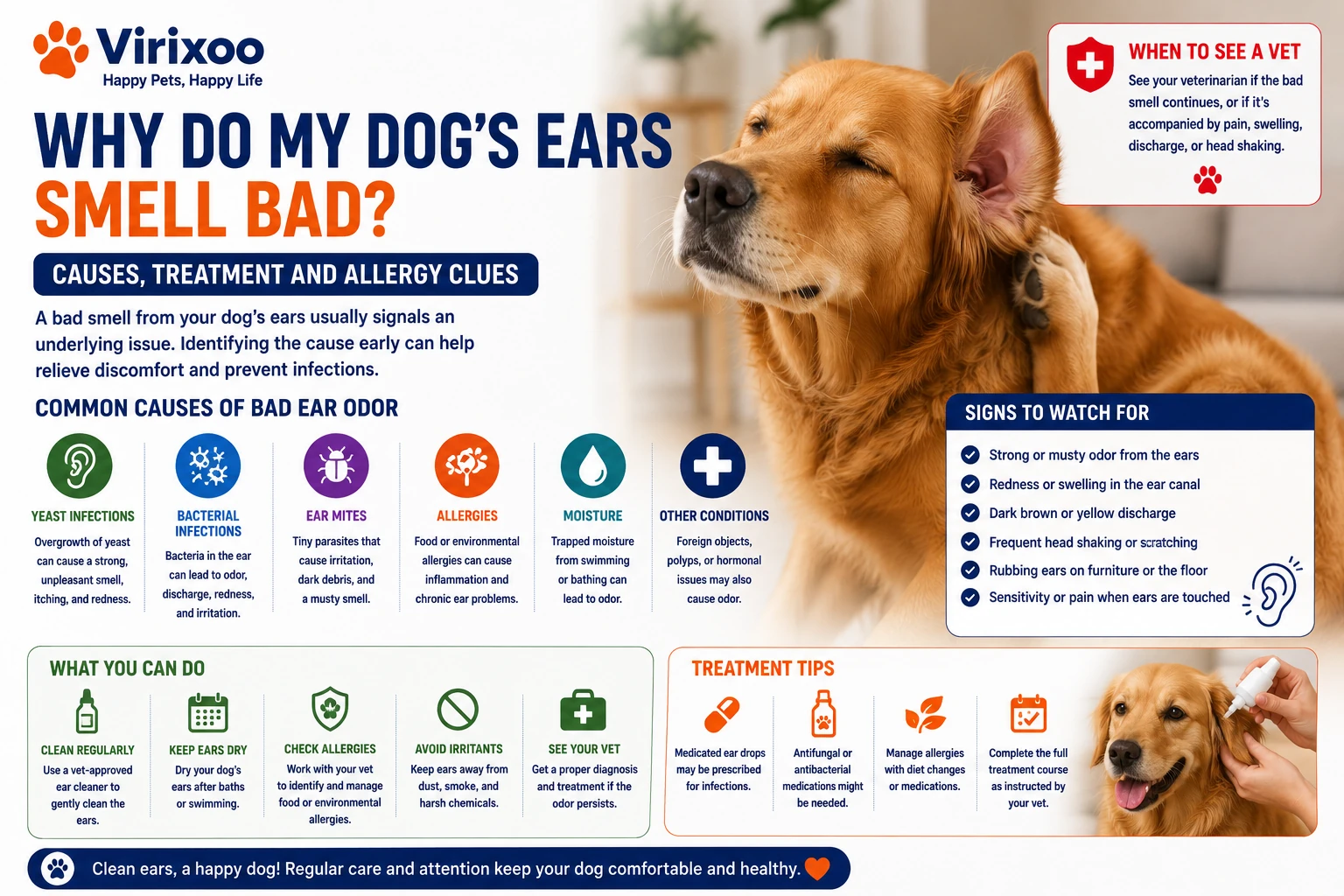
Foul or unusual ear odor with head shaking, scratching, redness, or discharge commonly accompanies ear inflammation. Because treatment depends on the cause and condition of the ear canal, avoid leftover drops or home mixtures.
Bad Breath
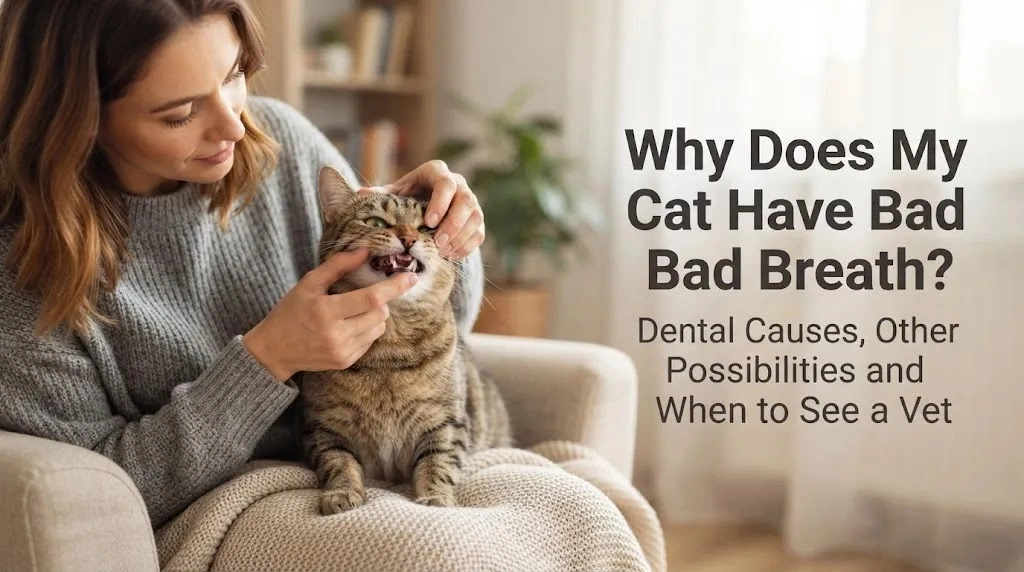
Persistent mouth odor can reflect plaque, tartar, periodontal disease, broken teeth, or oral infection. Dental disease can be painful even when a dog continues to eat.
Rear-End Odor
A strong fishy odor, scooting, licking, swelling, or pain around the anus may be associated with anal-sac problems. Stool caught in long hair can also cause odor and irritation.
When Another Bath Is Not the Answer
If odor returns quickly after bathing, focus on identifying the source. Dogs with active skin disease may need a veterinarian-directed bathing routine and specific products. Human shampoos and fragrances can irritate canine skin.
When to See a Veterinarian
Book an examination for persistent or recurring odor accompanied by itching, hair loss, sores, ear discharge, mouth pain, swelling, scooting, or behavior change. Sudden severe pain, rapidly spreading skin lesions, or significant swelling deserves prompt care.
Related Virixoo Guides
For mouth odor, read Why Does My Dog Have Bad Breath?. For rear-end odor and scooting, see Why Does My Dog Scoot on the Floor?.
Sources & References
The Merck Veterinary Manual lists odor among common signs of canine ear inflammation. Cornell's hot spot resource explains how moisture and skin inflammation can contribute to secondary infection.
FAQ
Why does my dog smell again right after a bath?
Rapidly returning odor suggests the source may be an ear, mouth, skin infection, or another localized problem rather than simple dirt.
Can I use perfume on my dog?
Fragrance can mask odor without treating the cause and may irritate sensitive skin. Use pet products only as directed.
Does a fishy smell mean anal glands?
Anal-sac secretions are one possibility, especially with scooting or rear-end licking, but an examination may be needed to confirm the source.
Bottom line: Persistent odor is a clue. Locate whether it comes from skin, ears, mouth, paws, or rear and treat the underlying problem instead of repeatedly covering the smell.