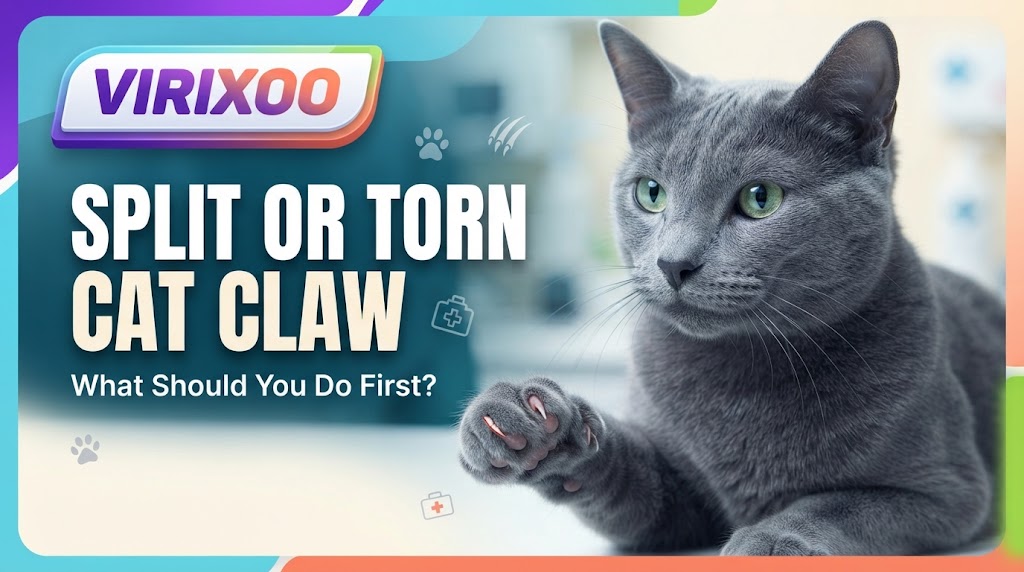
A split or torn claw can be very painful because the sensitive quick inside the nail contains nerves and blood vessels. Cats may injure a claw when it catches on carpet, furniture, wire, a scratching surface, or during a jump or struggle. Some injuries only affect the hard tip; others split toward the base or partly detach the claw from the nail bed.
Quick Answer
If bleeding is mild, keep the cat calm and apply gentle pressure with clean gauze. Prevent licking and avoid pulling on a loose claw. Contact a veterinarian if the claw is hanging, split near the base, repeatedly bleeding, very painful, swollen, or producing discharge. Do not give human pain medicine.
How to Tell a Minor Chip From a Deeper Tear
A superficial chip usually affects only the outer keratin shell and may not cause much pain. A deeper split often exposes pink or red tissue, bleeds, or moves when the cat walks. If the claw fragment shifts independently or the crack runs close to the toe, treat it as a deeper injury.
Why the Quick Matters
The quick supplies the claw with blood and sensation. When exposed, even a small injury may sting sharply. Cats may lick, hide, limp, growl when the paw is touched, or stop using a favorite scratching post.
Control Minor Bleeding
Use clean gauze or cloth and hold steady gentle pressure for several minutes. Avoid repeatedly lifting the gauze to check because that can disturb the clot. If bleeding continues, is heavy, or restarts every time the cat walks, veterinary care is appropriate.
Do Not Pull Off a Hanging Claw
A partially attached piece can still be connected to living tissue. Pulling may cause severe pain and bleeding. A veterinarian can trim or remove unstable material safely and may use local pain control or sedation if needed.
Check the Entire Toe
Sometimes the visible claw damage is not the only problem. Look for swelling, heat, punctures, toe deformity, pad injury, or pain higher in the paw. A cat with severe limping may have a sprain, fracture, or bite wound in addition to the claw injury.
Signs of Infection
| Finding | Why It Matters |
|---|---|
| Increasing redness or swelling | Can indicate inflammation or infection |
| Discharge or odor | Needs veterinary evaluation |
| Persistent licking | May worsen tissue irritation |
| Fever or lethargy | May indicate a broader infection |
| Pain that is getting worse | Suggests the injury is not settling |
Keep the Paw Clean and Dry
Keep the cat indoors and away from dirty litter or wet surfaces if the claw is open and bleeding. Do not soak the paw in harsh disinfectants. If your veterinarian recommends a specific cleaning method or bandage, follow those instructions exactly.
Why Bandaging Can Be Tricky
Paw wraps can become too tight, trap moisture, or slip. A poorly placed bandage can cause more harm than the original injury. Unless you have been shown how to bandage a cat paw, it is safer to use a carrier, reduce activity, prevent licking, and let the veterinary team handle the wrap.
What Not to Do
- Do not pull off a loose claw.
- Do not trim deep into a painful split.
- Do not use glue or household adhesive.
- Do not give ibuprofen, acetaminophen, naproxen, or aspirin unless a veterinarian specifically instructs you.
- Do not ignore swelling or discharge.
What the Veterinarian May Do
The veterinarian may remove unstable nail material, clean the nail bed, control bleeding, provide pain relief, and treat infection if present. If the toe itself appears injured, X-rays may be recommended.
How Healing Usually Looks
Comfort should improve gradually. The cat should become more willing to bear weight, and the toe should not become increasingly red, swollen, or warm. The damaged claw may take weeks to grow out fully.
Preventing Future Claw Injuries
Keep claws trimmed to an appropriate length, provide sturdy scratching surfaces, and check for loose carpet loops, damaged screens, or wire where claws can snag. Indoor cats can still tear claws during vigorous play, so regular paw checks are useful.
Bottom Line
A split claw can be surprisingly painful. Control minor bleeding, prevent licking, keep the cat quiet, and avoid pulling unstable nail material. Veterinary care is safest when the quick is exposed, the tear is near the base, bleeding persists, or the toe becomes swollen or infected.
Why Cats Often Hide Paw Pain
Cats may continue walking despite a painful claw, especially when the injury affects only one toe. Watch for subtle changes such as avoiding scratching posts, sitting with one paw tucked, licking one toe repeatedly, or becoming less active. A cat that still walks normally may still have an exposed quick.
What to Record
Note when the injury happened, which claw is affected, whether bleeding stopped, whether the claw is stable, and whether swelling developed. A clear photo can help if the cat tolerates it without restraint.
What to Record Before the Appointment
For split or torn cat claw, write down when the sign first appeared, whether onset was sudden or gradual, and whether it is getting better, worse, or staying the same. Record appetite, water intake, urination, stool, grooming, sleep, breathing, activity, and behavior. Include recent trauma, fights, outdoor access, medication changes, toxin exposure, vomiting, diarrhea, or weight loss when relevant.
If the problem is intermittent, a short natural photo or video can be useful. Do not provoke pain, force movement, manipulate an injured area, or delay urgent care just to document the sign.
How to Decide Whether Monitoring Is Still Reasonable
Monitoring is only reasonable when the cat is comfortable, the sign is mild, there is a plausible non-urgent explanation, and no red flags are present. If the cat becomes weaker, stops eating, breathes abnormally, develops severe pain, cannot urinate, collapses, or the sign rapidly worsens, the situation has changed and needs prompt veterinary reassessment.
How to Tell Whether the Paw Is Improving
Improvement should be visible in the cat’s behavior as well as the claw itself. The cat should gradually become more willing to bear weight, stop guarding the paw, and reduce licking. The toe should not become hotter, more swollen, or more painful over time. If the claw looks slightly drier but the cat becomes quieter, hides, or stops eating, the overall situation is not improving.
Because cats often hide pain, compare normal daily habits. A cat that no longer jumps to a favorite place, avoids climbing, or stops using a scratching surface may still be uncomfortable even if the paw is not obviously bleeding.
What If the Claw Is Torn Near the Base?
A tear close to the base is more concerning because the nail bed is more likely to be involved. These injuries can bleed repeatedly and may expose sensitive tissue. Do not attempt to clip across a deep fracture. The veterinary team can determine where healthy tissue begins and whether the unstable portion should be removed.
Why Litter Choice Can Matter During Healing
Loose dusty litter can stick to an open nail bed. If the veterinarian recommends temporarily changing litter, follow that advice. Do not make abrupt litter changes unless needed, because some cats may avoid unfamiliar litter. The goal is to keep the paw clean without creating a new litter-box problem.
When Recurrent Claw Problems Need Investigation
One torn claw is often traumatic, but repeated splitting, abnormal nail growth, inflammation around several claws, or persistent crusting can suggest a broader skin or nail disorder. Take photos of recurrent episodes and mention whether other claws look brittle, thickened, or deformed.
A Practical Decision Guide
When evaluating split or torn cat claw, start with the cat’s overall function. A cat that can breathe comfortably, walk normally, eat, drink, urinate, and respond to the environment is different from one that is weak, painful, hiding, confused, or unable to perform a normal function. Next consider speed: a change that developed over minutes or hours generally deserves more urgency than a stable finding that has been unchanged for months.
Combinations of signs matter. Pain plus food refusal, weakness plus pale gums, swelling plus breathing difficulty, or neurologic change plus collapse are more concerning than one mild isolated feature. If you are uncertain, call the veterinary clinic and describe the cat’s current condition rather than only naming the symptom.
How to Keep the Cat Comfortable While Waiting
Use a quiet indoor room, minimize unnecessary handling, and keep food, water, and the litter box easy to reach. Prevent access to stairs or high furniture if mobility is abnormal. For suspected trauma, reduce activity. Do not force food, water, exercise, or handling when the cat is distressed.
What Follow-Up Should Focus On
After treatment begins, track whether the cat is returning toward its normal baseline. Improvement should include comfort, appetite, grooming, movement, and normal litter-box habits—not just a smaller swelling or less visible lesion. Contact the clinic if the original problem returns, new signs appear, or the cat worsens after initially improving.