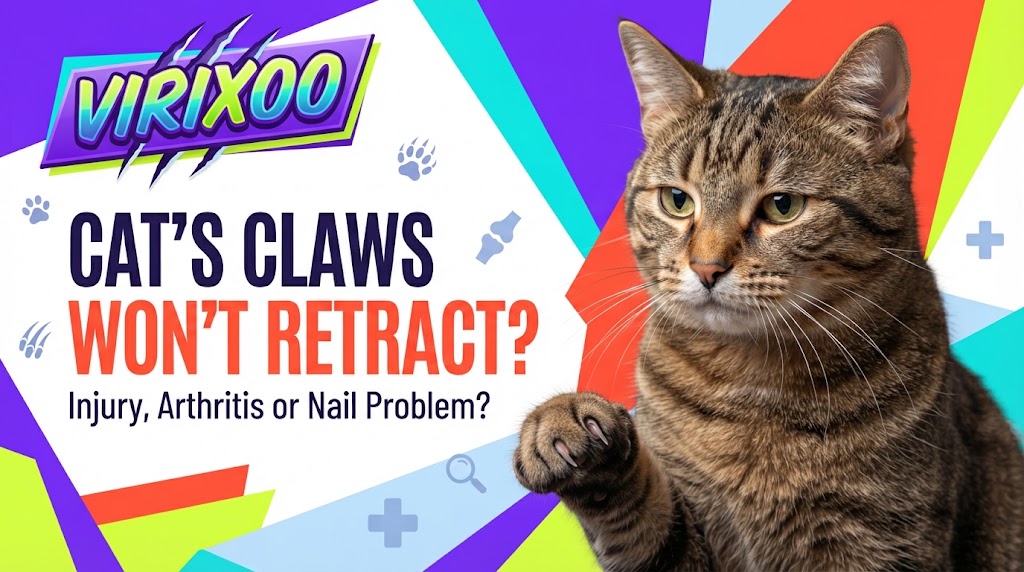
Cats normally extend and retract their claws using tendons and small muscles in the toes. If the claws suddenly stay out, catch on fabric, or no longer retract as they used to, the cause may be overgrowth, arthritis, toe pain, injury, tendon dysfunction, or neurologic disease.
Quick Answer
If one claw is stuck out after trauma or appears broken, painful, swollen, or bleeding, arrange veterinary evaluation. If several claws gradually stop retracting in an older cat, check nail length and mobility and schedule a routine examination for arthritis or other age-related problems. Sudden weakness or loss of control in a limb increases urgency.
How Claw Retraction Works
A cat’s claws are not pulled in like a mechanical switch; their resting position is influenced by ligaments and tendon tension. When the cat flexes the toes, the claws extend. Pain, joint stiffness, or changes in tendon function can alter this movement.
Overgrown Claws
Senior, sedentary, or arthritic cats may scratch less and naturally wear the claws down less effectively. The nails can become long, curved, and more likely to remain visible or snag on bedding. In severe cases, an overgrown claw can curve into the paw pad.
Arthritis
Arthritis in the toes, wrists, elbows, shoulders, spine, or hips can reduce normal grooming and scratching. Cats may stop using scratching posts, hesitate before jumping, or allow the claws to grow longer because movement is uncomfortable.
Single-Claw Injury
A torn or split claw can remain extended because the toe is painful or the nail is unstable. Look for swelling, bleeding, a hanging fragment, or repeated licking. Do not pull loose nail material.
Tendon or Nerve Problems
Injury affecting tendons or nerves can disrupt normal claw movement. If the paw also knuckles, drags, or feels weak, a neurologic examination may be needed.
What to Check Safely
While the cat is relaxed, look at each paw without forcing the toes. Compare nail length, shape, and symmetry. Check whether one toe is swollen and whether any claw is curving toward the pad.
Why Snagging Matters
Exposed claws can catch on blankets, carpet, furniture, or mesh and tear. Keep snag-prone fabrics away from an affected cat until the claws are trimmed or the underlying problem is treated.
Internal Virixoo Guide
If the issue is simply nail length, see our guide on How to Trim Cat Nails Safely. If a claw is split or bleeding rather than just long, treat it as an injury rather than a routine grooming problem.
What Not to Do
- Do not force a painful claw backward.
- Do not pull loose nail fragments.
- Do not cut into the quick.
- Do not assume an older cat is “just lazy” if scratching and jumping have changed.
What the Veterinarian May Check
The veterinarian may examine the toes, joints, tendons, nail beds, and neurologic function. Overgrown claws can be trimmed safely, while painful joints, infection, or nerve problems require additional treatment.
Helping an Older Cat Maintain Its Claws
Provide stable horizontal and vertical scratching surfaces that do not require a large jump or stretch. Check claws every few weeks, because older cats may need more frequent trimming than young active cats.
Bottom Line
Claws that remain extended can reflect simple overgrowth, but pain, arthritis, injury, tendon dysfunction, and neurologic disease are also possible. Look at whether the change affects one claw or several and whether mobility has changed at the same time.
Why Senior Cats Need More Frequent Nail Checks
Older cats often sleep more, scratch less, and develop thicker claws. Arthritis can make normal scratching and grooming uncomfortable. Checking the nails every few weeks helps catch overgrowth before a claw curves into the pad.
Why One Paw May Be Different
If only one paw has persistent extended claws, consider local pain, injury, or nerve dysfunction rather than generalized aging. Compare toe position, nail wear, and limb movement with the opposite side.
When Nail Trimming Is Not Enough
Trimming improves length but does not treat arthritis, tendon injury, infection, or neurologic disease. If claws quickly become abnormal again or mobility changes, the underlying problem needs evaluation.
A Practical Decision Guide
For cat claws won't retract, start by deciding whether the change is truly new and whether the cat can still perform basic functions normally. Breathing, walking, eating, drinking, urinating, defecating, grooming, and responding to the environment are more useful than one isolated sign. A cat that becomes weak, painful, unable to urinate, unable to swallow, or neurologically abnormal has moved beyond routine home monitoring.
Next consider speed. A problem that develops over minutes or hours generally deserves more urgency than a stable finding that has looked the same for months. Finally, look for combinations of signs. Pain plus food refusal, weakness plus pale gums, eye change plus vision loss, or swelling plus breathing difficulty are more concerning than a single mild feature.
What to Record Before the Appointment
Write down when the problem began, whether onset was sudden or gradual, and whether it is constant or intermittent. Record appetite, water intake, urination, stool, grooming, sleep, breathing, movement, and behavior. Include recent trauma, falls, fights, medication changes, toxin exposure, weight loss, vomiting, diarrhea, or outdoor access when relevant.
A short photo or video can be useful if the sign comes and goes, but do not provoke pain, force movement, manipulate an injured area, or delay urgent care just to document the problem.
Common Mistakes Owners Make
- Waiting for a dramatic symptom before calling.
- Using leftover medication from another illness.
- Giving human pain medicine.
- Repeatedly touching or testing a painful body part.
- Assuming normal eating means the cat is not in pain.
- Stopping treatment as soon as one visible sign improves.
How to Keep the Cat Comfortable While Waiting
Use a quiet indoor room, minimize unnecessary handling, and keep food, water, and the litter box easy to reach. Prevent access to stairs or high furniture when movement is abnormal. If trauma is suspected, restrict activity. Do not force food, water, exercise, or handling when the cat is distressed.
What Follow-Up Should Focus On
After treatment begins, improvement should involve the whole cat rather than only the visible sign. Appetite, grooming, mobility, litter-box habits, breathing, sleep, and social behavior should move back toward the cat’s normal baseline. Contact the clinic if the original problem returns, new signs appear, or the cat worsens after initially improving.
When to Recheck Even After Initial Improvement
A cat can look better for a few hours while the underlying problem remains. Recheck is appropriate when the sign returns, appetite falls, the cat hides more, breathing changes, mobility worsens, or new pain appears. Follow any scheduled veterinary recheck even if the visible sign seems smaller or less dramatic.
Do not stop prescribed medication early, change the dose, or add supplements without discussing it with the veterinarian. If a new symptom appears after treatment begins, report both the new sign and the timing relative to medication, feeding, or activity changes.
Why Claw Sheaths Can Be Confusing
Cats naturally shed the outer layers of their claws, and these translucent sheaths are often found near scratching posts. A retained sheath can sometimes make a claw look thicker or more prominent, but it should not cause marked pain, swelling, or inability to use the paw.
Why Scratching Behavior Is Useful History
Tell the veterinarian whether the cat still uses vertical and horizontal scratching surfaces. A sudden decline in scratching can reflect shoulder, elbow, wrist, toe, or spinal pain. It can also explain why nails begin overgrowing and staying visible.
Why Thickened Claws Need More Care
Older claws can become thicker and harder to trim. If the claw is curled or close to the pad, a veterinary nurse or veterinarian can trim it safely and check whether arthritis or toe disease is limiting normal wear.
Final Safety Check
Before continuing home observation, confirm that the cat is comfortable, breathing normally, responsive, and able to eat, drink, move, urinate, and defecate. A worsening change in any of these basic functions is more important than one isolated symptom appearing slightly better. When the cause is uncertain or the sign is progressing, veterinary reassessment is safer than prolonged experimentation at home.
Why Claw Problems Can Affect Confidence
A cat whose claws constantly snag may become hesitant on blankets, carpet, or climbing furniture. The cat may reduce play or scratching to avoid discomfort. This behavior can look like normal aging even when overgrown claws or painful toes are contributing.
After trimming or treatment, watch whether the cat resumes scratching, climbing, and normal paw placement. Lack of improvement suggests that joint or neurologic problems may still be present.
When to Contact the Clinic Again
Call again if the cat develops new pain, appetite loss, vomiting, breathing changes, weakness, abnormal urination, or neurologic signs, even if the original symptom looks slightly improved. A change in overall function is an important reason to shorten the monitoring period and seek reassessment.