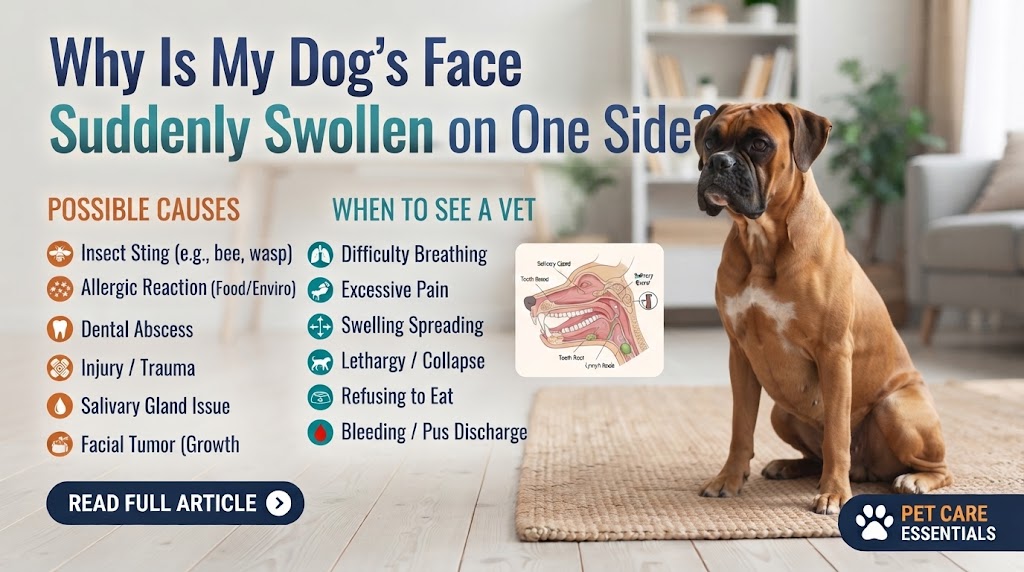

Sudden facial swelling can range from a localized sting reaction to a life-threatening allergic emergency. The most important first question is whether the dog is breathing normally. Swelling around the muzzle, lips, eyelids, or face can also come from dental infection, trauma, bites, or other inflammatory problems.
Quick Answer
If facial swelling is rapidly increasing or occurs with breathing difficulty, collapse, repeated vomiting, widespread hives, or severe weakness, seek emergency veterinary care immediately. If the dog is breathing comfortably but swelling persists, contact a veterinarian the same day because dental infection, stings, trauma, and other causes may still need treatment.
Start With Breathing
Watch the dog at rest. Is breathing quiet and easy, or is there noisy inhalation, open-mouth distress, excessive effort, or an inability to settle? Swelling involving the airway can progress quickly. Blue-gray gums, collapse, or severe breathing difficulty are emergency signs.
Allergic Reactions and Insect Stings
Stings from bees, wasps, and other insects can cause sudden swelling around the lips, eyelids, or muzzle. Some dogs develop only a localized reaction, while others have a more generalized allergic response. Hives, vomiting, weakness, facial swelling, and breathing difficulty raise concern for anaphylaxis.
Dental Infection
A tooth-root infection can create swelling beneath the eye or along the jaw. The dog may also have bad breath, painful chewing, reduced appetite, drooling, or a history of a broken tooth. Dental swelling usually does not resolve just because the dog receives temporary pain relief.
Trauma and Bites
Rough play, falls, collisions, bites, or punctures can cause localized facial swelling. Small puncture wounds may be hidden beneath fur. Swelling that becomes hotter, more painful, or starts draining can indicate infection.
What the Location Can Suggest
| Location | Possible Clues |
|---|---|
| Both eyelids and muzzle | Allergic reaction becomes more likely |
| One side below the eye | Dental root problem may be considered |
| One focal painful area | Sting, bite, trauma, or abscess |
| Swelling plus hives | Generalized allergic reaction |
| Swelling plus breathing difficulty | Emergency airway concern |
Do Not Give Random Human Medication
Owners often want to give an antihistamine immediately, but not every product or dose is appropriate for every dog. Some combination medications contain ingredients that are unsafe. Call a veterinarian for specific instructions rather than guessing.
Do Not Delay for a Perfect Diagnosis
You do not need to know whether the trigger was a sting, food, medication, or another exposure before seeking help. If breathing or circulation is affected, treatment comes before determining the exact cause.
What to Check if the Dog Is Stable
Look for a visible sting site, puncture, broken tooth, oral swelling, hives, vomiting, or recent exposure to new foods, medications, vaccines, plants, insects, or chemicals. Do not probe painful areas deeply.
Why Dental Swelling Can Be Misleading
Dental infections may cause a soft swelling below one eye and can resemble a sting. If the dog has bad breath, chewing pain, or a damaged tooth, tell the veterinarian. Tooth-root infections require dental treatment rather than simply waiting for the swelling to disappear.
What Not to Do
- Do not wait at home if breathing changes.
- Do not give human medication without veterinary direction.
- Do not puncture or squeeze a facial swelling.
- Do not force the mouth open if the dog is painful.
- Do not assume every facial swelling is an allergy.
When to Seek Emergency Care
Go immediately for breathing difficulty, blue-gray gums, collapse, severe weakness, rapidly spreading swelling, repeated vomiting, or widespread hives with systemic signs.
When Same-Day Veterinary Care Is Appropriate
Even when breathing is normal, arrange prompt care for persistent swelling, obvious dental pain, puncture wounds, fever, discharge, or swelling that keeps increasing. A stable dog can still have a painful infection or injury that requires treatment.
Bottom Line
Facial swelling is a symptom, not a diagnosis. Check breathing first, then consider allergy, sting, dental disease, trauma, or infection. Rapid swelling with breathing or circulation problems is an emergency, while persistent localized swelling still deserves timely veterinary assessment.
Why Swelling Around the Eyes Needs Careful Observation
Swollen eyelids can become dramatic quickly, but the dog may still breathe normally. Watch whether the swelling remains limited to the face or whether hives, vomiting, weakness, or breathing changes develop. The spread of symptoms is more important than how dramatic one photograph looks.
What If the Swelling Improves Before the Appointment?
Improvement is reassuring, but it does not always identify the cause. Dental infections can fluctuate, and allergic reactions can recur. Keep a photo of the original swelling and tell the veterinarian how quickly it appeared and whether any medication was given.
How to Reduce Future Sting Risk
Supervise dogs that snap at bees or insects, inspect outdoor areas for nests, and avoid leaving sweet food outdoors. Dogs with a history of severe allergic reactions may need a veterinarian-designed emergency plan for future exposures.
How Quickly Can an Allergic Reaction Progress?
Some reactions remain limited to mild facial puffiness, while others can progress over minutes to affect breathing or circulation. This unpredictability is why owners should watch closely after a sudden onset. If swelling is expanding rapidly, do not wait for breathing difficulty to appear before contacting an emergency clinic.
Why Repeated Vomiting Changes the Urgency
Vomiting during a facial-swelling episode can signal that the reaction is affecting more than the skin. When vomiting is paired with weakness, collapse, or breathing changes, treat the situation as an emergency rather than a simple cosmetic swelling.
Dental Swelling Can Fluctuate
A tooth-root infection may enlarge, drain, partially shrink, and then recur. Temporary improvement does not mean the infection is gone. If swelling appears beneath one eye or along the jaw and the dog has dental odor or chewing discomfort, veterinary dental assessment is important even if the swelling later softens.
What to Bring to the Appointment
Bring a timeline, photos of the swelling at its worst, a list of medications and supplements, and details of any recent vaccine, new food, insect exposure, grooming product, or trauma. If a sting was seen, note where it occurred. This information can help distinguish allergic, dental, and traumatic causes.
How to Prevent Delays Next Time
If your dog has had a significant allergic episode before, ask your veterinarian for a written emergency plan that explains which symptoms require immediate transport and what, if any, medication should be given. Do not rely on a dosage found online because product strengths and dog-specific factors vary.
What to Do While You Are Traveling to the Clinic
Keep the dog calm and avoid unnecessary activity. If breathing is normal, allow the dog to rest in a comfortable position and prevent scratching or rubbing the swollen area. Do not place tight wraps around the muzzle or neck. If breathing begins to change, call the clinic again while you are on the way so the team knows the situation is escalating.
If you know the trigger, bring the package, plant photo, medication name, or insect information with you. Even when the cause seems obvious, treatment decisions depend on the dog's current condition rather than the trigger alone.
Why Previous Reactions Matter
A dog that has reacted before may not respond exactly the same way the next time. One episode may remain limited to facial puffiness while another can involve vomiting or circulation changes. Tell your veterinarian about all prior reactions, how quickly they developed, and what treatment was needed. This history can help create a safer plan for future exposures.