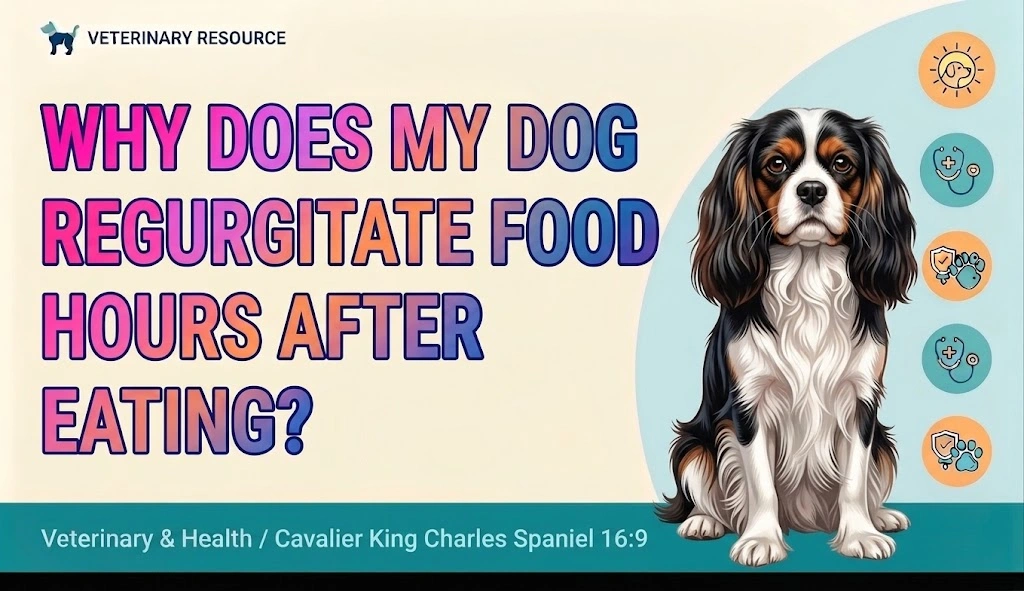
Passive return of food hours after a meal can suggest an esophageal problem and should be distinguished from active vomiting because the causes and risks differ. A single sign rarely identifies one diagnosis, so the safest approach is to look at the whole pattern: when it started, how often it happens, what triggers it, and whether your dog is otherwise acting normally.
Quick Answer
Passive return of food hours after a meal can suggest an esophageal problem and should be distinguished from active vomiting because the causes and risks differ. Focus on frequency, stool or urine quality when relevant, pain, appetite, hydration, and whether your dog can perform normal functions comfortably. Persistent or worsening changes should be discussed with a veterinarian.
Possible Causes
Normal digestive activity or timing
The intestines normally move gas, fluid, and food. Timing around meals, fasting, exercise, and bowel movements can make digestive signs more noticeable without necessarily indicating disease. The timing, severity, and accompanying signs help determine how much weight to give this possibility.
Dietary or gastrointestinal upset
A sudden diet change, scavenging, food intolerance, gas, mild gastroenteritis, constipation, or nausea can change digestive behavior and sounds. The timing, severity, and accompanying signs help determine how much weight to give this possibility.
Painful or obstructive disease
Persistent discomfort, repeated vomiting or retching, abdominal enlargement, inability to pass stool, marked weakness, or rapid deterioration raises concern for more serious gastrointestinal disease. The timing, severity, and accompanying signs help determine how much weight to give this possibility.
Bottom Line
Passive return of food hours after a meal can suggest an esophageal problem and should be distinguished from active vomiting because the causes and risks differ. The most useful next step is not to guess a diagnosis from one symptom, but to document the pattern and judge whether normal function is changing. If the sign is persistent, painful, progressive, or accompanied by other abnormalities, veterinary evaluation is the safest course.