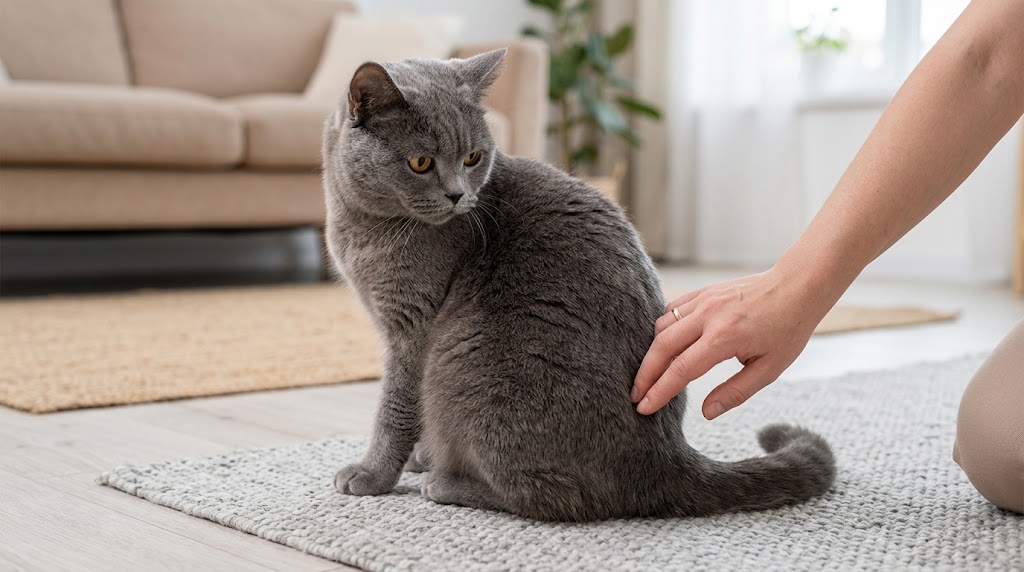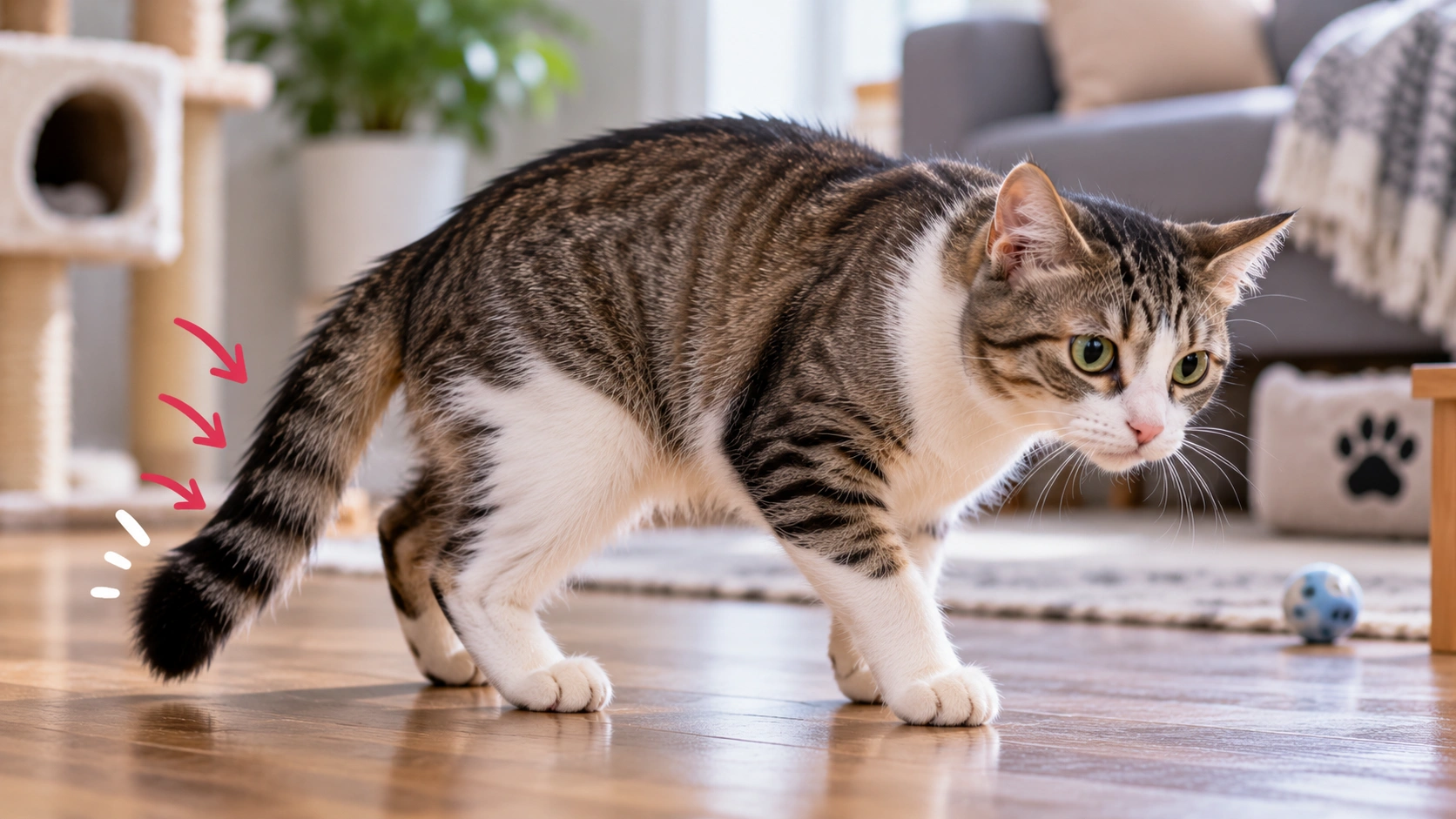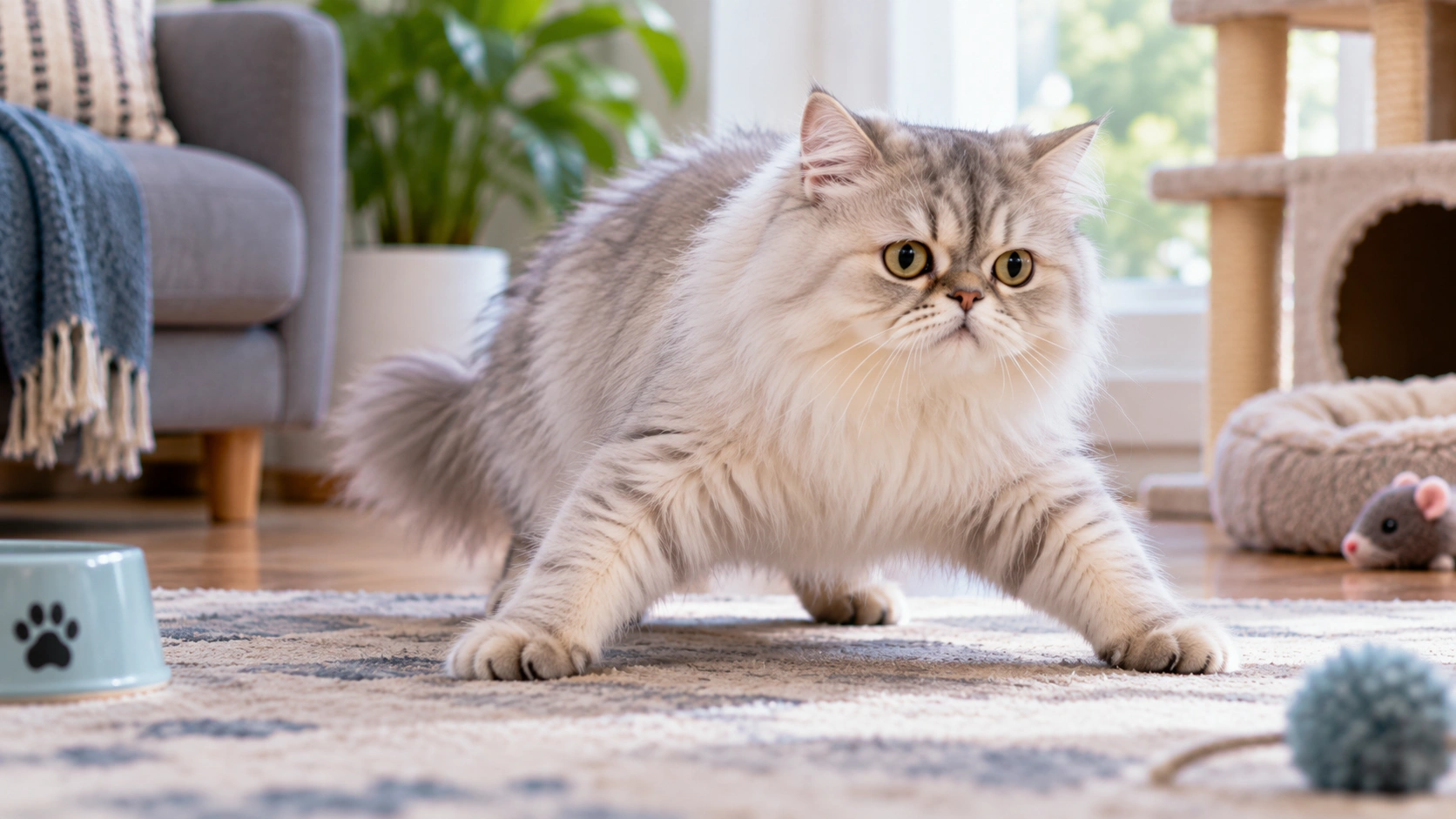

A persistently arched or hunched back can be a sign of pain. Dogs may change posture because of abdominal discomfort, spinal pain, muscle injury, urinary problems, or other conditions. A brief stretch after rest is different from a dog that remains tense, walks stiffly, refuses food, or seems unable to get comfortable.
Quick Answer
If your dog suddenly develops a hunched or arched posture, watch movement, appetite, urination, stool, vomiting, and abdominal comfort. Limit strenuous activity and avoid human pain medication. Contact a veterinarian when the posture persists, is painful, or appears with vomiting, weakness, reluctance to move, or appetite loss. Seek urgent care for collapse, severe abdominal swelling, repeated unproductive retching, inability to urinate, or severe neurologic weakness.
What an Arched Back Looks Like
The spine may appear rounded upward, the abdomen may look tucked, and the dog may take short careful steps. Some dogs keep the head lower than usual or resist turning. Others alternate between standing and lying down because no position feels comfortable.
Abdominal Pain
Gastrointestinal inflammation, pancreatitis, obstruction, urinary problems, and other abdominal conditions can cause guarding and a hunched posture. Vomiting, diarrhea, appetite loss, a tense abdomen, or repeated attempts to get comfortable add concern.
Spinal or Muscular Pain
Back injury, intervertebral disc disease, muscle strain, or other spinal problems can cause an arched posture. Watch for reluctance to jump, difficulty using stairs, crying when picked up, weakness in the limbs, or a change in coordination.
Urinary Problems
A dog with urinary discomfort may hunch, strain, lick the genital area, or make repeated attempts to urinate. Inability to pass urine is an emergency, particularly in a dog that repeatedly strains without producing a normal stream.
Distinguish Stretching From Persistent Posture
A normal stretch is brief and followed by relaxed movement. A painful posture tends to persist or return frequently. If your dog arches only during a familiar stretch after waking and then moves normally, the pattern is less concerning than a posture that remains for minutes or hours.
What to Check Safely
| Observation | Why It Matters |
|---|---|
| Vomiting or diarrhea | May suggest abdominal illness |
| Difficulty urinating | Can become an emergency |
| Weakness or dragging limbs | Raises concern about spinal or neurologic disease |
| Abdominal swelling | Can indicate a serious abdominal problem |
| Pain when moving | Supports musculoskeletal or spinal discomfort |
Do Not Press on a Painful Abdomen or Spine
Repeatedly poking the abdomen or bending the back can worsen pain and may provoke a bite. Observe posture and movement without forcing a range-of-motion test.
Limit Activity Until You Know More
Keep walks short and controlled. Avoid jumping, stairs, rough play, or running if back pain is possible. A small confined area can reduce unnecessary movement while you arrange veterinary advice.
What Not to Give
Do not give ibuprofen, naproxen, acetaminophen, aspirin, or other human pain relievers unless a veterinarian specifically directs you. Some can cause serious toxicity in dogs.
When to Seek Urgent Care
Seek urgent veterinary care for collapse, severe weakness, repeated vomiting, a rapidly enlarging abdomen, repeated unproductive retching, inability to urinate, sudden inability to walk, dragging limbs, loss of bladder control with weakness, or severe uncontrolled pain.
What the Veterinarian May Evaluate
The veterinarian may assess the abdomen, spine, gait, reflexes, hydration, temperature, and urinary function. Blood tests, urine testing, imaging, or other diagnostics may be needed depending on the pattern.
Bottom Line
A dog with a persistently arched back may be guarding the abdomen or spine. The posture itself does not reveal the diagnosis, but it is a useful sign that should be taken seriously when new, painful, or paired with vomiting, weakness, urinary difficulty, or neurologic changes.
Why Appetite and Mobility Together Are Important
A dog with abdominal pain may stop eating and move cautiously, while a dog with spinal pain may keep appetite but resist turning, jumping, or climbing stairs. These patterns are not diagnostic, but they help your veterinarian prioritize the examination. Note which everyday activities changed first.
Do not repeatedly ask the dog to sit, lie down, jump, or climb stairs to test the back. Observation of natural movement is safer.
Abdominal Pain Can Change Posture and Breathing
A dog with abdominal discomfort may stand with a tense belly, arch the back, breathe more shallowly, or repeatedly change positions. Some dogs stretch the front legs forward while keeping the rear elevated. This posture can have several meanings and should be interpreted with appetite, vomiting, stool, and overall comfort.
Spinal Pain Can Be Subtle
Not every dog with back pain cries out. Some simply move more slowly, avoid jumping, hesitate at stairs, or hold the body stiffly. A new arched posture together with these changes deserves veterinary attention even if the dog still eats.
Neurologic Warning Signs
Dragging toes, crossing the hind legs, wobbling, falling, inability to stand, or sudden loss of bladder control can indicate neurologic involvement. These signs increase urgency because spinal cord function may be affected.
Why Repeated “Stretching” Can Be Misleading
Owners sometimes describe a painful dog as stretching frequently. If the dog repeatedly assumes the same posture, cannot settle, or returns to it every few minutes, record a video. Repetition may indicate discomfort rather than normal flexibility.
Transporting a Painful Dog
Keep movement controlled. Use a short leash for necessary bathroom trips and avoid jumping into vehicles. If the dog cannot walk normally, ask the veterinary clinic how to move the dog safely. Do not twist the spine or lift by the front legs alone.
What to Record
Note when the posture began, whether appetite changed, whether vomiting or diarrhea is present, whether urination is normal, and whether the dog can climb stairs, jump, and rise from rest. A short video of natural walking can be helpful.
Why Waiting for Crying Can Be a Mistake
Dogs do not always vocalize when in pain. Posture, reduced movement, tense muscles, appetite changes, and altered behavior can be more reliable than whining. A quiet dog can still be significantly uncomfortable.
How Posture Can Change With Abdominal vs. Back Discomfort
Abdominal discomfort often appears with appetite changes, nausea, vomiting, diarrhea, or a tense belly, while spinal pain may be more obvious during turning, jumping, stair use, or rising from rest. These patterns overlap, so they cannot diagnose the cause, but they help organize what you report to the veterinarian.
Why Rest Does Not Replace Evaluation
Temporary rest may reduce strain, but it should not be used to postpone care when the posture is persistent or worsening. A dog that seems better while lying down but immediately arches again when standing may still be painful. Likewise, a dog with an abdominal problem may become quieter because it feels worse, not because it is recovering.
What to Avoid During Transport
Do not encourage jumping into a vehicle if the dog appears painful. Use a ramp or assistance if appropriate and safe, or call the clinic for transport guidance. Keep the dog supported and avoid unnecessary twisting of the spine or pressure on a tense abdomen.
What Improvement Should Look Like
If the problem is a minor strain, the dog should gradually move more comfortably, stand with a more normal posture, and resume ordinary activities according to veterinary guidance. Worsening stiffness, new weakness, vomiting, appetite loss, or repeated painful posturing means the situation should be reassessed rather than simply extending rest at home.
Because posture can change before other signs become obvious, compare short videos taken naturally rather than repeatedly asking the dog to walk for testing.
What Improvement Should Look Like
If the problem is a minor strain, the dog should gradually move more comfortably, hold a more normal posture, and resume ordinary activities according to veterinary guidance. Worsening stiffness, new weakness, vomiting, appetite loss, or repeated painful posturing means the situation should be reassessed rather than simply extending rest at home.
Because posture can change before other signs become obvious, compare short videos taken naturally rather than repeatedly asking the dog to walk for testing. A dog that remains hunched at rest or becomes reluctant to rise deserves more attention than a dog that briefly arches during a normal stretch and immediately relaxes.
Why a Pain Diary Can Help
Record the time of day, activity before the posture appears, appetite, urination, stool, and whether the dog can climb stairs or jump. Also note whether pain seems worse after rest or after exercise. This does not diagnose the cause, but it gives the veterinarian a clearer picture of whether the problem behaves more like abdominal discomfort, spinal pain, or another condition.