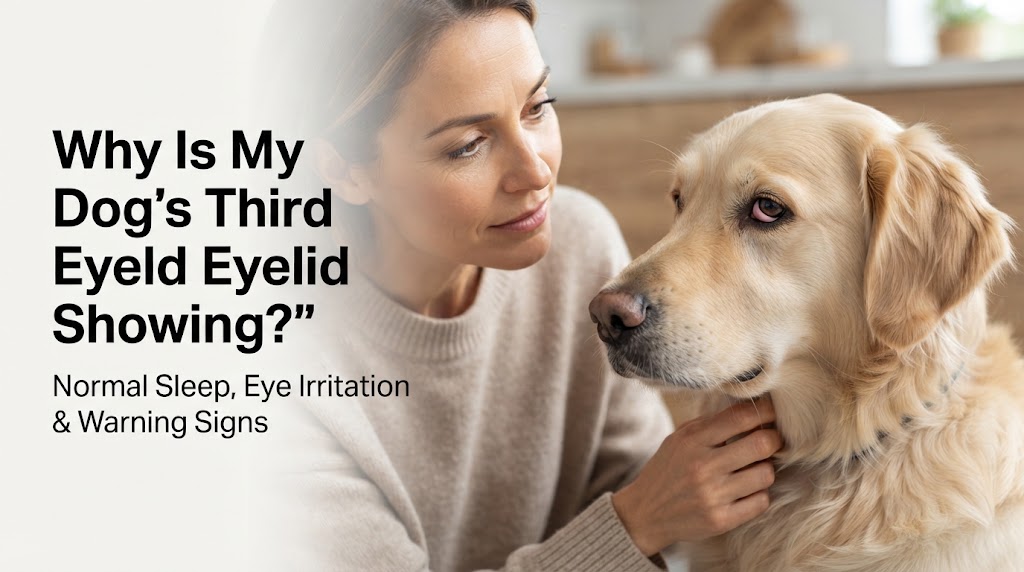
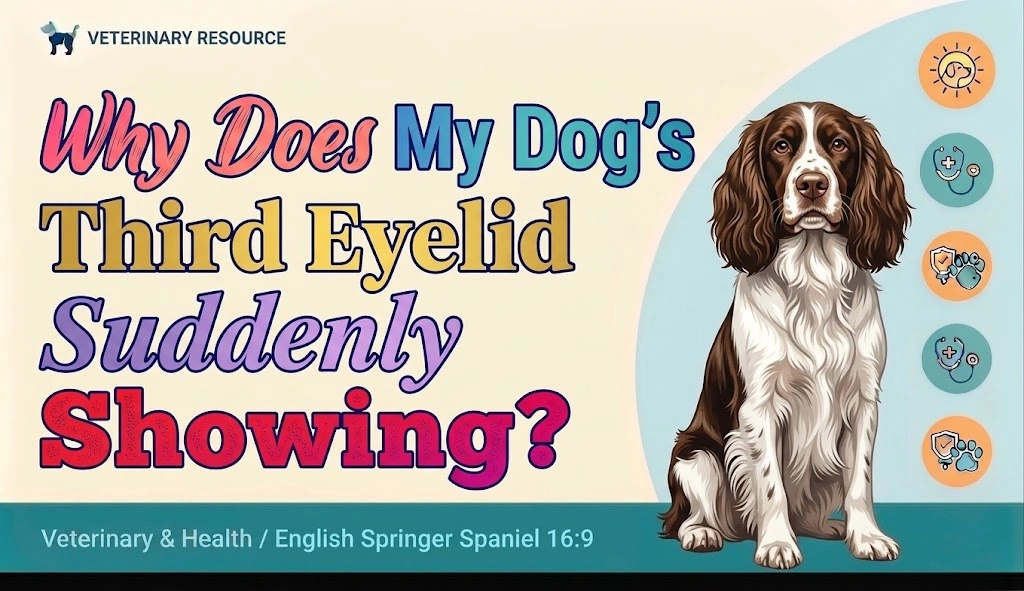
A visible third eyelid can appear with eye pain, dehydration, illness, nerve problems, or a local gland disorder and is more concerning when new or one-sided. A single sign rarely identifies one diagnosis, so the safest approach is to look at the whole pattern: when it started, how often it happens, what triggers it, and whether your dog is otherwise acting normally.
Quick Answer
A visible third eyelid can appear with eye pain, dehydration, illness, nerve problems, or a local gland disorder and is more concerning when new or one-sided. Eye pain, squinting, cloudiness, sudden vision change, marked redness, or a rapidly changing eye problem deserves prompt veterinary assessment.
Possible Causes
Painful eye-surface disease
Corneal scratches, ulcers, foreign material, and inflammation can cause squinting, rubbing, tearing, or light sensitivity. The timing, severity, and accompanying signs help determine how much weight to give this possibility.
Internal eye disease
Inflammation, pressure changes, lens disease, or other internal problems may alter pupil size, clarity, or comfort. The timing, severity, and accompanying signs help determine how much weight to give this possibility.
Nerve or systemic problems
Some eye signs arise from facial or autonomic nerve dysfunction or from illness elsewhere in the body. The timing, severity, and accompanying signs help determine how much weight to give this possibility.
Bottom Line
A visible third eyelid can appear with eye pain, dehydration, illness, nerve problems, or a local gland disorder and is more concerning when new or one-sided. The most useful next step is not to guess a diagnosis from one symptom, but to document the pattern and judge whether normal function is changing. If the sign is persistent, painful, progressive, or accompanied by other abnormalities, veterinary evaluation is the safest course.